Understanding Well Depth and Fixture Pressure
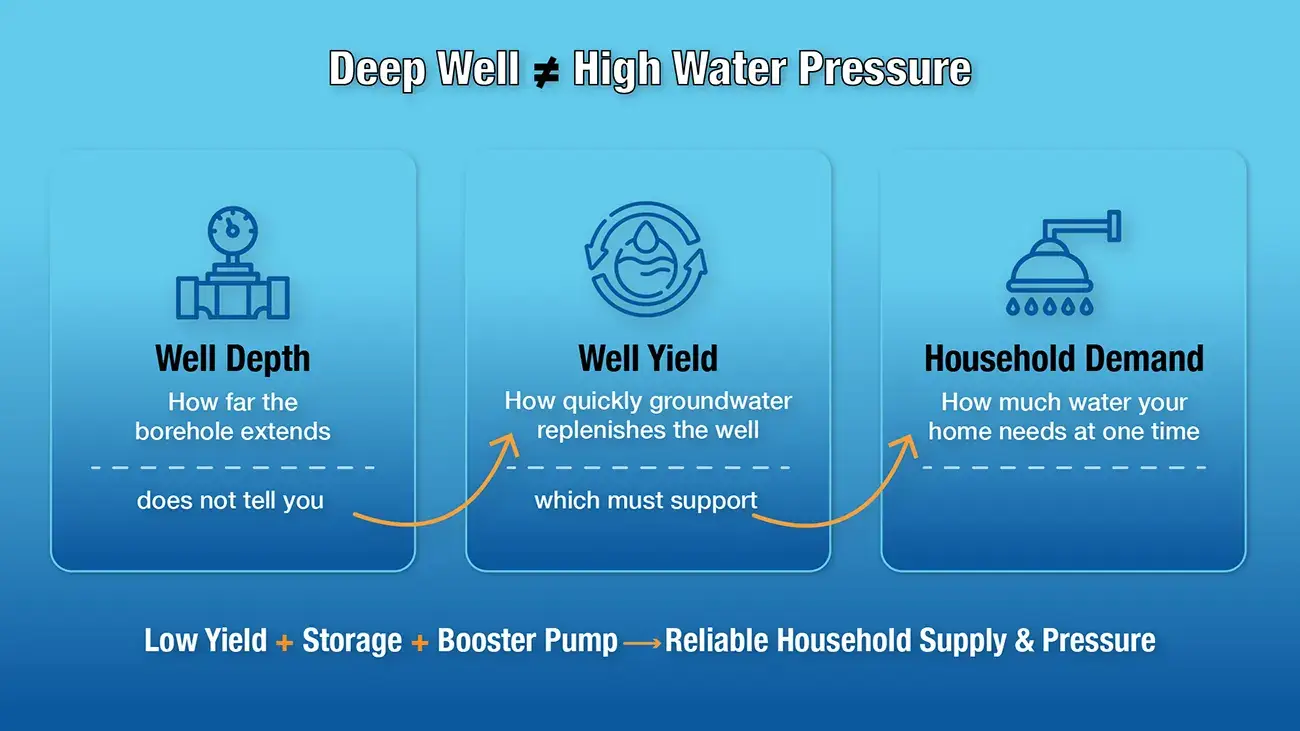
Does drilling a deeper well solve weak fixture flow, or is borehole depth an expensive distraction from the real mechanical problem? When evaluating how to increase water pressure effectively on private residential wells, installing a dedicated atmospheric storage tank is often far more dependable and less expensive than drilling hundreds of feet deeper into bedrock. A well’s depth reflects only where the borehole was drilled, not how fast groundwater recharges or how steadily water reaches home fixtures. Learning how water storage bridges the gap between low well yield and peak household demand allows homeowners to solve low pressure permanently.
Property owners with weak showers and sputtering faucets often assume their only option is to hire a drilling rig to go deeper. Contractors often encourage this costly step, promising that deeper rock fractures will uncover massive underground water streams. However, understanding how groundwater recharges reveals why drilling deeper is often an expensive gamble that doesn’t deliver better pressure.
Homeowner Fundamentals: How Private Water Wells Actually Work
Private water wells generally fall into two categories: shallow water-table wells and deep drilled bedrock wells. Shallow wells, typically drilled to less than fifty feet deep, draw water from unconsolidated sand and gravel layers near the surface. While shallow wells can produce abundant flow during wet seasons, their water levels rise and fall dramatically based on local rainfall patterns.
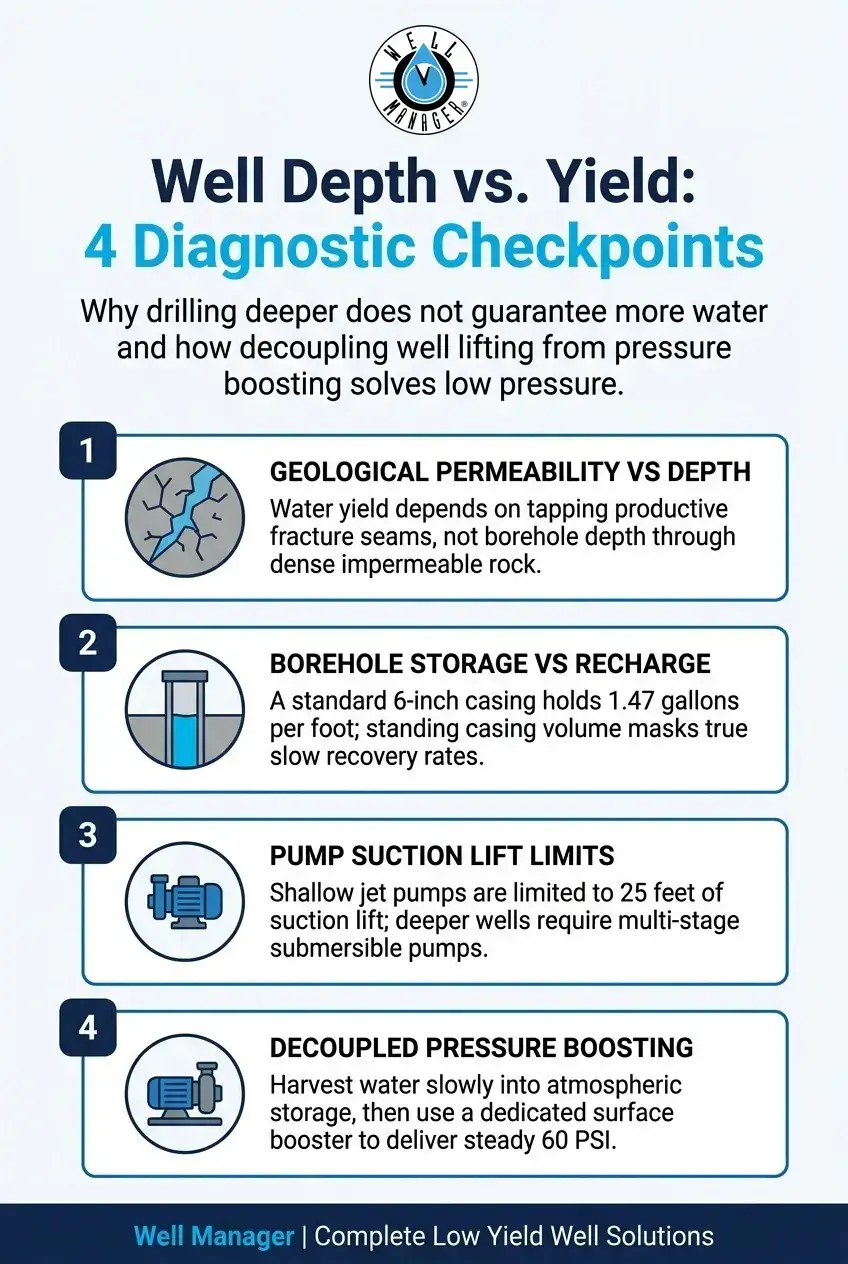
Deep drilled wells penetrate hundreds of feet into solid bedrock and rely on narrow subterranean fractures to supply water to the borehole. While deep wells are protected from surface contamination and summer droughts, bedrock fractures often yield water very slowly. A bedrock well may only produce a slow trickle, such as one-half to one gallon per minute, which is insufficient for direct household use.
The fundamental challenge for low-yield wells is the mismatch between well recharge and peak household demand. A standard modern home requires eight to twelve gallons per minute during morning routines to supply simultaneous showers, toilets, and kitchen sinks. When a well only produces one gallon per minute, plumbing fixtures starve for water unless a dedicated storage buffer bridges the gap.
Why Drilling a Well Deeper Is Often an Expensive Mistake
When faced with recurring pressure drops, property owners frequently turn to well drillers who recommend deepening the borehole. Drillers charge fifty to one hundred dollars per foot, easily driving total project expenses past fifteen to twenty-five thousand dollars. Unfortunately, deepening an existing well carries severe financial and practical risks that often leave homeowners in a worse situation.
- No Guarantee of Finding Additional Water: Drilling deeper into solid bedrock often encounters dense, unyielding rock that yields no new water veins, leaving the overall flow rate unchanged.
- Risk of Striking Contaminated Mineral Veins: Deeper rock layers often contain high concentrations of dissolved minerals, including sulfur, iron, manganese, and total dissolved solids that ruin water taste and stain fixtures.
- Higher Electrical Pumping Costs: Lifting water from several hundred feet deeper requires a much larger downhole motor that consumes significantly more electrical power every time the pump cycles.
Even if a deeper borehole encounters a modest additional water vein, deep drilling does not solve the fundamental problem of delivery pressure. Downhole well pumps are designed to lift water to the surface, not maintain steady 60 PSI across multiple open fixtures upstairs. Investing thousands in speculative drilling addresses the wrong end of the water system while ignoring proven storage solutions.
How an Atmospheric Storage Tank Solves Low-Yield Wells
The most cost-effective, reliable way to solve low water pressure is to manage the water an existing well already produces. Many homeowners do not realize that a well producing only one gallon per minute yields fourteen hundred and forty gallons of fresh water every single day. Because an average family of four uses about three hundred gallons per day, even a low-yield well produces more than enough water to meet daily needs.
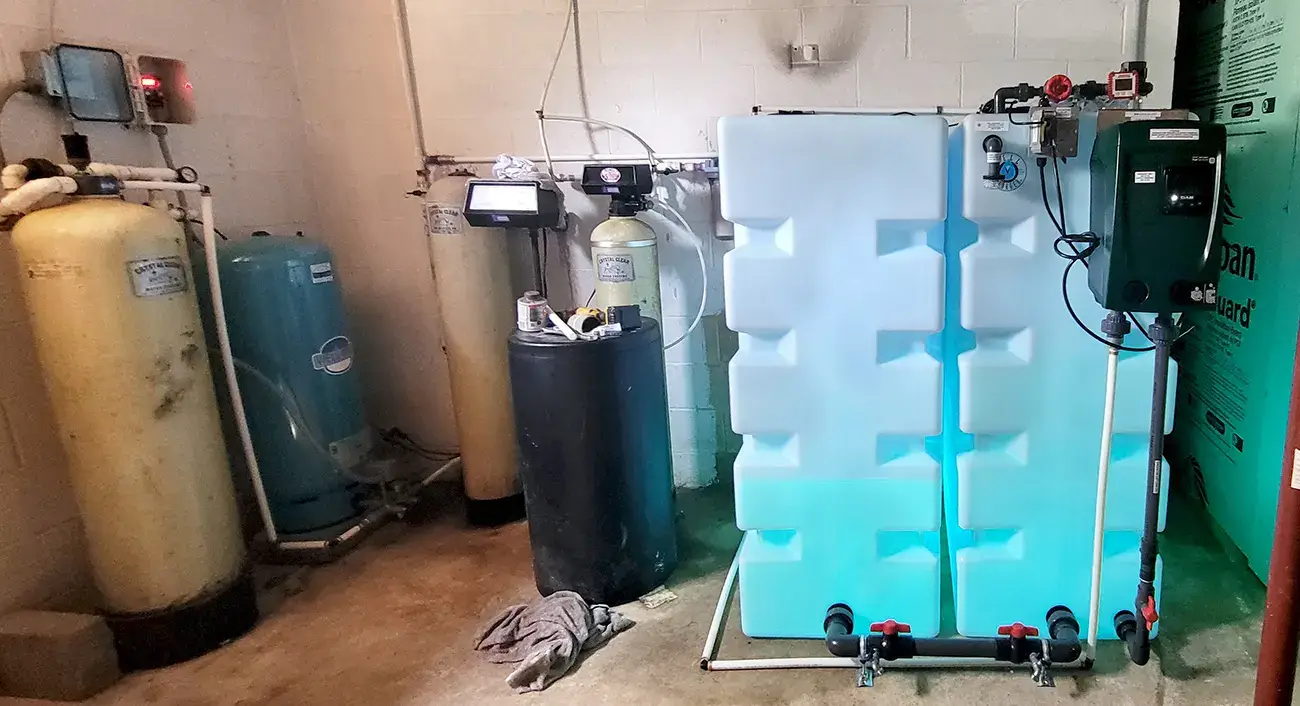
An atmospheric storage system captures this continuous subterranean recharge by gently harvesting water into an indoor holding tank. Instead of running the well pump hard during morning showers, the downhole pump operates at a low, metered rate that never strains the aquifer. This slow harvesting strategy protects downhole equipment from overheating and eliminates the risk of pulling sediment into home filtration systems.
Inside the home, a dedicated variable-speed booster pump draws water from the atmospheric tank and pressurizes household plumbing. The booster pump maintains a steady 55 to 60 PSI across second-floor showers, laundry rooms, and garden hoses at the same time. Families enjoy powerful, reliable water pressure throughout the house without spending a dime on speculative well drilling.
Comparing Water Well Capacity Improvement Strategies
| Improvement Strategy | Operating Principle | Average Expense Range | Water Quality Risk | Fixture Pressure Guarantee |
| Atmospheric Storage System (Well Manager) | Harvests slow continuous yield into private indoor tank | Moderate & fixed investment | None; preserves existing clean water | 100% constant 55-60 PSI at all fixtures |
| Deepening Existing Well Borehole | Drills deeper into bedrock hoping for new water veins | High ($15,000 to $25,000+) | High; risk of sulfur, iron, & hardness | No guarantee of improved flow or pressure |
| Hydrofracking Rock Formations | Pumps high-pressure water to crack open bedrock fissures | High ($5,000 to $10,000+) | Moderate; can cause persistent sediment | Unpredictable; fissures may re-close over time |
| Larger Bladder Pressure Tank | Adds standard 40-80 gallon pressurized bladder tank | Low ($800 to $1,500) | None | Provides only 10-15 gallons of usable drawdown |
Practical Diagnostics to Evaluate Well Capacity
Before deciding on well modifications or storage equipment, homeowners can review a few key benchmarks for their water system. Understanding current well performance allows water specialists to design an exact, cost-effective solution.
Property owners can review three practical diagnostic areas:
- Review the Original Well Completion Log: Locate the state well driller report to verify total borehole depth, casing diameter, static water level, and the original measured yield in gallons per minute.
- Measure Recovery Time After Heavy Use: Observe how long it takes for water pressure to return after running two consecutive loads of laundry or multiple showers, and note how quickly the borehole recovers.
- Inspect Water Clarity and Pressure Gauges: Check whether the pressure gauge at the pressure tank drops below thirty PSI during use, and watch for cloudy sediment in toilet tanks that indicates extreme drawdown.
Gathering these basic operational facts provides valuable context for designing an appropriate atmospheric storage system. Specialists use well depth, static water level, and recovery rates to determine the ideal tank capacity and pump sizing for the home. An objective diagnostic approach ensures homeowners invest in equipment that permanently resolves pressure issues without unnecessary expenses.
Choosing Proven Storage Over Speculative Drilling with Well Manager
Well depth measures drilling distance into the earth, not a guarantee of dependable household water pressure. Rather than gambling tens of thousands of dollars on deeper drilling, property owners achieve permanent water security by capturing and managing existing well yield. Atmospheric storage systems transform low-producing wells into powerful, reliable water sources that support modern family living.