Solving Pressure Drops on a Shared Well
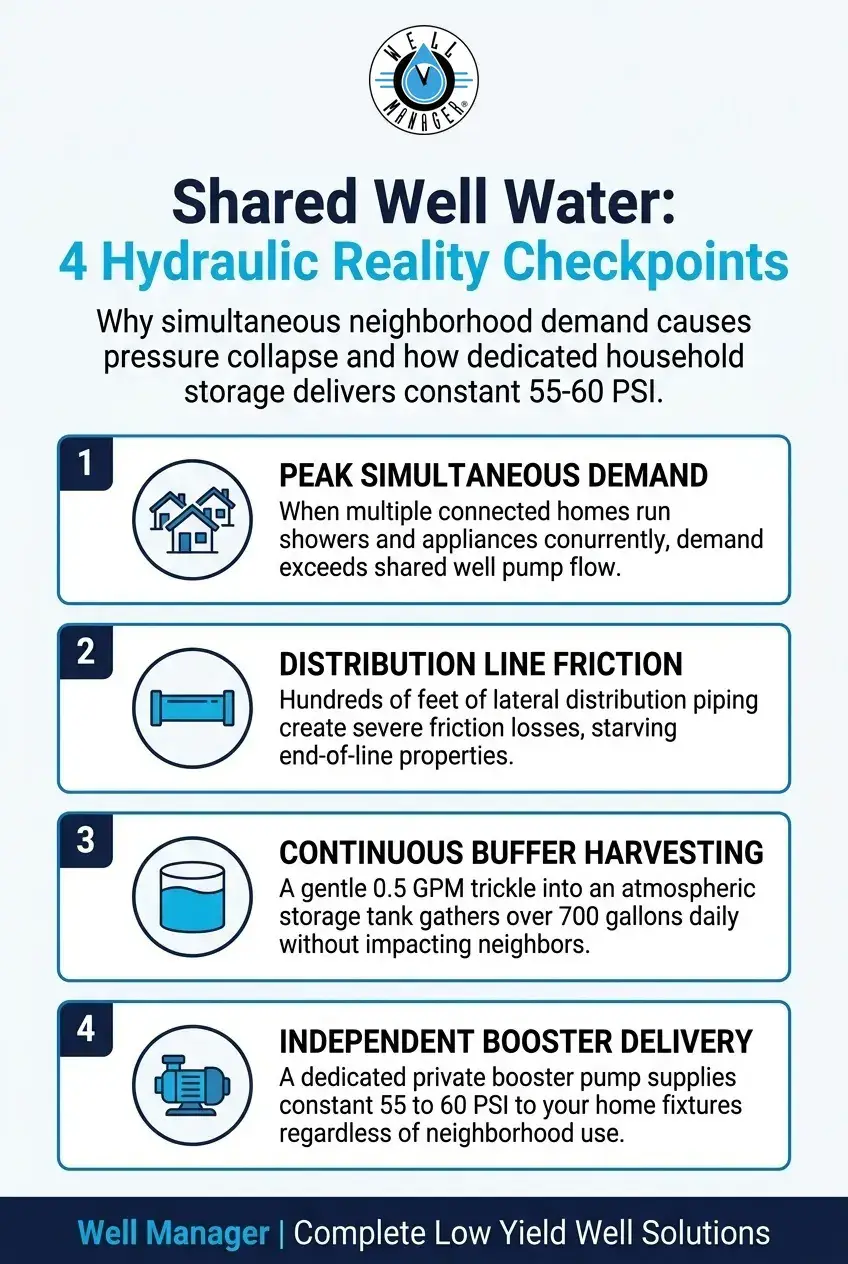
Does sharing a private well with neighbors mean living with weak showers and sputtering faucets? For homes connected to a shared community water line, a low water pressure well problem is almost always caused by peak neighborhood demand and long pipe runs rather than a dried-up aquifer. When multiple households run appliances at the same time, central well pumps cannot maintain steady pressure across the shared distribution network. Installing a private indoor storage system lets individual property owners enjoy constant, high water pressure regardless of how much water neighboring homes use.
Living on a shared well system frequently creates daily household frustration during morning and evening routines. A morning shower suddenly drops to a weak trickle when a neighbor starts a washing machine or turns on outdoor garden hoses. Instead of organizing expensive community-wide plumbing overhauls, property owners can solve delivery issues independently in their own utility room.
Homeowner Fundamentals: Why Shared Wells Suffer from Low Water Pressure
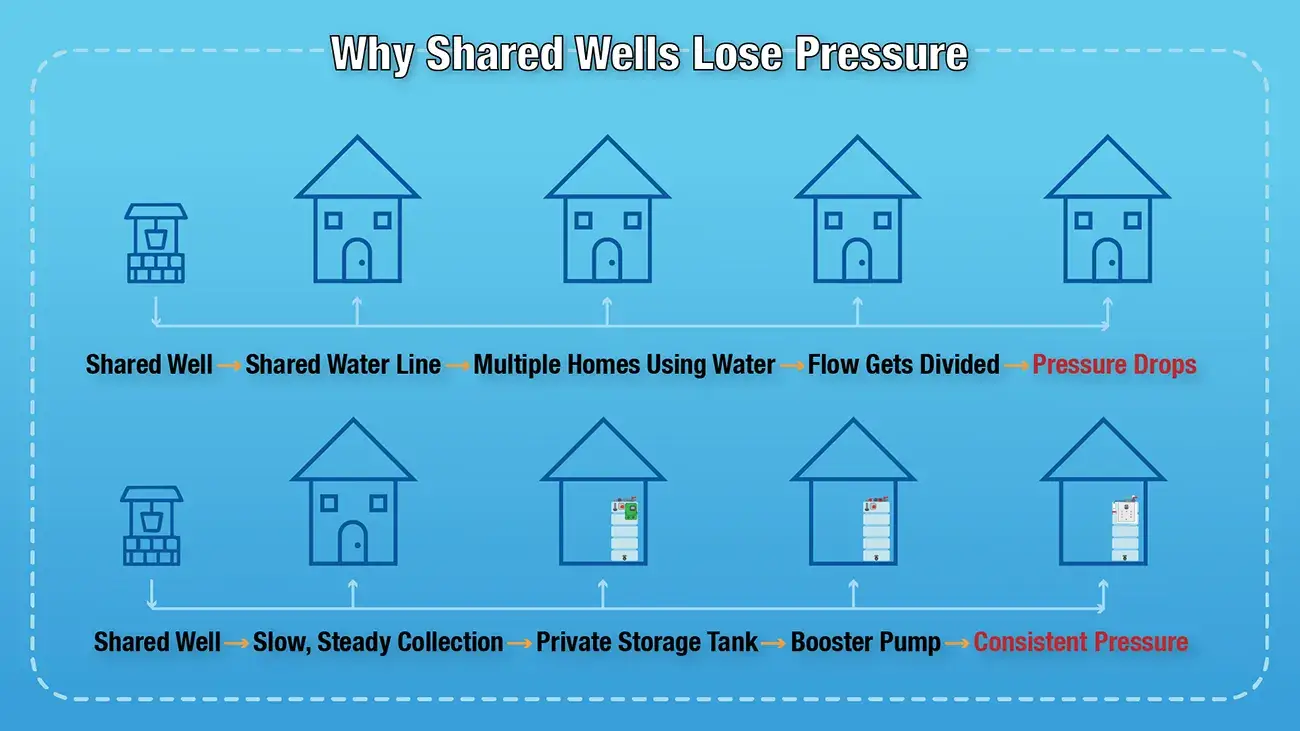
Shared private wells are a common water setup in rural subdivisions and small residential clusters where drilling individual wells for every lot is impractical. In these shared arrangements, a single submersible pump inside a central borehole pushes water through underground distribution pipes to several different houses. While the central well itself may have plenty of water overall, the plumbing network connecting the houses creates a severe delivery bottleneck during peak hours.
Plumbing friction increases dramatically as water travels through hundreds of feet of shared underground piping. When only one home is using water, the pump easily maintains adequate pressure at fixtures throughout the residence. However, as soon as two or three households open faucets simultaneously, the available flow divides between them, causing immediate pressure drops for everyone on the line.
Homes at the end of the shared line or on higher-elevation lots suffer the most severe water shortages. Water naturally flows toward the path of least resistance, favoring homes situated closest to the central wellhead. Understanding this distribution reality helps property owners see that their pressure problem is a delivery bottleneck, not a lack of groundwater.
Why Installing a Bigger Well Pump Always Fails
When homeowners complain about weak fixture flow, local contractors or well drillers often suggest replacing the central well pump with a larger horsepower model. While a larger pump sounds like an easy fix, this recommendation routinely creates expensive secondary complications without solving low pressure at home fixtures.
Installing an oversized pump on a shared water system introduces three common failure risks:
- Rapid Well Drawdown and Pump Burnout: A high-capacity pump draws water out of the borehole faster than natural groundwater can recharge, causing the pump to suck air, overheat, and burn out prematurely.
- Sediment and Sand Contamination: Pulling water aggressively pulls fine sand, clay, and mineral grit from surrounding rock fissures, quickly clogging home sediment cartridges and damaging plumbing fixtures.
- Pipe Friction Limits Actual Delivery: A larger pump cannot force high volumes through narrow, aging distribution pipes without generating severe friction loss that neutralizes the extra horsepower.
Furthermore, upgrading a central pump requires financial cooperation and agreement among multiple homeowners, which often leads to neighbor disputes. Even if all neighbors agree to split the cost, a bigger pump still can’t prevent pressure fluctuations when multiple families shower at the same moment. True water reliability requires decoupling household delivery from shared distribution lines, not forcing higher flow through a shared pipe.
How an Indoor Storage System Delivers Complete Water Independence
Modern residential water-harvesting technology lets property owners solve shared well problems entirely within their own homes. Instead of fighting neighbors for water during morning rush hours, an atmospheric storage system collects water continuously at a gentle, steady trickle throughout the day and night. Because the system only draws a modest flow rate, such as one gallon per minute, the collection never strains the shared central pump or disrupts neighboring water supplies.
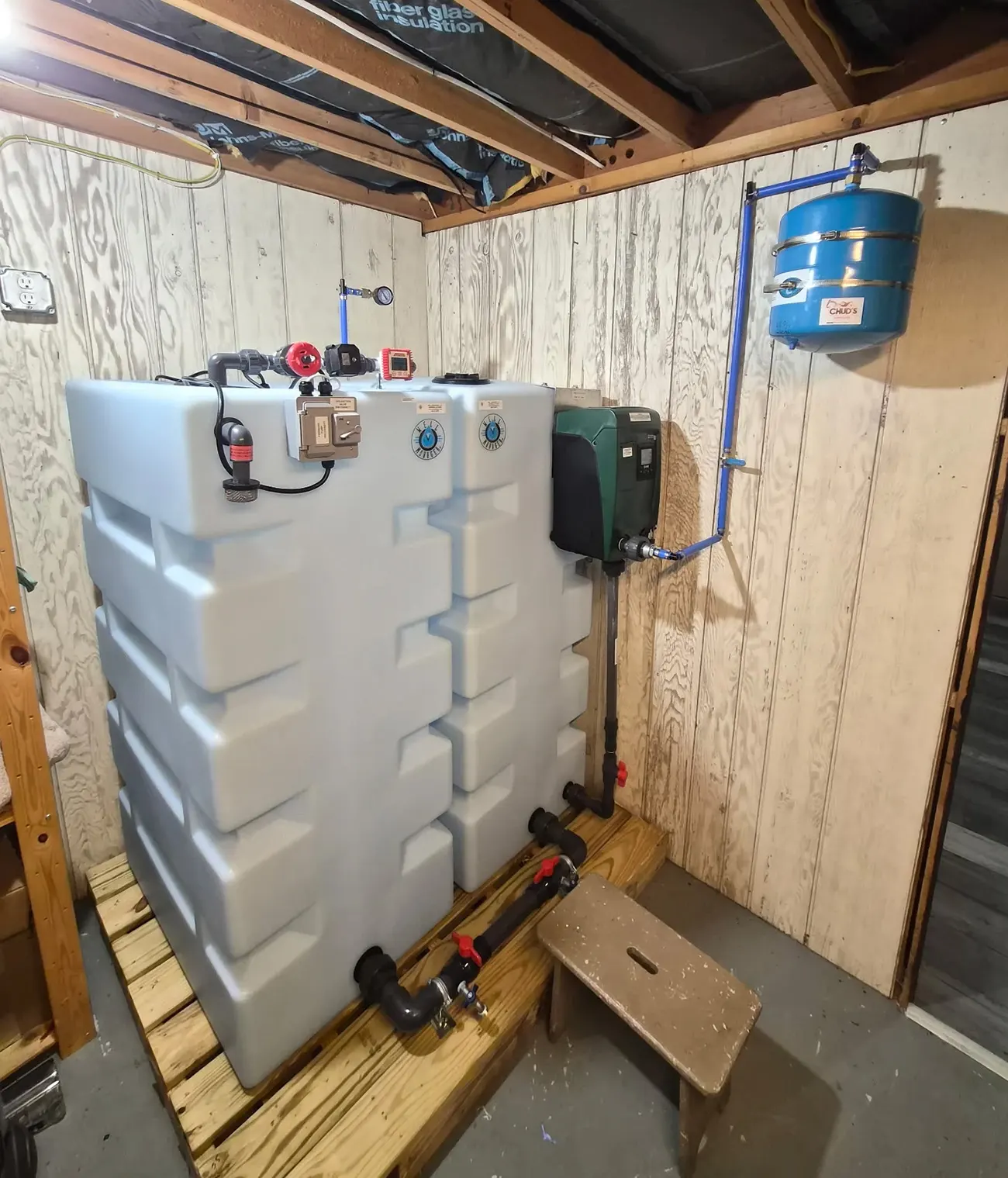
Harvested water accumulates inside a clean, non-pressurized atmospheric storage tank placed conveniently in a basement, garage, or utility room. Over twenty-four hours, even a modest one-gallon-per-minute incoming rate accumulates over fourteen hundred gallons of usable reserve inside the home. This dedicated private reserve ensures that plenty of water is always staged and ready before peak family usage begins.
Household plumbing fixtures receive water directly from this private indoor reservoir through a dedicated variable-speed booster pump. When family members turn on multiple showers, run dishwashers, or start laundry cycles, the booster pump delivers robust, unwavering 55 to 60 PSI of pressure. Household water pressure stays stable whether neighbors are washing cars, watering lawns, or filling swimming pools.
Comparing Shared Well Solutions for Residential Homeowners
| Solution Method | How It Operates | Neighbor Agreement Needed? | Impact on Fixture Pressure | Expected Reliability |
| Indoor Atmospheric Storage (Well Manager) | Harvests slow, continuous trickle into private indoor tank | None; installed entirely inside private home | Constant, unwavering 55-60 PSI at all fixtures | Permanent; protects central pump & well |
| Larger Central Well Pump | Replaces central pump with higher horsepower unit | High; requires financial consensus from all neighbors | Still drops during simultaneous peak usage | High risk of pump burnout & well siltation |
| Direct In-Line Booster Pump | Pulls directly on incoming shared pipeline | None; installed indoors on main service pipe | Fluctuates wildly; drops when line pressure falls | Prone to cavitation & pulling line sediment |
| Drilling a New Independent Well | Bores a completely separate well on private lot | High; requires municipal permits & lot clearance | Depends entirely on finding a new water vein | High-cost gamble ($15,000 to $30,000+) |
Helpful Diagnostic Checkpoints for Homes on Shared Wells
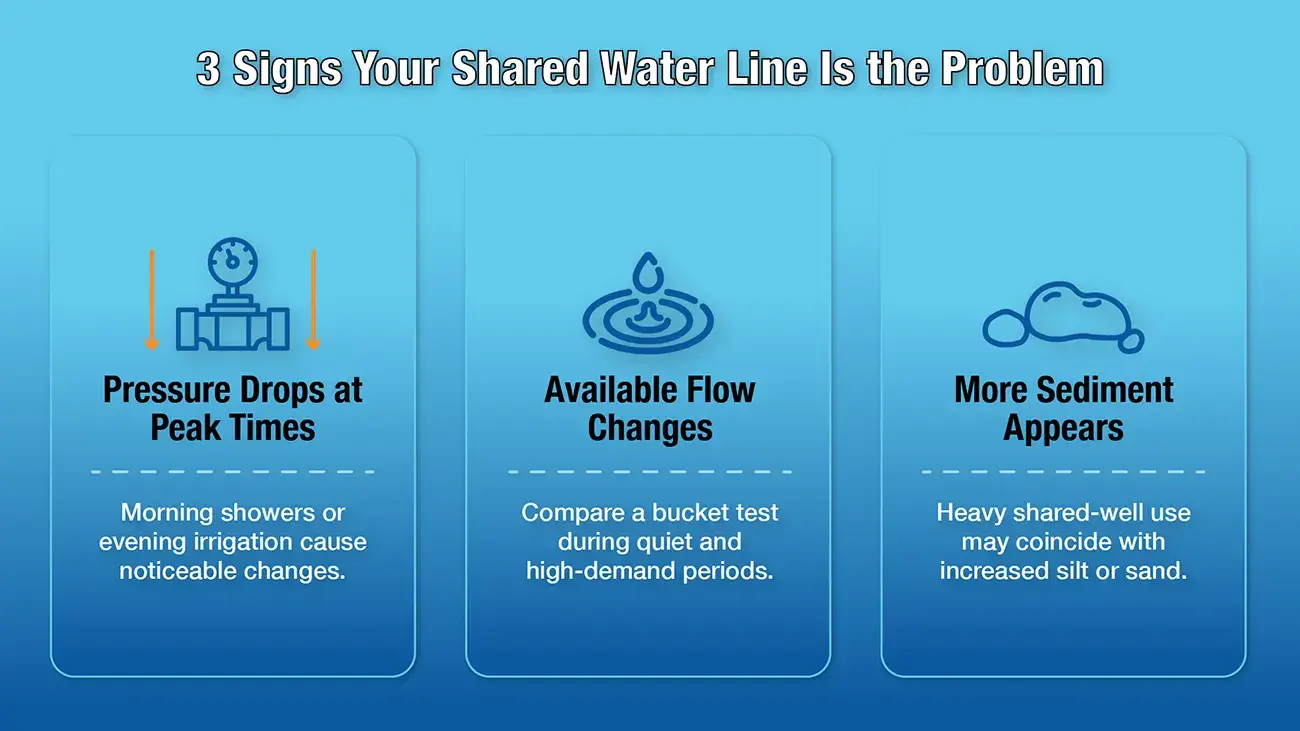
Before investing in water management equipment, property owners can perform a few simple diagnostic observations to understand their shared water line. Gathering basic performance data helps specialists size an appropriate storage and boosting system tailored to specific household needs.
Homeowners can observe three practical benchmarks around the house:
- Track Pressure Drop Patterns: Record the specific times of day when water pressure drops occur, noting whether weak flow aligns with morning shower hours or evening irrigation schedules across the neighborhood.
- Perform a Sustained Bucket Flow Test: Time how many seconds it takes to fill a five-gallon bucket from an unrestricted outdoor spigot during mid-afternoon versus the peak morning rush to measure available flow rate.
- Inspect Water Filtration Cartridges: Examine existing whole-house sediment filters for sudden accumulations of fine silt or sand, which indicates that the shared well pump is cycling aggressively during heavy usage.
Sharing these observations with a water systems specialist ensures that an indoor storage setup is calibrated accurately for household fixture counts. Understanding daily water usage habits allows engineers to configure tank capacity and booster output for maximum energy efficiency. With clear performance data, property owners can move from unpredictable shared supply to total water independence with confidence.
Regaining Water Independence with Well Manager
Living on a shared private well should never force a family to endure weak showers, sputtering faucets, or frustrating laundry delays. By decoupling household water delivery from shared distribution lines, atmospheric storage systems provide a permanent solution that requires zero coordination with neighbors. Families enjoy strong, consistent water pressure throughout the residence while protecting the shared well from costly over-pumping damage.