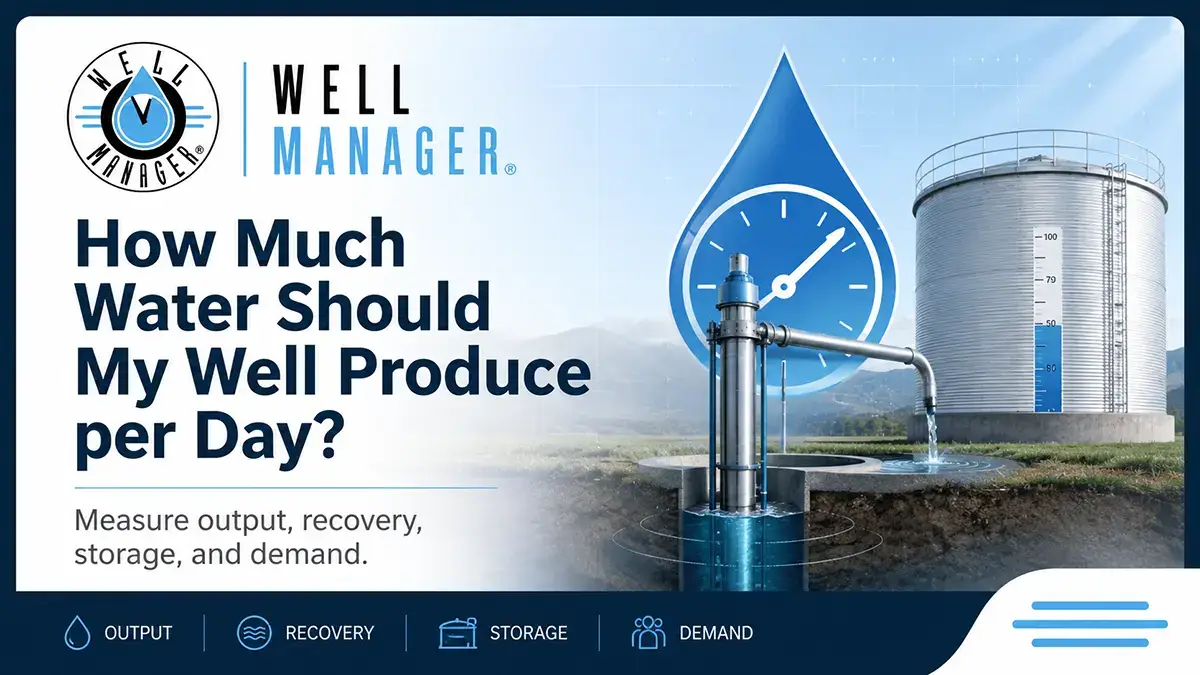
A shower that loses pressure is hard to ignore. The same goes for a washing machine that fills slowly when someone opens a faucet. That is why many homeowners start by searching for how to increase water pressure.
Pressure might be part of the problem, but it is not always the source. The well might produce water too slowly, recover poorly after heavy use, or lack enough stored water for a busy morning. Before changing the pump or pressure settings, the full water delivery system should be compared with the household’s actual water use.
Start With How Your Home Uses Water
There is no single daily water target for every home. Two families of the same size might use water differently. One household might spread showers, laundry, and dishwashing throughout the day, while another might use several fixtures during the same morning rush.
A useful estimate starts with the home’s busiest water-use periods. Total gallons used by the end of the day matter, but timing matters too. A well system has to support normal daily use and the short periods when the home asks for water all at once.
When estimating household demand, look at:
- How many people live in the home
- When the household uses the most water
- How often showers, laundry, and dishwasher cycles overlap
- Whether outdoor watering or livestock adds demand
- Whether leaking toilets or older fixtures waste water
This helps separate total daily use from peak demand. A well might produce enough water over 24 hours but still fall behind during a busy 30-minute stretch. That difference is often where pressure complaints begin.
Understand the Main Well Water Terms
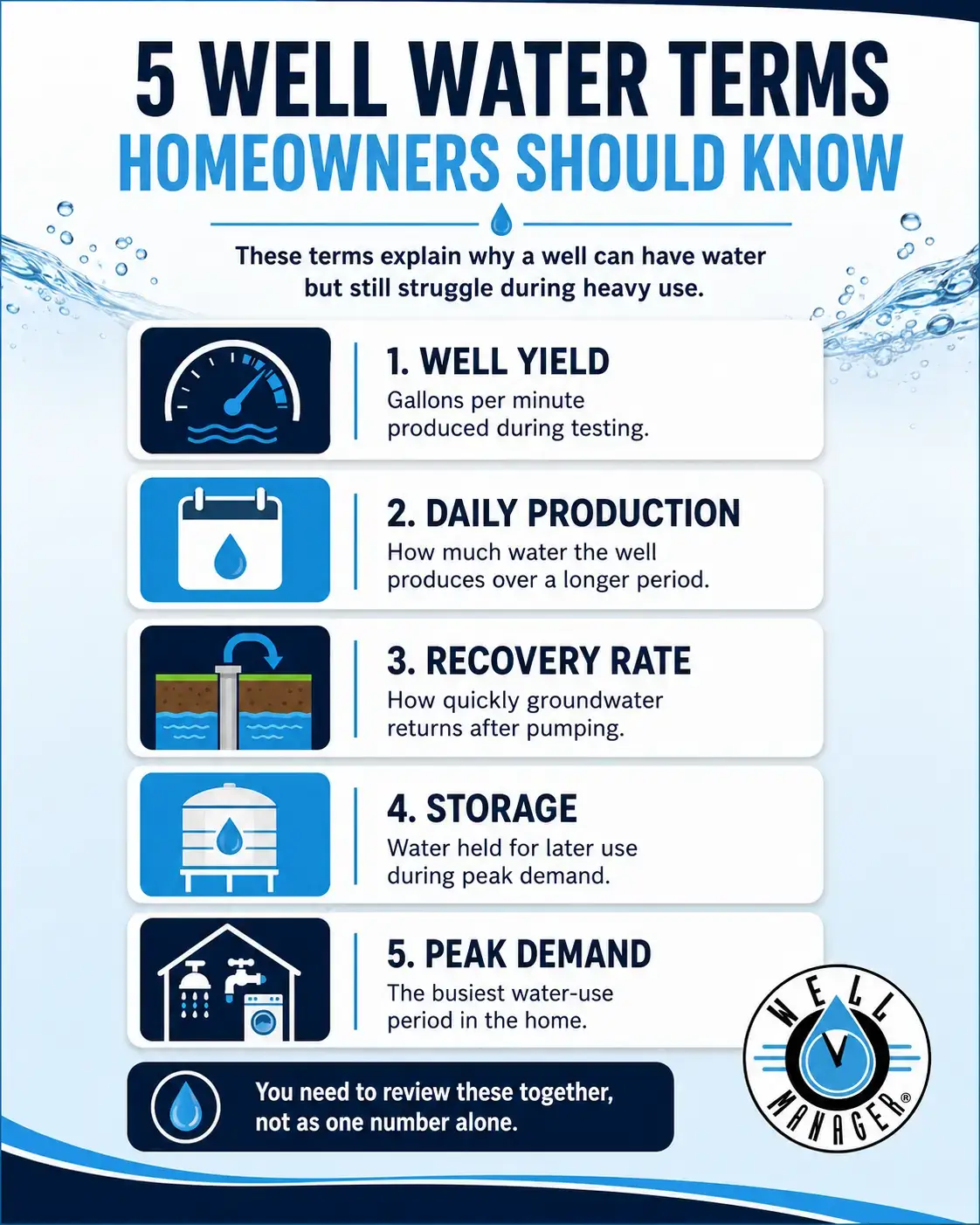
Homeowners often hear daily production, well yield, recovery rate, and storage used together. Those terms are related, but they do not mean the same thing. Knowing the difference helps explain why a home might have water available over a full day but still lose pressure during heavy use.
| Term | What It Means | Why It Matters |
| Well yield | How many gallons per minute the well produces during testing | Shows the well’s measured output under test conditions |
| Daily production | How much water the well produces over a longer period | Helps compare the well with total household use |
| Recovery rate | How quickly groundwater returns after pumping | Shows whether the well keeps up after water is drawn down |
| Storage | Water held for later use | Helps the home meet peak demand without asking the well to keep up in real time |
| Peak demand | The busiest water-use period in the home | Often explains pressure drops during showers, laundry, or multiple fixtures |
These numbers should be reviewed together. A single gallons-per-minute result does not show the full picture. The better question is whether the well, storage, pump, and plumbing support the household’s water use.
Daily Production Is Different From Well Yield
Well yield is commonly measured in gallons per minute. Daily production is the amount of water a well produces over a sustained period. Those two numbers connect, but they do not mean the same thing in real household use.
At one gallon per minute, a well theoretically produces 1,440 gallons in 24 hours.1 That number sounds strong, but household use is not spread evenly across the day. Families usually use much more water during short morning and evening periods.
A low-yield well is not automatically unusable. It means the well, storage, pump, and home demand need to be considered together. Four factors matter most:
- Tested well yield
- Recovery rate
- Available water storage
- Household demand
A professional well test provides homeowners with a clearer picture of sustainable capacity. It also helps prevent the wrong fix, such as replacing a pump when the real issue is recovery, storage, or demand timing.
Compare Well Output With Household Demand
A gallons-per-minute test is useful, but it should not decide the issue on its own. Homeowners also need to know how quickly the well recovers after pumping. A well that performs well for several minutes might still struggle if groundwater returns slowly.
A modest-yield well might serve a home well when storage collects water during quiet hours. That stored water is then available when showers, laundry, and fixtures overlap. Storage helps with timing, but it does not replace water the well never produces.
A strong test result does not always guarantee strong service either. The pump, tank, plumbing, treatment equipment, controls, and stored supply all affect what happens at the faucet. The best answer comes from evaluating the entire system rather than a single number.
Recovery Rate Shows What Happens After Pumping
A well might provide strong flow for a short time because water has collected inside the well casing. That short burst does not show how fast groundwater returns once pumping starts. The recovery rate shows whether the well maintains production after stored water has been drawn down.
Slow recovery becomes more noticeable when several uses overlap. A long shower followed by laundry might lower the water level faster than groundwater replaces it. When that happens, the home might feel like it has a pressure problem even though the deeper issue is water availability.
Homeowners might notice:
- Sputtering faucets
- Bursts of air
- Uneven pressure
- A pump that runs much longer than usual
A proper evaluation should look at static water level, pumping level, sustained yield, recovery time, and pump capacity. Dry weather also matters because groundwater levels often drop during dry periods. Trouble that appears or worsens during dry weather might point to well recovery rather than to pressure equipment alone.
Peak Demand Is Often the Real Test
Many well complaints start when the household uses several fixtures at once. The pressure drops when a toilet flushes while a faucet is open, or when the washing machine starts while a shower is running. In those cases, the system is being tested by peak demand, not only daily use.
A low-yield well might provide enough water for a full day, but still fall short during high-use periods.2 Supplemental storage helps close that gap by collecting water when demand is low and making it available when demand rises. The goal is to stop asking the well to supply every fixture in real time.
A well that produces enough total water but struggles during the morning or evening often needs better water management. A well that does not meet total daily demand presents a different problem. The response depends on whether the issue is timing, storage, recovery, or total supply.
Possible responses include:
- Reducing unnecessary water use
- Repairing or restoring the well
- Adding supplemental storage
- Evaluating the full water system
This is why the question should not stop at daily gallons. The more important question is whether the well system supports the household’s water use. A home needs enough water for the full day and an adequate supply during its busiest periods.
A Stronger Pump Does Not Create More Water
The pump must match what the well safely supplies. A larger pump does not make groundwater enter the well faster. Instead, it might lower the water level too quickly, draw in air, trigger pump protection, or shorten equipment life.
Increasing the pressure-switch setting has limits too. It might change how water feels when there is enough supply, but it does not make a low-producing well produce more gallons. Before replacing equipment, homeowners should identify what is restricting delivery.
Common causes include:
- Low well yield
- A worn pump
- Clogged treatment equipment
- A failed pressure tank
- Undersized plumbing
- Limited storage
- Improper system controls
Each cause needs a different response. A pump replacement might help if the pump is worn or mismatched. If the real problem is low recovery or limited storage, a stronger pump alone will not solve the issue.
Solve the Full Water Delivery Problem
Well Manager LLC treats low pressure as a symptom, not the whole diagnosis. We help homeowners address low-yield wells, limited storage, low pressure, and uneven whole-home delivery. The goal is dependable water, not higher pressure for its own sake.
A Well Manager® system collects limited well output through controlled fill cycles. The water stays stored until the household needs it. A separate delivery pump then sends water through the home at dependable pressure while the well refills the stored supply at a sustainable rate.
When homeowners research how to increase water pressure, they are usually focused on what they feel at the faucet. The underlying cause might involve the pump, but it might also involve well recovery, storage, controls, or household demand. A well should produce enough water for daily use while maintaining an adequate supply during the busiest parts of the day.
Ensure Your Well Produces Enough Water
A well should produce enough water to support the home’s total daily use and its busiest water-use periods. Daily gallons matter, but they do not tell the whole story. Well yield, recovery rate, storage, pump capacity, and household demand all affect what happens at the faucet.
Before replacing a pump or raising pressure settings, find out whether the problem is pressure, flow, recovery, storage, or total supply. The right fix depends on the cause. When the system matches the well’s real capacity and the home’s real demand, the household gets steadier water without pushing the well or equipment beyond safe limits.