
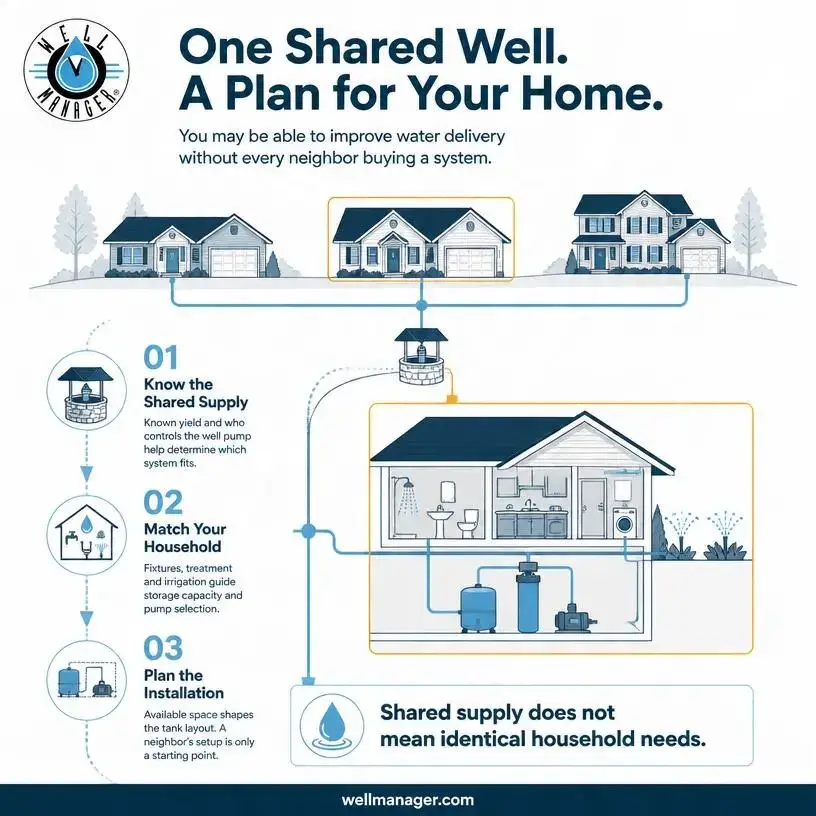
You may be able to improve water delivery at your home without requiring every neighbor to install a system. On a shared well, a household can install separate equipment to collect, store, and deliver water to the home. The right arrangement depends on the shared supply, who controls the well pump, and how much water your household needs.
For a homeowner asking how to increase water pressure, that’s a practical starting point: assess what you can improve on your property within the existing shared system. A neighborhood experience from July 2026 shows how an individual solution can begin, and why a neighbor’s equipment choice is only part of the answer.
One Shared Well and Different Household Experiences
Over the July 4 weekend, homes on one shared well lost water or pressure. Some were owner-occupied, some were rentals, and some served both uses. When the neighbors compared experiences, a homeowner near the end of the supply line reported no loss of water or pressure. That property already had a ConstaBoost system.
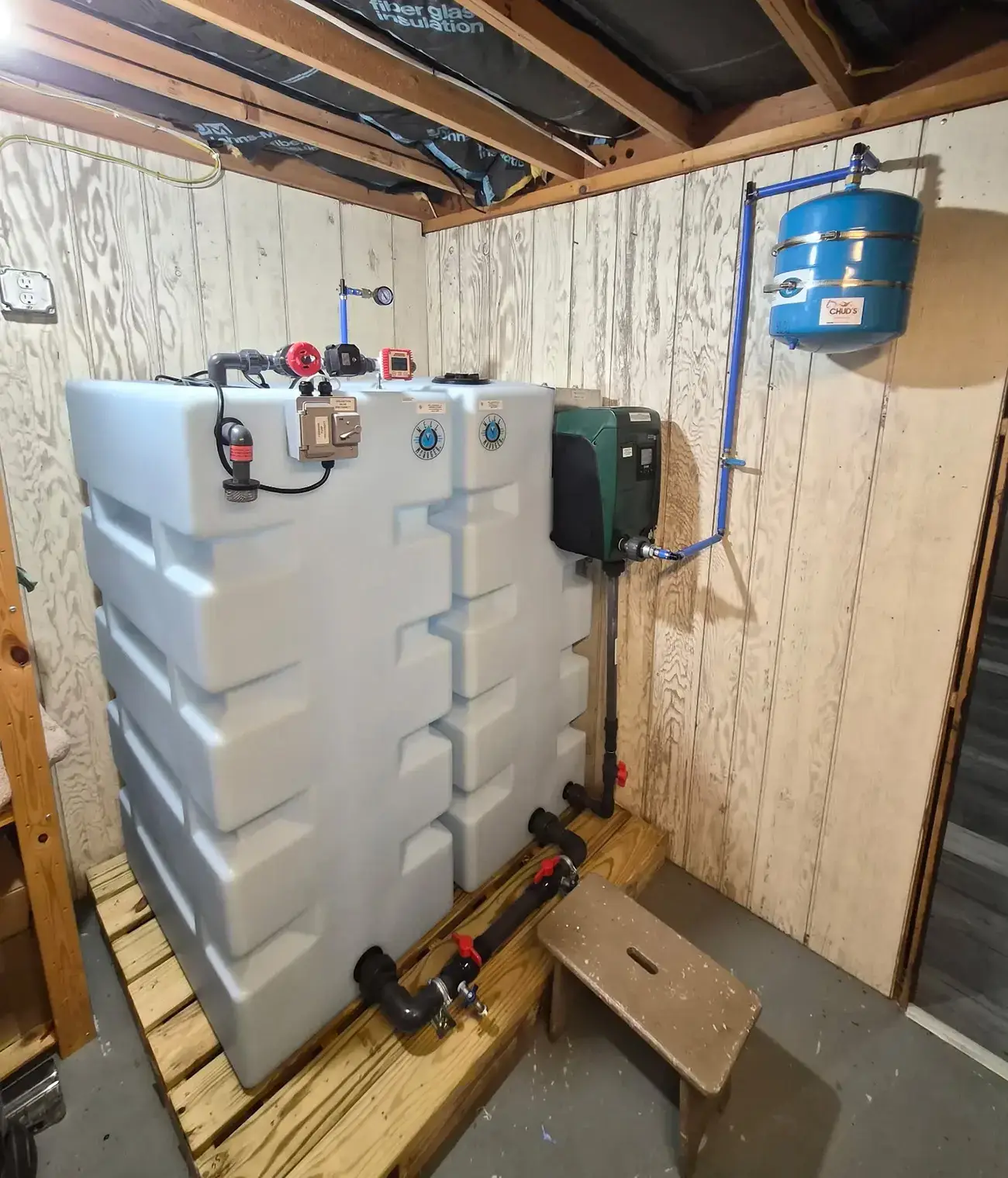
Two neighbors then contacted us. After discussing their needs, both bought two-tank Well Watcher systems with adjustable collection inlets and DAB Mini 3 pumps. Their early feedback was positive, and other homeowners were watching their experience. They purchased these individually within the neighborhood’s existing shared-well arrangement.
The original customer’s experience prompted those neighbors to investigate. It didn’t clarify which equipment they needed: the existing home had ConstaBoost, while the two new customers selected Well Watcher. We use a referral to begin the discussion, then assess the source and household before recommending a configuration.
What You Can Do About Well Water Low Pressure
Well technicians and developers establish the central shared-well infrastructure. We don’t install the neighborhood’s central pressure tanks, meters, and switches. Our systems generally provide separate collection and delivery for each participating home. Buying one does not require every other household on the shared well to do the same.
That boundary matters when selecting equipment. An individual homeowner often cannot control the source well pump. Well Watcher and ConstaBoost can help in that arrangement because they collect from the shared supply and store and deliver water to the home. The collection controls determine how water enters the system; the tanks hold it for use, and the delivery pump supplies the household.
We consider three parts of the application:
- The source and its controls. Known yield information and who controls the well pump help us determine which system family fits the shared arrangement.
- The household’s demand. Fixture counts and flow rates, water treatment, and irrigation needs help determine tank capacity and pump selection.
- The connection to the shared line. Describe how the system is arranged and where your home sits along the line. That context helps us understand the supply reaching your property.
The Equipment Also Has to Fit the House
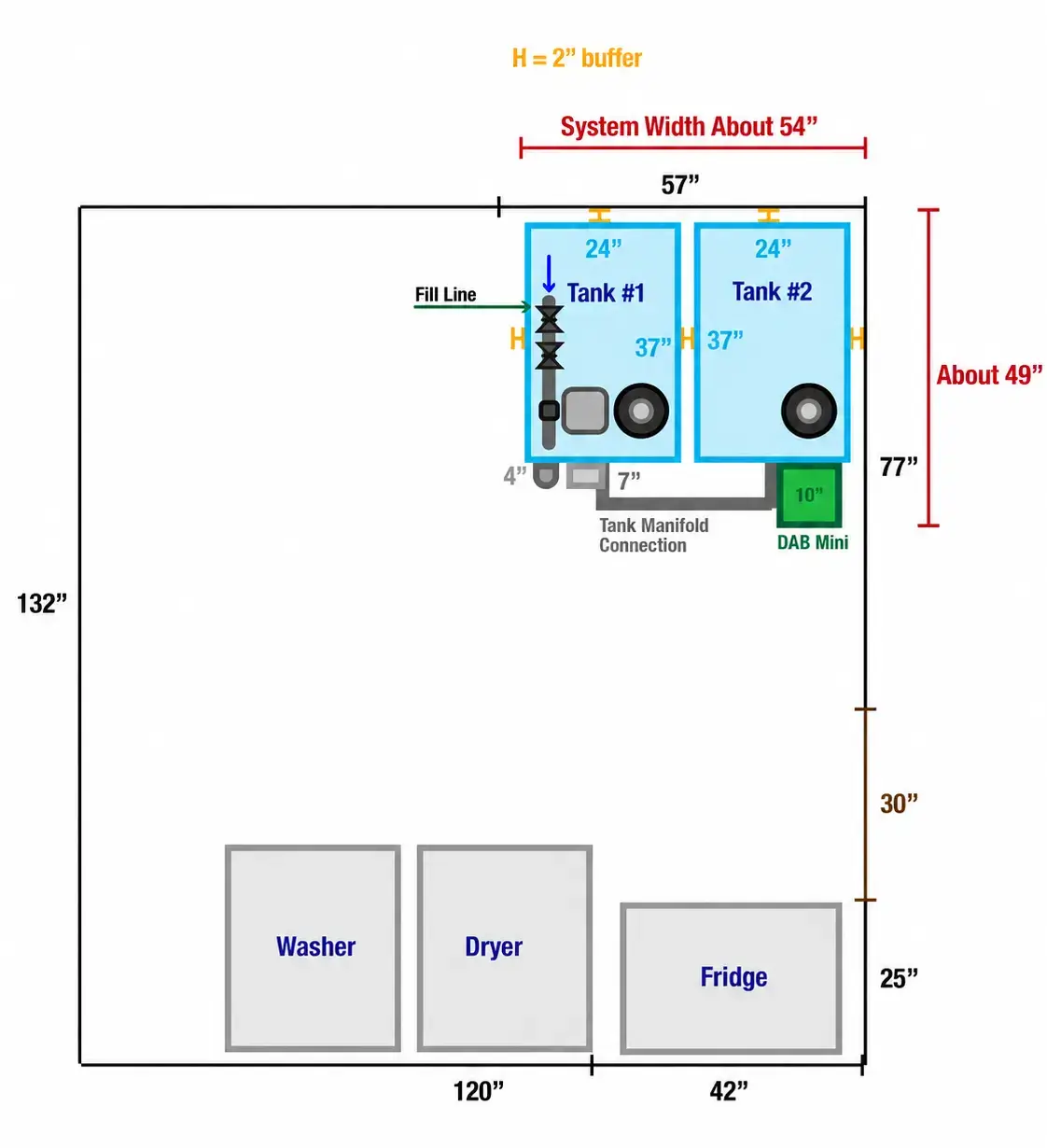
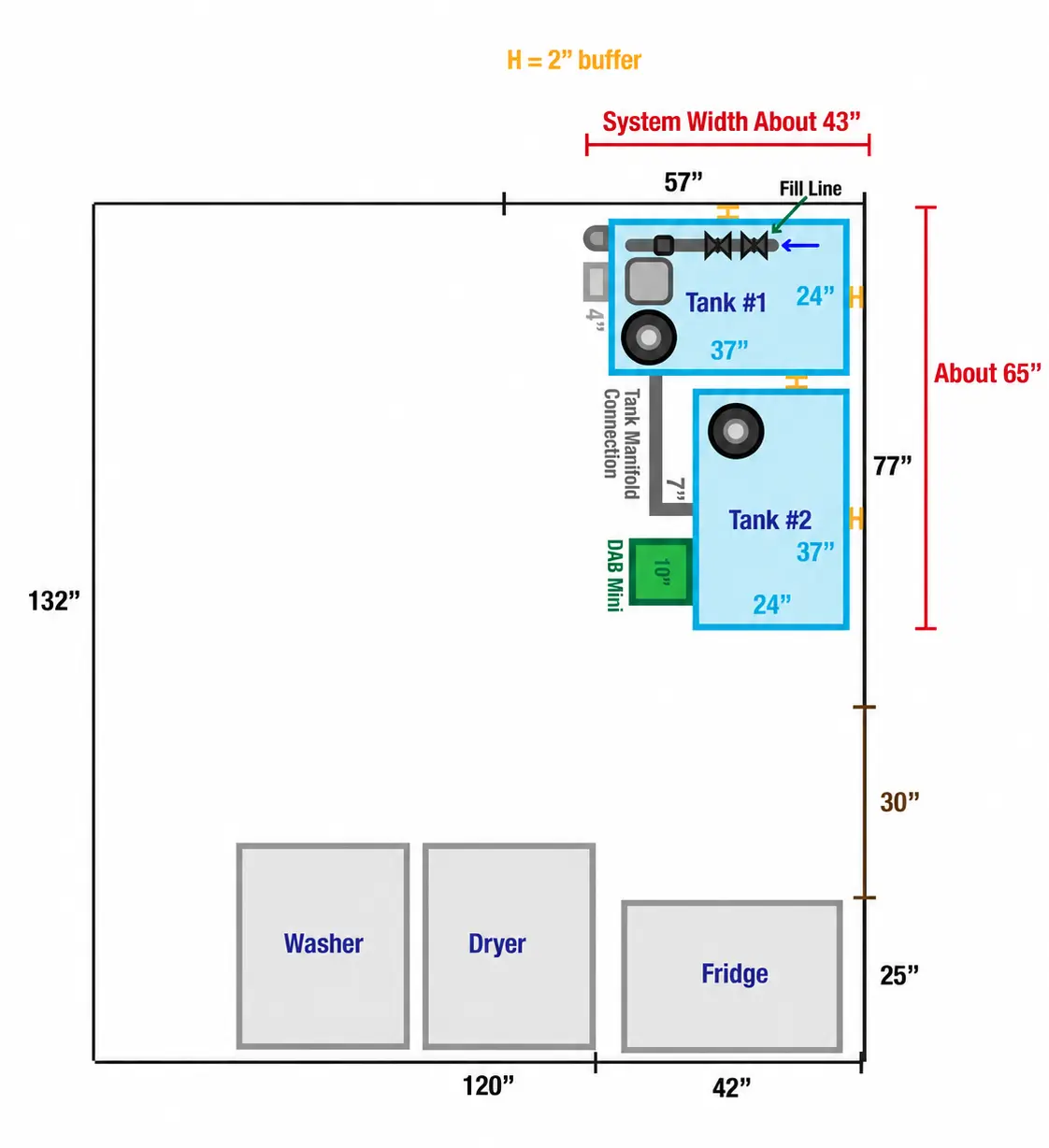
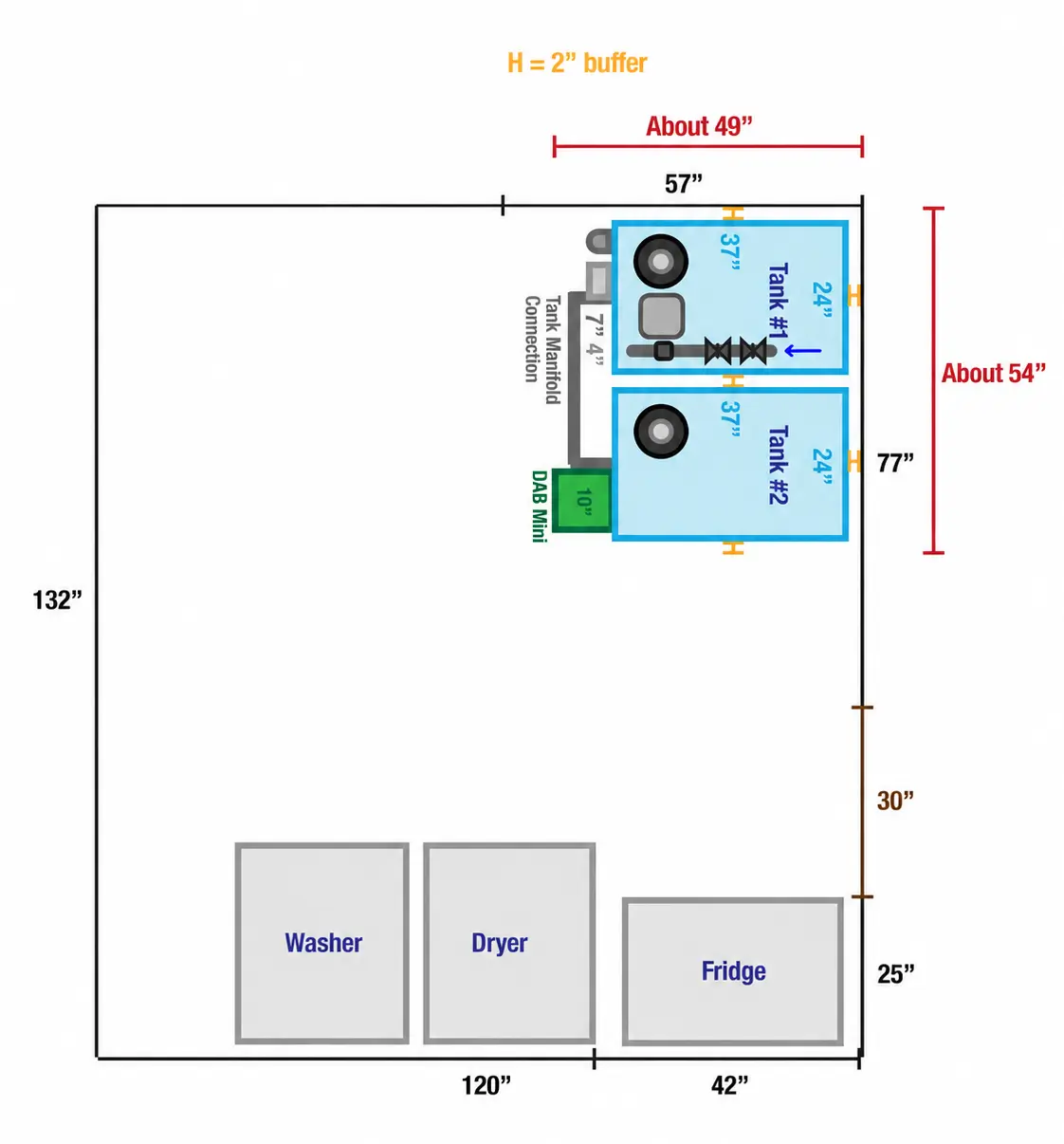
Steven Shuck, one of the new Well Watcher owners in that neighborhood, described both low incoming pressure and limited installation space in his review. Our team provided multiple floor plan options for the tight space and helped him through the purchase and installation process. Placement was part of the solution for his property.
Steven reported incoming pressure of 10 to 15 psi and an average of 50 to 60 psi throughout the house after installing his Well Watcher 210 two-tank system with a pressure tank. Those are his reported results for that installation, not a pressure guarantee for another home. His experience shows why the conversation needs to cover both the water problem and the space available to address it.
What to Have Ready for a Recommendation
You do not need complete neighborhood development plans to begin. We do not routinely require a shared-well homeowner to provide central metering plans. Start with information about your own property and identify what you do not know.
Describe the interruption. Did you lose pressure, lose water, or experience both? Include whether neighbors reported the same event, so the discussion starts with the problem you actually experienced.
- List the uses the system must serve. Include household fixtures, water treatment, and irrigation. These details are more useful for sizing than the number of neighboring homes alone.
- Share available well information. Bring known yield and static-level information, along with a description of the shared setup and your position on the supply line.
- Describe the installation space. Explain any placement limits so tank layout and pump selection can be considered together.
Start With a Recommendation for Your Home
A shared source does not make every household’s needs identical. The July neighborhood example illustrates the opportunity to assess one home at a time while keeping the central infrastructure and each home’s equipment distinct.
Contact Well Manager about your shared-well home. Tell us what happened, what the system needs to supply, and what you know about the source. We can use those details to discuss whether a household system fits your situation and which configuration to consider.