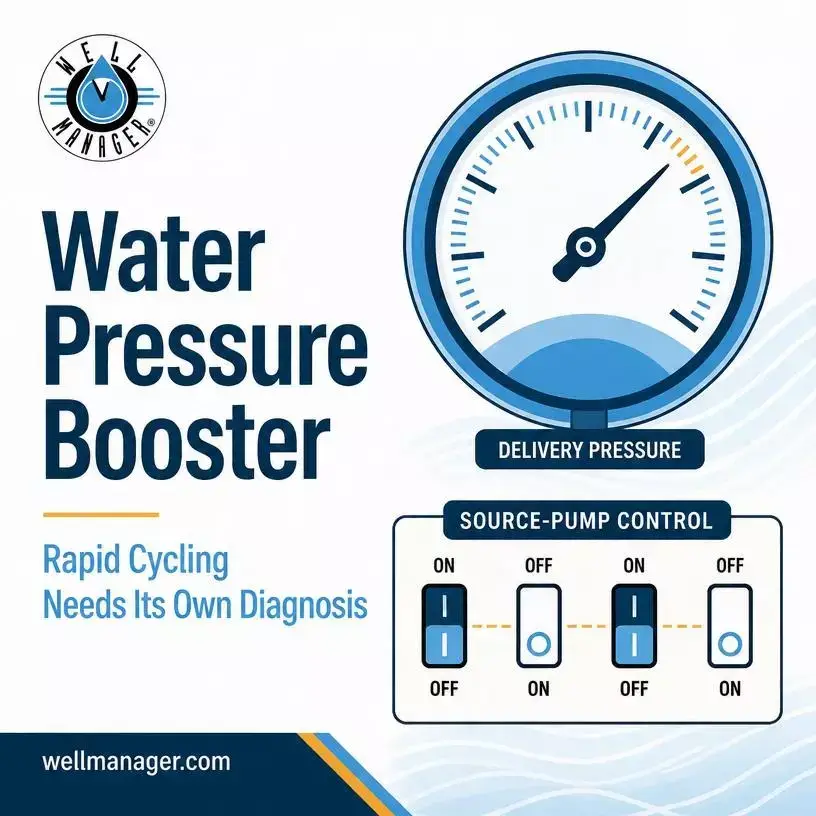
A water pressure booster improves delivery pressure. It does not protect an upstream well pressure switch from rapid chatter. If your well pump rapidly turns on and off, have someone assess that behavior before buying a booster to address it. The equipment needs to match the problem you are trying to solve.
At Well Manager, we distinguish a pump-control problem from a water-availability problem. Short cycling typically points toward the pump, line, setup, or existing equipment. Dry running can indicate difficulty supplying water. Those observations lead to different next steps, even when a homeowner experiences them as part of the same frustrating water problem.
Separate Rapid Cycling From Running Without Water
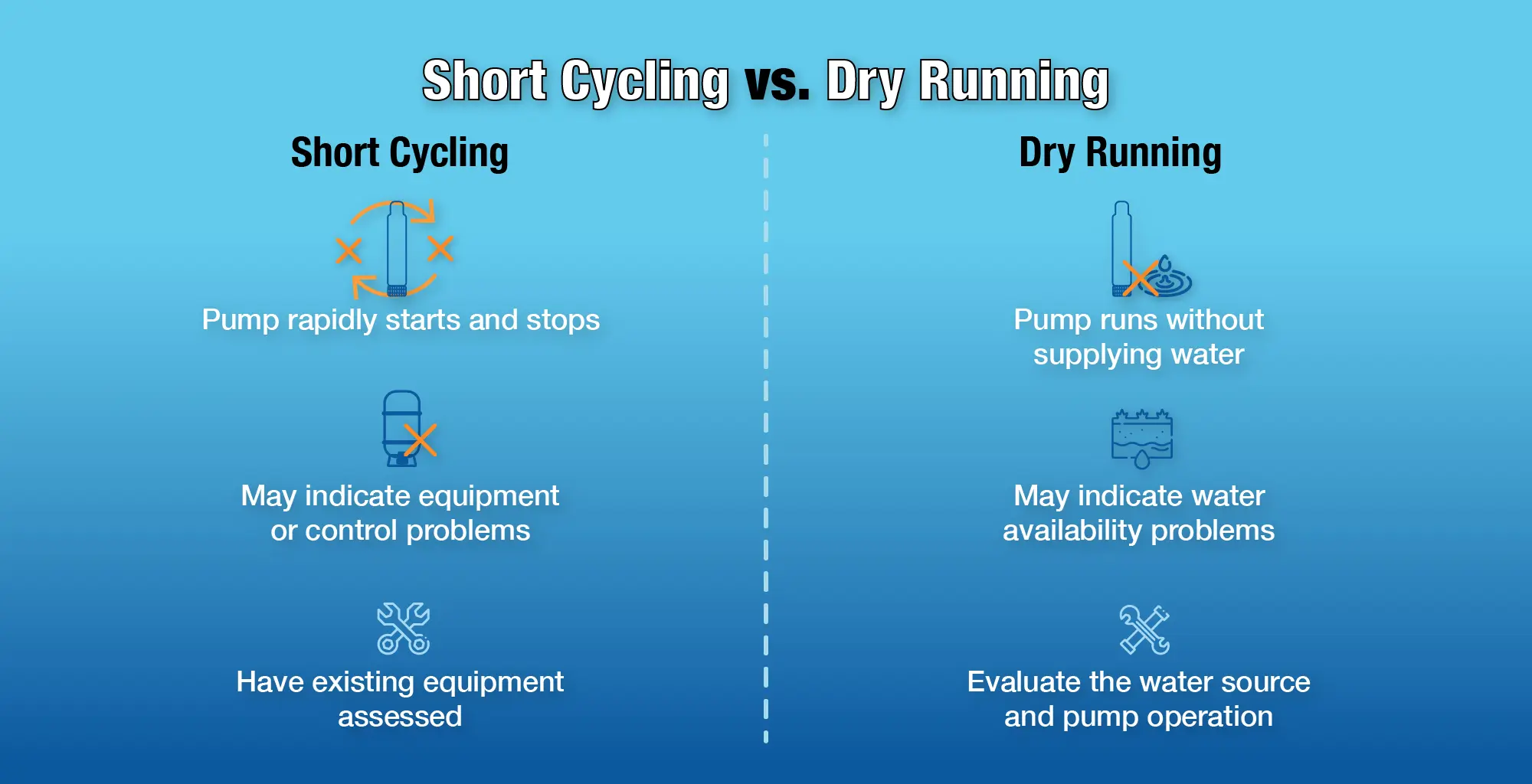
Short cycling means the pump starts and stops repeatedly and quickly. Noticing that a pump starts and stops isn’t enough to describe the concern. Tell the service professional whether the cycling is rapid and which pump you are observing. Our technical guidance treats short cycling as a reason to assess the existing equipment, rather than as proof of slow well recovery.
Dry running raises a different question: is the well supplying water to the pump? That observation can justify evaluating water availability and recovery, but it does not identify the cause by itself. Neither symptom is enough to select a storage capacity or order a system without assessing the application.
| Observed Symptom | Possible Meaning | What It Does Not Prove | Appropriate Next Step |
| Well pump rapidly starts and stops | A problem with the pump, line, controls, or existing equipment | That the well has low yield or that a booster will fix the cycling | Ask a well professional to assess the equipment; involve an electrician for electrical faults |
| Well pump runs without supplying water | A possible water-availability or recovery problem | The cause, required storage capacity, or correct system family | Have the source and pump operation assessed; discuss system selection if a supply problem is established |
Identify Which Equipment Controls the Well Pump
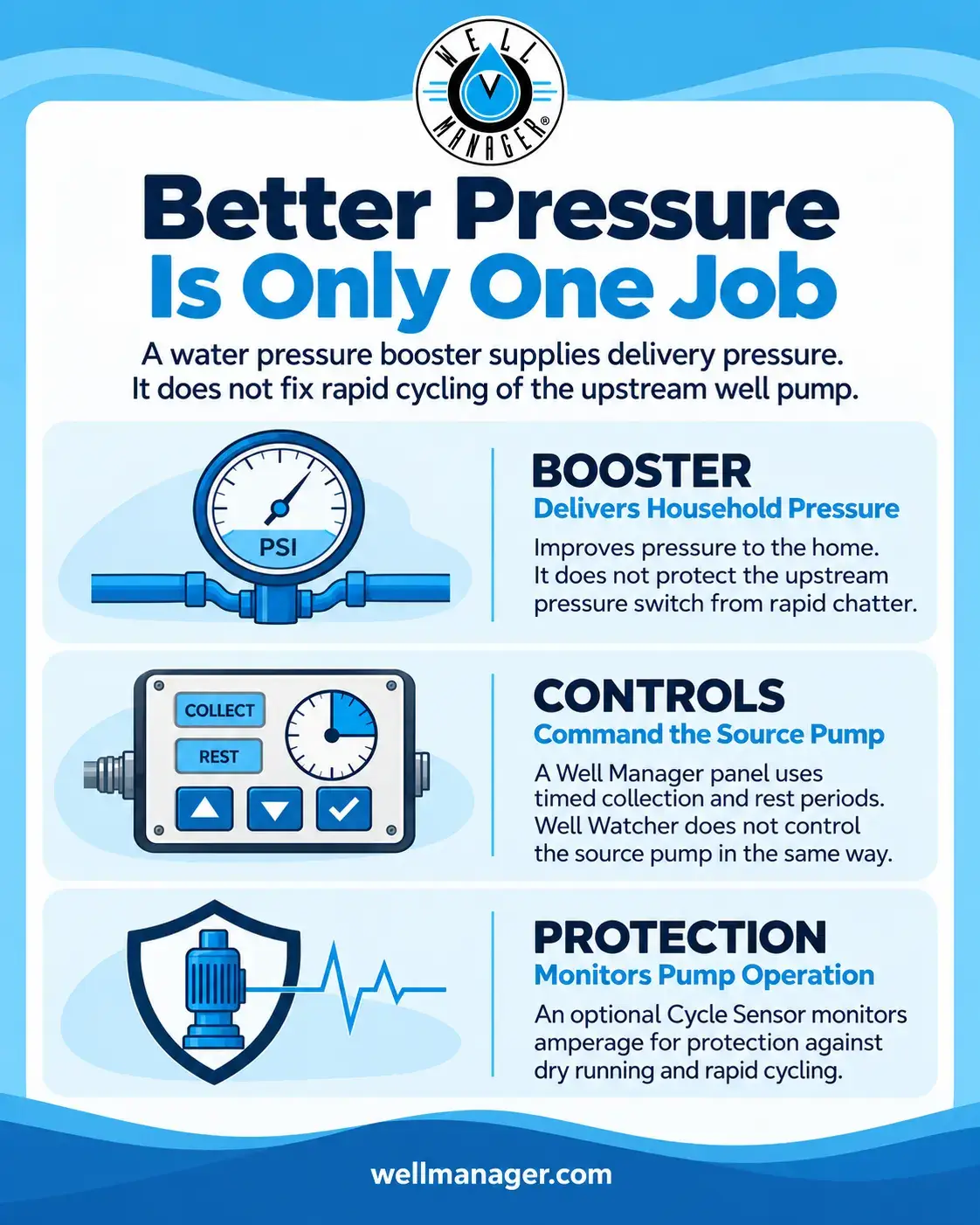
The booster and the source well pump perform different roles. The booster supplies delivery pressure. Adding one to a line does not make it responsible for correcting the upstream pressure switch’s rapid cycling. Therefore, evaluate its ability to improve pressure separately from the equipment fault.
The flagship Well Manager system changes the source-pump control arrangement. Its control panel replaces the pressure switch’s control role and runs the well pump through timed collection intervals and rest periods. That controls when the source pump operates; it is a different intervention from adding a booster while retaining the source controls.
This does not make the control panel a universal short-cycling repair. Existing equipment faults still need diagnosis, and the system must fit the source and household demand. Well Watcher does not take control of the source well pump in the same way. The system family matters because it determines which equipment commands that pump.
Where Optional Pump Protection Fits
We offer the Cycle Sensor module, manufactured by Cycle Stop Valves, as an add-on, particularly for Well Watcher systems. It monitors the well pump’s amperage to protect against dry running and rapid cycling. That monitoring role is separate from the booster’s pressure-delivery role.
When reviewing a proposed system, ask the supplier to identify each responsibility:
- Which component supplies household pressure? The answer should identify the booster and the delivery need it is intended to meet.
- Which component controls the source pump? Establish whether the existing pressure switch remains in control or a Well Manager panel takes over through timed collection and rest periods.
- Which component monitors the source pump for protection? If a Cycle Sensor is proposed, identify the pump it will monitor and the protection it provides.
These questions let you evaluate a recommendation by what the equipment does. A system may combine several functions, but a pressure booster alone does not answer the control and protection questions.
Give the Service Professional Useful Observations
You do not need to name the failed part before asking for help. Describe the behavior and the equipment you know about, so the professional can investigate the right part of the system.
- Separate the symptoms. Report rapid starts and stops, running without supplying water, or both at different times. Avoid describing every change as low pressure.
- Identify the pump. Distinguish the source well pump from a booster, and mention any Well Manager system or optional protection already installed.
- Explain the purpose of the visit. Say whether you need an existing fault diagnosed, a separate pressure problem assessed, or information for a new system recommendation.
External relay and electrical faults belong with a well professional or electrician. We discuss well-pump voltage, amperage, and available power when selecting our systems and pumps. That selection conversation does not replace diagnosis of an external electrical fault.
Choose the Next Step Before Choosing a Booster
For rapid short cycling, start by assessing the existing system. If that assessment also identifies a supply problem, discuss collection and storage separately. If it identifies a need for better delivery pressure, our booster pump options can help you review equipment for that role.
Contact Well Manager about system selection once you can describe your existing equipment, the assessment findings, and the household’s needs. A water pressure booster belongs in a recommendation for improved delivery pressure; the cycling problem needs the controls, protection, or service work appropriate to its cause.