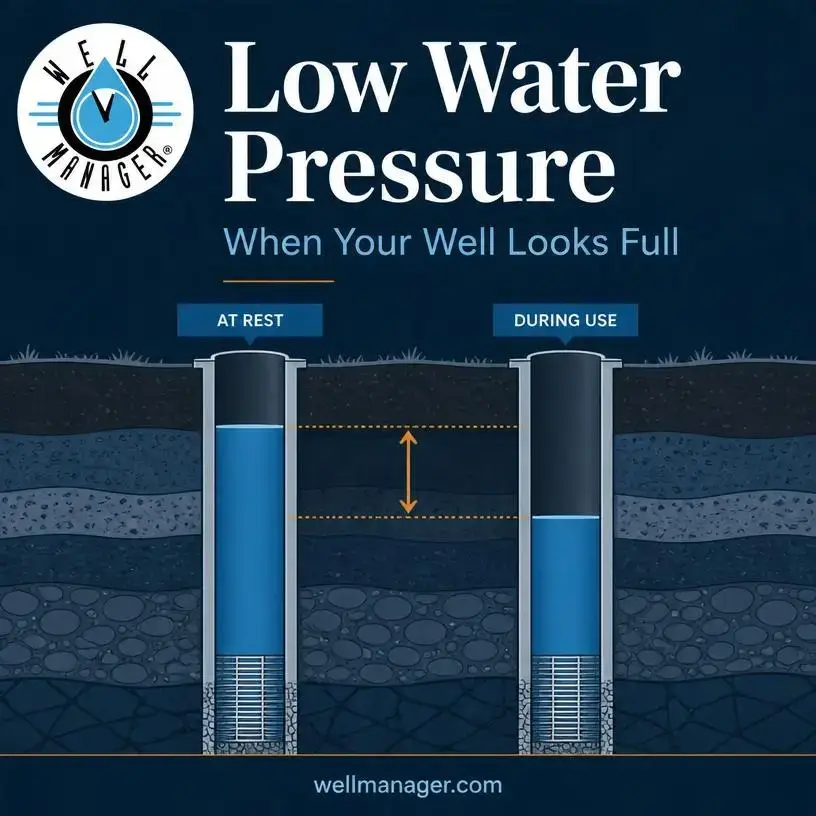
A reassuring water level on a well report can be difficult to reconcile with low water pressure or water that runs out during use. The missing information may be what happens after pumping begins and how quickly the well recovers. Water present after a rest and water replenished during household use answer different questions.
A low water pressure well is not necessarily a slow-recovering well. This distinction is especially useful when the household also runs out of water as it uses it. Our customer Gene experienced that pattern: his well held water after a rest, but it couldn’t replace water as quickly as his household consumed the accumulated supply.
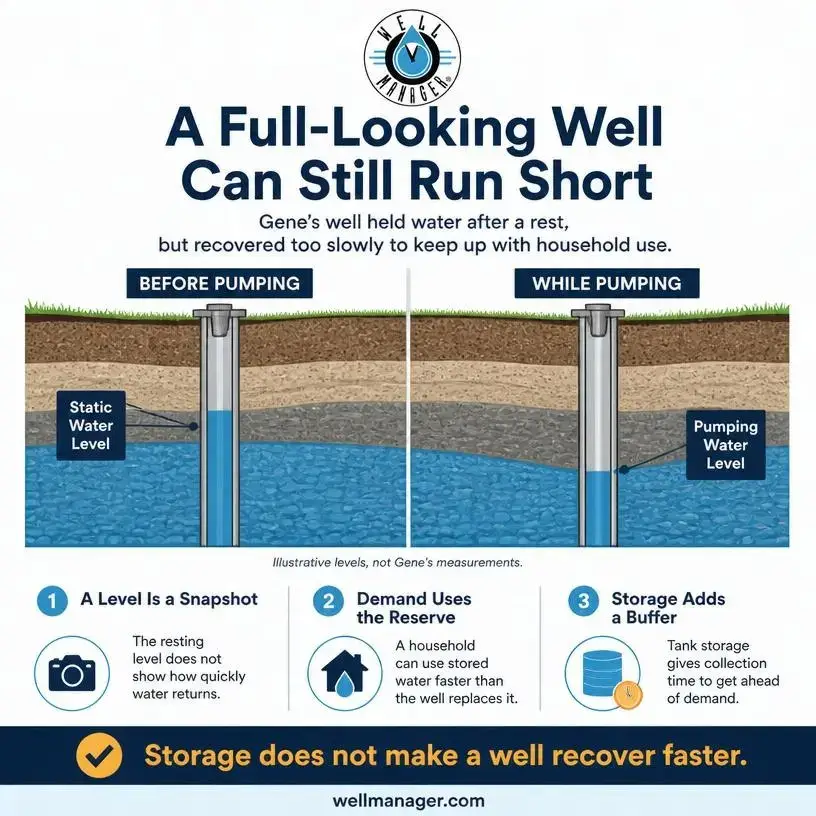
Gene Had Water After a Rest but Ran Short During Use
Gene had a strong static water level and a slow-recovering well. If nobody used the well for a day or so, water accumulated. Once regular use resumed, the household could consume that supply quickly and frequently experienced loss of water.
The resting level was not a false reading. It described the water present after the well had time to recover. The difficulty appeared when the household drew that water faster than the well could replace it. That is why we look at the pattern of use alongside the measurements rather than dismissing either one.
After installing a Well Manager system, additional storage provided a buffer between collection and demand. Gene allowed the tanks to fill before heavy use, giving the well time to recover while water accumulated in storage. He attributed the improvement to that separation; it was not evidence that the well itself was recovering faster.
What to Measure in a Low Water Pressure Well
The Arizona Department of Water Resources distinguishes these measurements in its groundwater records. Static level describes the pre-pumping condition; the production, or pumping, level records the water level while the well is discharging. Read the labels before treating two numbers as interchangeable.
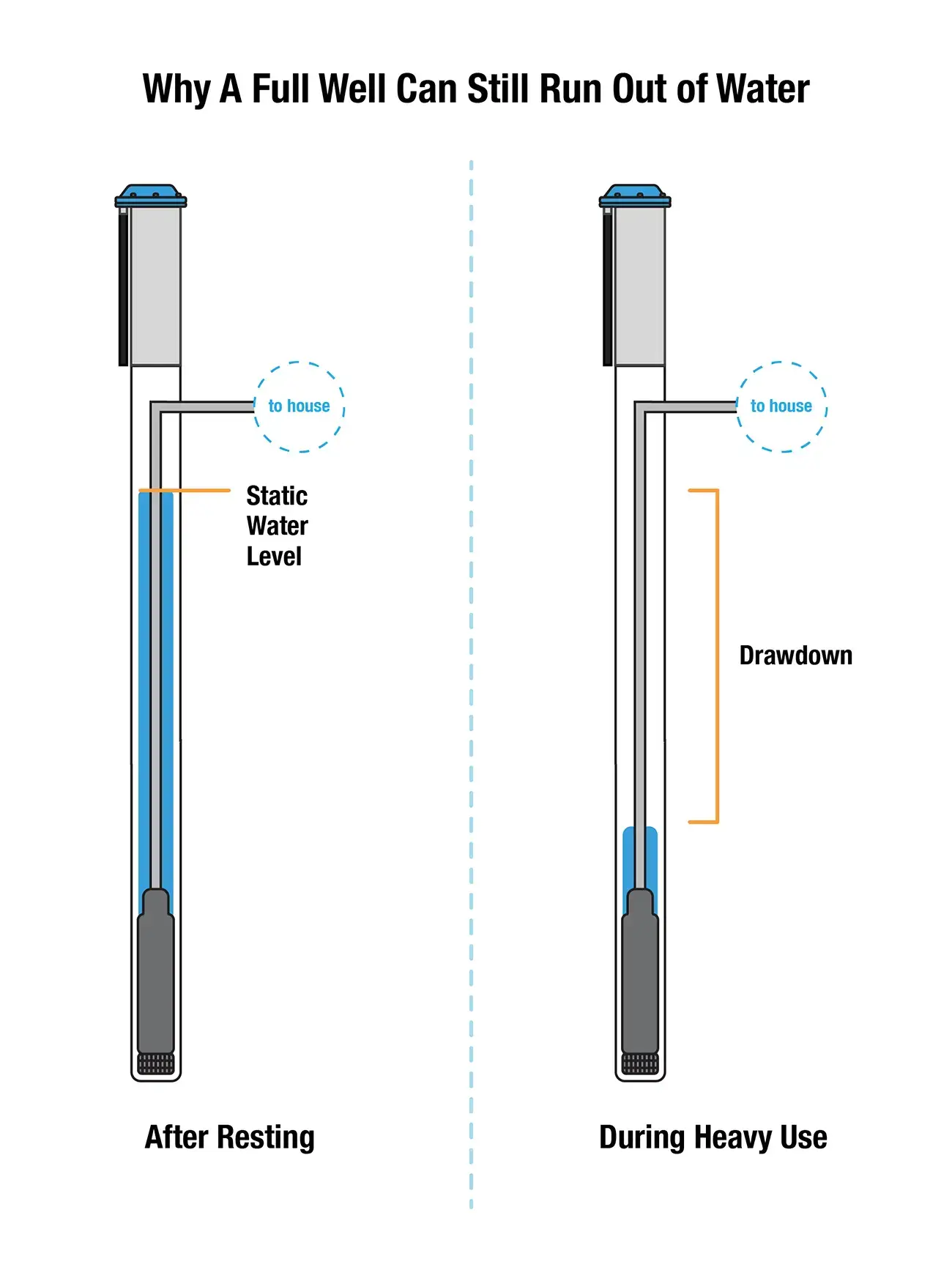
- Static water level is the level before pumping.If the record is measured in feet below land surface, it tells you how far down the water is at that time.
- Pumping water level is the level while water is being pumped. Read it with the reported pumping rate and how long the well has been pumping.
- Drawdown is the drop between the static and pumping levels. It describes a change in level, rather than the amount of water stored in gallons.
For a simple example, suppose a report gives a static level of 60 feet below land surface and a pumping level of 90 feet below that same surface. The water level has fallen 30 feet. The larger depth number means the water is farther down the well. These example numbers are not Gene’s measurements.
A Level Measurement Does Not Set the Storage Capacity
At Well Manager, static-level information helps us assess how much water could sit above the pump intake. Calculating that volume also requires well dimensions and the pump’s position; a depth reading alone isn’t a capacity figure. We use available well information and a water-volume calculator to help evaluate that stored supply.
Recovery adds the time component. A well may hold a useful reserve after inactivity but take a long time to replenish once used. For Gene, the important comparison was the household’s frequent use against the slow return of water. A favorable resting level alone could not answer that question.
Our system selection follows those separate roles. Well recovery helps determine the system family. In-well storage information can affect how much additional storage you need, while household demand also informs tank capacity and pump selection. One measurement should not be asked to make all three decisions.
What Additional Storage Changed for Gene
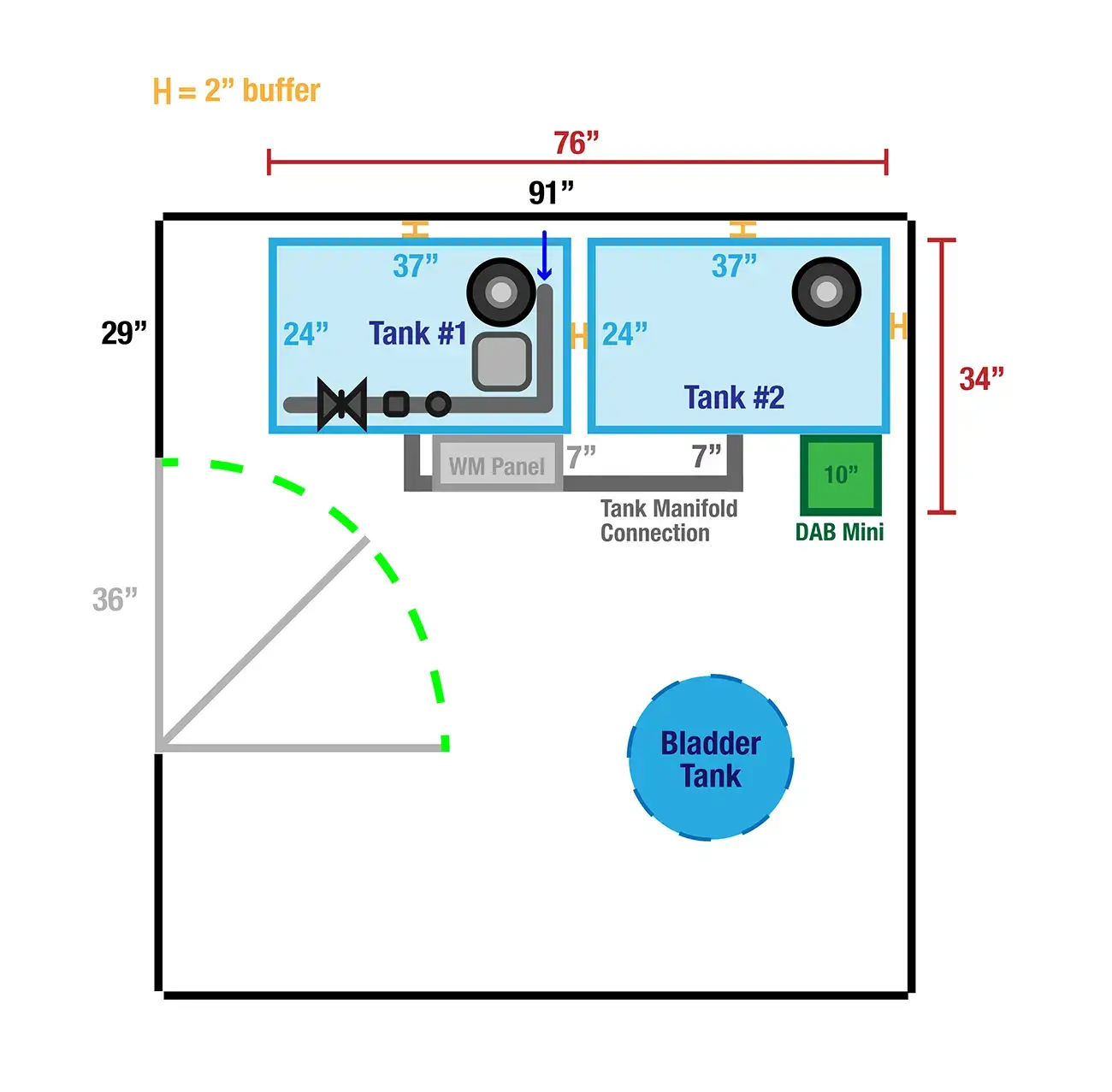
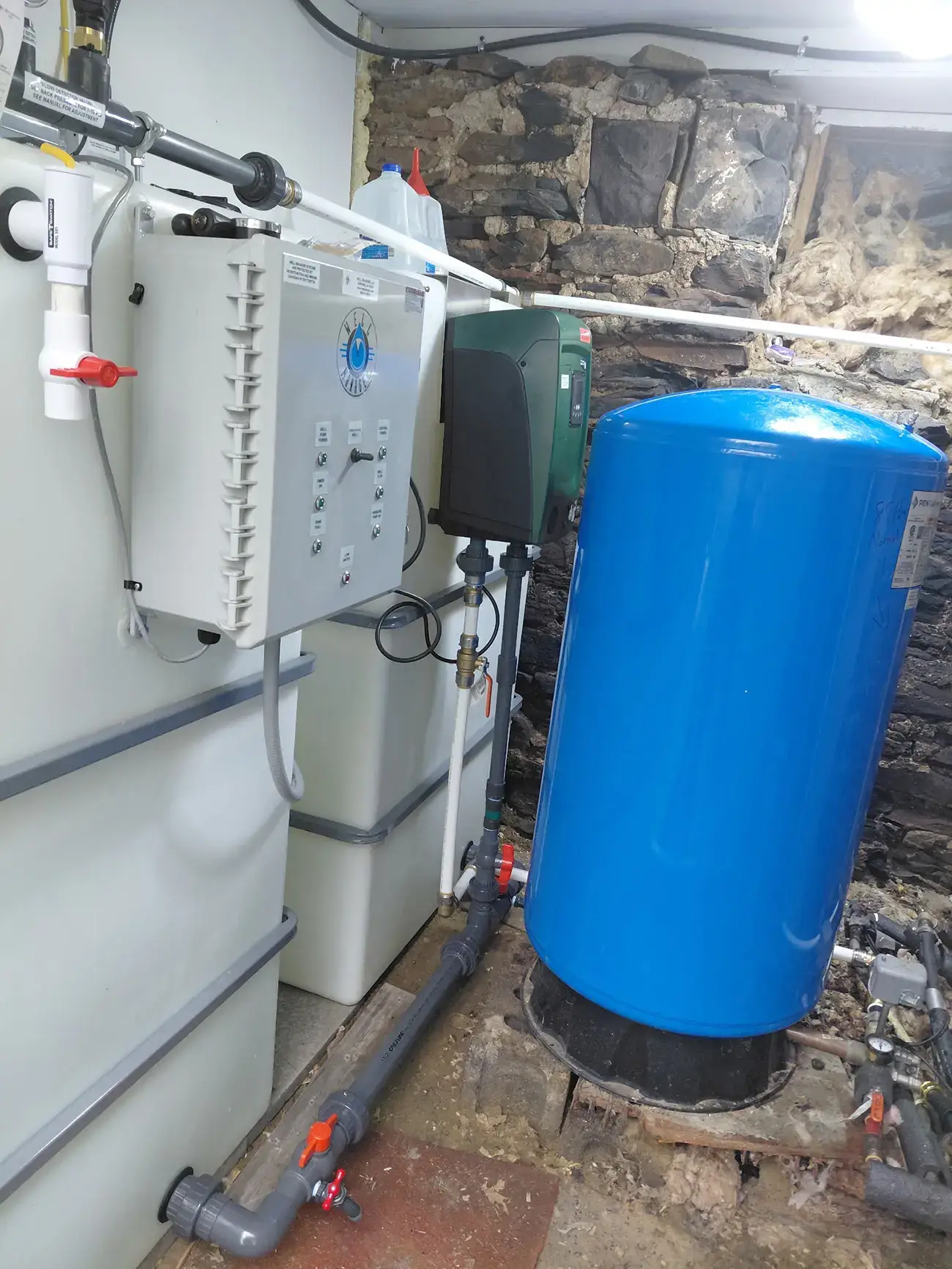
Our main complete system families use atmospheric storage tanks to collect available water and hold it for later household use. In Gene’s case, the tanks gave collection time to get ahead of demand. The household had a stored supply to draw on after the system filled.
That benefit has a boundary: additional tank capacity does not establish that a well can supply any requested amount of water. We still need to understand the source and how the household uses it. The practical question is whether the collection arrangement and stored volume can accommodate that pattern.
Bring the Measurements and the Pattern of Use
To discuss a similar problem, gather the records you already have and describe what happens at home. Identify missing information during the conversation; don’t fill it in with assumptions.
- Bring the well report.Include available static and pumping levels, casing diameter, pump depth, yield, and recovery information. Keep measurement dates and test conditions with the figures.
- Describe what changes after a rest.Explain whether water becomes available after inactivity, then runs short when regular use resumes. Distinguish loss of water from reduced pressure.
- Explain the household demand.Include fixtures, treatment, irrigation, and periods of frequent use so storage and pump selection reflect the property.
If you need to establish yield and recovery, a local well technician can perform the relevant testing. We do not have field technicians. Our role is to use the available information to relate the water source, the proposed system, and the household’s needs.
Discuss your well information with Well Manager if low water pressure is accompanied by the kind of shortages Gene experienced. A useful starting point is how the well performs during use and recovery, not whether a single resting measurement looks reassuring.