Low water pressure can make a well homeowner doubt the entire system. A shower weakens, a toilet starts filling, the washing machine opens its valve, and suddenly the house seems to be negotiating over limited water. The unsettling part isn’t just the weak stream; it is not knowing whether the well is failing or a repair is hiding closer to the house. That uncertainty is why installing a larger pump or turning up the pressure can feel decisive while solving the wrong problem.
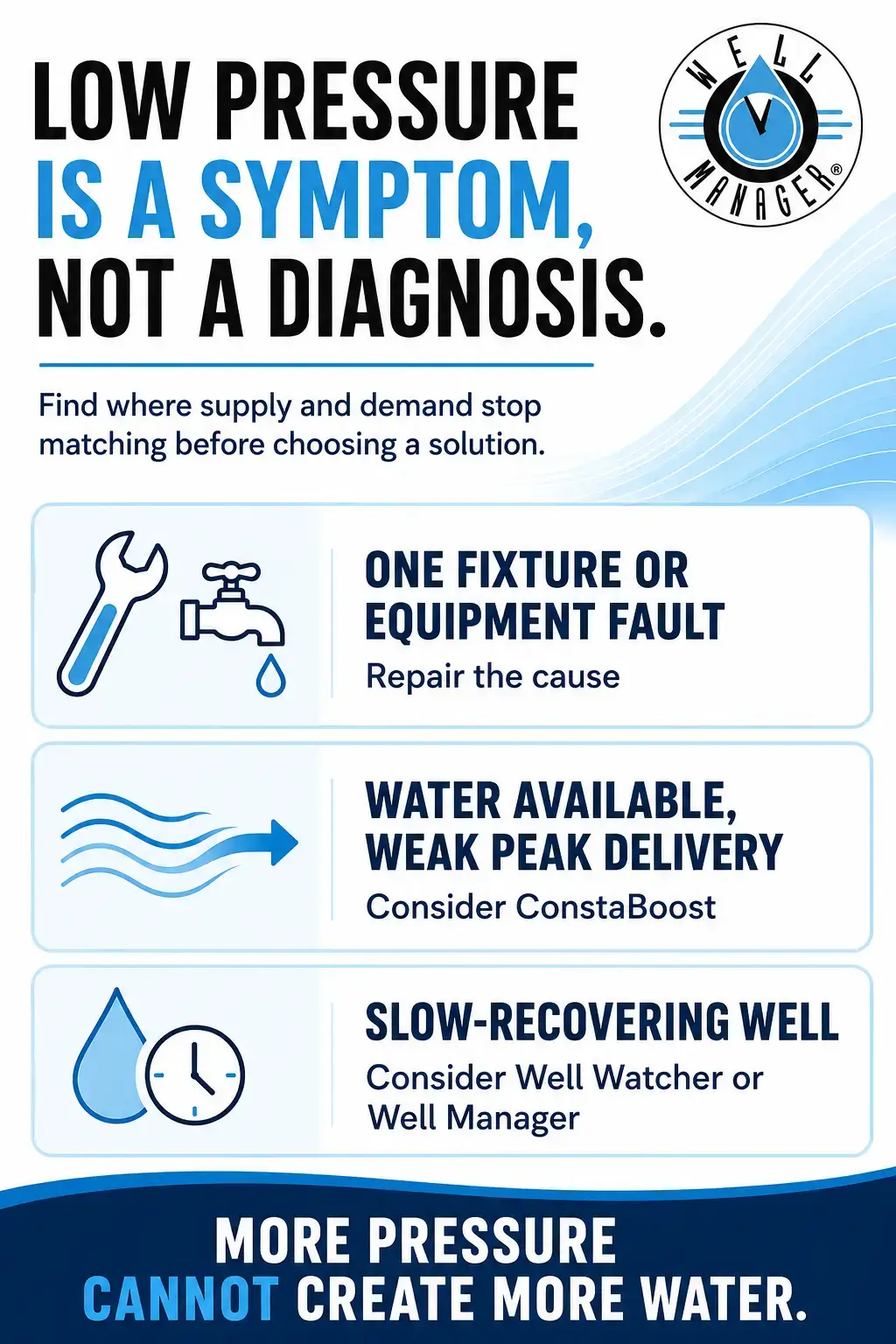
Treat water pressure as a symptom, not a diagnosis. The problem may be limited to one fixture, caused by a restriction or failing component, created by household demand exceeding the system’s delivery capacity, or connected to a well that cannot recover quickly enough. To increase pressure, start by identifying where the system stops keeping up. More pressure doesn’t create more water, and you shouldn’t choose new equipment until you’ve evaluated pressure delivery and water availability separately. A water pressure booster pump can solve the problem only when the home has enough water available but cannot deliver it at the pressure and flow the household needs.
Start With the Pattern, Not the Pressure Setting
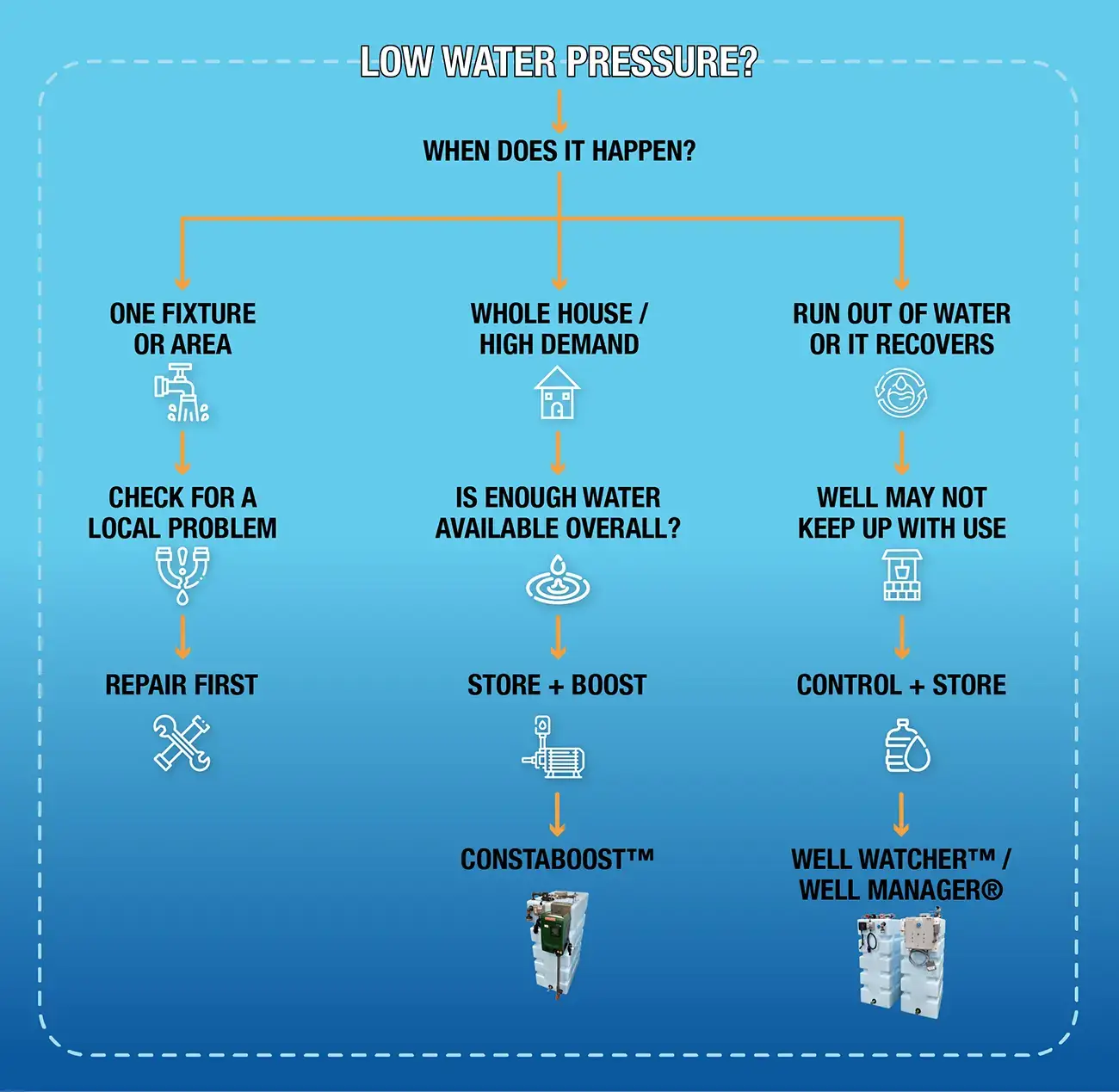
The timing and location of pressure loss often reveal more than one gauge reading. At Well Manager, we first ask when the problem appears and what else is using water. One weak faucet differs from pressure that falls when two showers run. Treatment backwashing also differs from a well that runs out seasonally and recovers hours later.
The first useful observations include:
- One fixture, one area, or the entire house
- A toilet, appliance, or outdoor use that triggers the change
- Several fixtures operating together
- Filtration or treatment equipment backwashing
- Complete loss of water, even temporarily
- Seasonal or dry-weather changes
- Dirt or sand in the water
- Known well depth, yield, and service history
These details separate pressure, flow, and well yield. The pump moves water, the pressure tank provides a reserve, and the pressure switch controls pump operation. A fixture can have poor flow even when water is available, while a house can show acceptable pressure at rest and weaken as demand increases. Well yield is the sustainable rate at which water can be drawn from the well. The correct fix depends on whether water is restricted, delivered poorly, or produced too slowly for demand.
Match the Pressure Pattern to the Right Next Step
The same complaint can come from different failures. The problem may be local, mechanical, demand-related, or at the source. That distinction separates repairs, boosting from stored water, and controlled well collection. It prevents a larger pump or a higher setting from concealing the cause.
| What is happening | What it may indicate | Best next step |
| Weak flow at one fixture | Clogged aerator, fixture valve or local restriction | Inspect and repair that fixture before changing the well system |
| Weak pressure throughout the house | Filter, valve, treatment, plumbing, tank, switch or pump problem | Test the existing system and repair confirmed faults |
| Pressure falls when several uses overlap | Demand exceeds delivery, storage or well production | Compare peak demand with source flow, storage and yield |
| The home runs out of water and later recovers | The well may not be keeping pace with use | Measure well yield and recovery before selecting equipment |
| The problem is seasonal or accompanied by sand or dirt | Changing well conditions or a source problem may be involved | Bring in a qualified well professional for evaluation |
Some Pressure Problems Do Not Need a Water Pressure Booster Pump
A whole-house storage or booster system is not appropriate when the problem is a clogged fixture, restricted filter, partially closed valve, leak, or failing component. A pump or pressure equipment fault can also resemble inadequate supply. These possibilities should be ruled out first. A professional may need to test the pump, tank, switch, plumbing, and treatment equipment. Turning up a switch or installing a larger pump is not a reliable shortcut because one change affects the rest. Electrical work, pump adjustments, and major plumbing changes belong with a qualified professional. When a repair explains the pressure loss, neither ConstaBoost nor a Well Manager system may be necessary. The goal is dependable delivery within the system’s actual capacity, not the highest pressure number.
When Water Is Available, but the House Cannot Receive Enough at Once
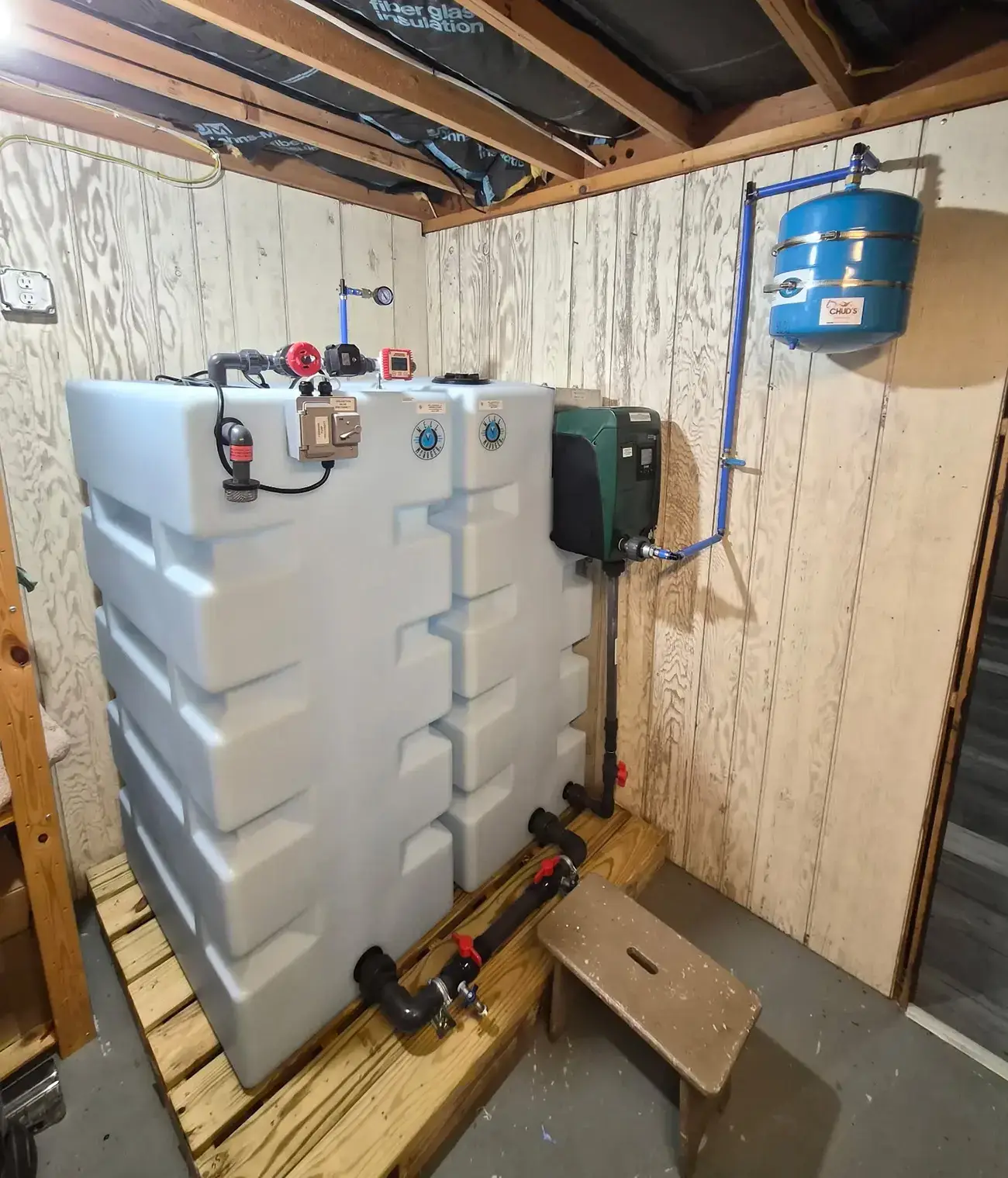
A productive well can supply enough water overall while the home still struggles during showers, irrigation, laundry, or treatment backwashing. The shortage exists at the moment of demand rather than across the entire day. ConstaBoost collects water at a fixed rate, stores it, and uses a properly sized water pressure booster pump to deliver consistent household pressure. The existing well equipment continues operating normally while storage creates a buffer between incoming flow and household use. Several fixtures can draw from that reserve instead of depending on what the line delivers at that second. The system therefore makes stored water available during peak demand rather than merely raising a pressure setting.
ConstaBoost requires a source that can refill its storage. It cannot make a slow well recover faster or control it through adjustable run-and-rest cycles. Household size, treatment, and major demands affect storage and pump selection. Recommendations depend on incoming supply and peak use.
When the Well Needs Time to Recover
A single universal gallons-per-minute threshold doesn’t define a low-yield well. The practical issue is whether the well can meet the home’s peak demand. A well may produce enough water across the day yet fall behind when showers, toilets, laundry, and sinks overlap. Supplemental storage can help when total daily production is sufficient, but the well cannot supply water as quickly as the household sometimes uses it. That is a supply-and-timing problem, not simply a low pressure setting.
Controlled collection matters when the well recovers slowly, changes seasonally, or has left the home without water. A Well Watcher collects at an adjustable rate, works with the existing pressure tank and stores water for pressurized delivery. The full Well Manager system replaces pressure-based well control with timed collection, adjustable run-and-rest periods and flow monitoring. The right system depends on recovery, household demand, existing equipment, and the control required. Both separate collection from immediate household use, but neither creates water. A household cannot continually use more water than its well produces.
One New Jersey homeowner sometimes turned on a faucet and found no water. He had been quoted approximately $30,000 to $40,000 for a new or deeper well. We first evaluated how to collect, store, and deliver his existing supply. He installed a single-tank Well Watcher with a booster pump and pump-protection controls. The system continued using the well while providing stored water and reliable pressurized delivery. This doesn’t mean every well can avoid drilling, but it shows why the existing source deserves evaluation before an expensive decision.
What We Need to Recommend the Right Response
Pressure complaints rarely arrive with every measurement available. A recommendation begins with the household’s experience and known well information. Those details separate repairs, delivery problems, and limited recovery. They also help storage, pump selection, and layout reflect actual use.
The most helpful information includes:
- The pressure or supply problem and when it occurs
- Known well yield and depth
- The number of residents and bathrooms
- Existing pumps, tanks, and controls
- Filtration, softening or other treatment equipment
- Irrigation, livestock or other major demands
- Photographs of the equipment and proposed installation area
Our team reviews those details before recommending a system. An uncertain cause may require equipment inspection or well testing first. Once we know the cause, we can recommend storage, a pump, and a layout instead of adding equipment to a symptom. The homeowner then has a clear reason for choosing ConstaBoost, Well Watcher, the full Well Manager system, or no new system.
Increase Pressure by Solving the Correct Problem
Reliable well water starts with finding where supply and demand stop matching. A fixture or equipment fault should be repaired, a home with adequate water but weak delivery during peak use may benefit from ConstaBoost, and a slow-recovering well may require adjustable or timed collection with storage. No storage system turns a private well into an unlimited municipal supply, but the right design can use the water the well produces far more effectively. Contact Well Manager with your symptoms, known well information, and equipment photos so we can help determine the most responsible next step.