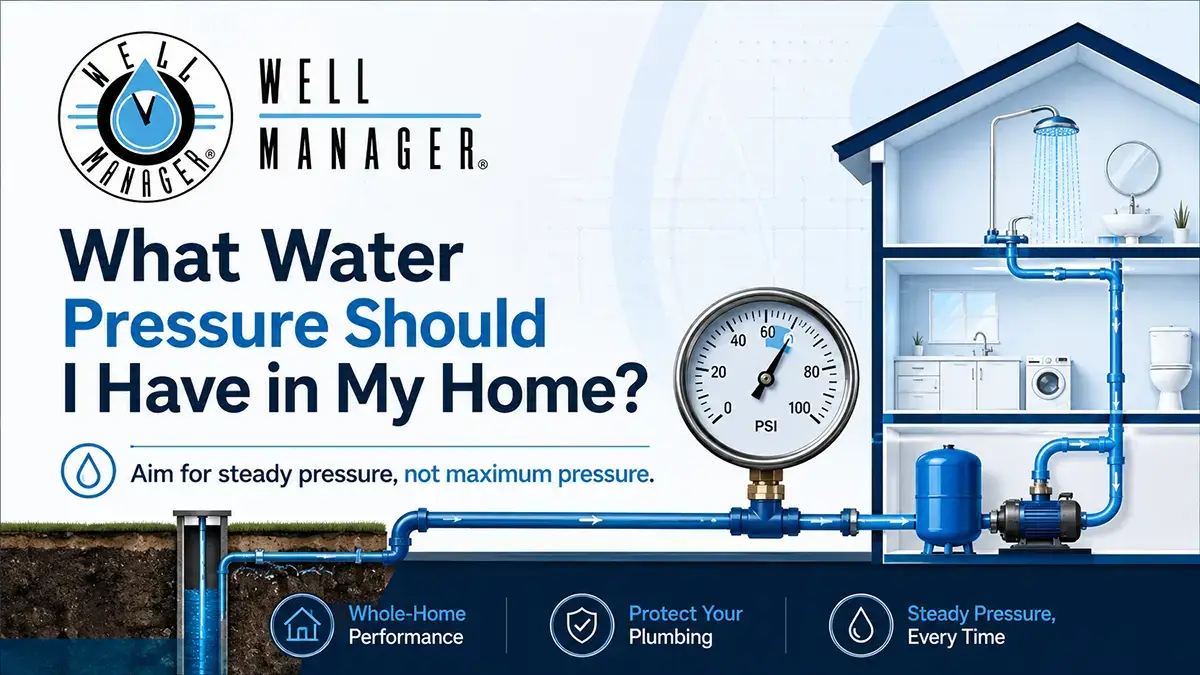
Most homes feel comfortable when incoming water pressure stays between 45 and 60 pounds per square inch.1 Within that range, showers usually feel steady, appliances fill at a reasonable pace, and faucets work without placing unnecessary stress on the plumbing. When pressure falls below that range, a water pressure booster might help, but only after the cause of weak pressure has been identified.
Well Manager LLC takes a controlled-pressure approach. The goal is not to create the highest pressure possible. The goal is to provide dependable water throughout the home by matching the solution to the source of the problem. In some homes, the answer involves pressure support. In others, it involves water storage, low-yield well management, plumbing repair, or a combination of fixes.
Steady Pressure Matters More Than Maximum Pressure
A pressure reading matters, but it does not tell the whole story. Homeowners notice pressure through normal use. A good system should allow someone to take a shower without the spray collapsing when a toilet flushes, a washing machine starts, or another fixture opens elsewhere in the home.
More pressure is not always better. Residential plumbing should not operate above 80 psi without proper pressure regulation. At that level, fixtures, valves, supply lines, water heaters, and appliances are under more stress than they should be.2
This is why the right target is controlled pressure, not maximum pressure. A well-matched system keeps water useful at the fixtures without pushing the plumbing beyond safe operating limits.
Test Static Pressure and Flowing Pressure
A basic pressure gauge attached to an outdoor hose connection gives you a useful starting point. Take one reading when no water is running. Then watch what happens when someone opens a shower, sink, or other fixture.
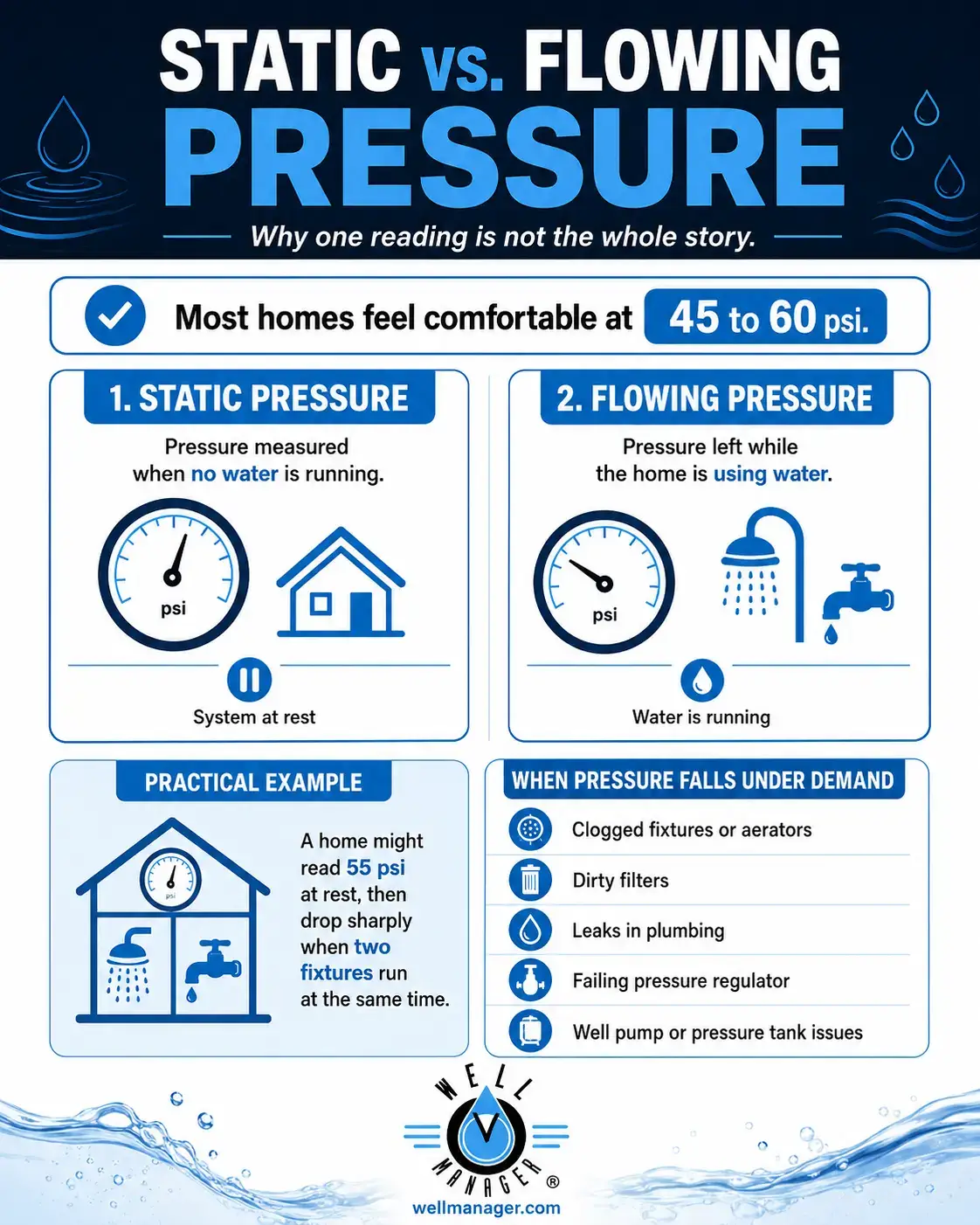
This comparison separates two different measurements:
- Static pressure is the pressure measured when water is not moving.
- Flowing pressure is the pressure left while the household is using water.
A home might show 55 psi at rest, and then drop sharply when two fixtures run simultaneously. In that case, the first reading looks normal, but the complaint is still real. The system has pressure at rest, but it does not hold enough pressure during demand.
Low Pressure and Low Flow Are Different Problems
Before adding equipment, it helps to know whether the home has a pressure problem, a flow problem, or both. Pressure is the force moving water through the system. Flow is the amount of water reaching a fixture over time.
If a showerhead is clogged, the water feels weak even when the home’s pressure is normal. Raising pressure across the whole house would not remove the restriction. It would only add stress to the plumbing without solving the real problem.
The reverse also happens. A fixture might have enough available water, but the system does not maintain enough pressure to deliver it well. That is why weak water at the tap should lead to inspection before equipment selection.
Start with the common restrictions first:
- Clogged aerators or showerheads
- Dirty sediment filters
- Partially closed shutoff valves
- Aging or undersized supply lines
- Leaks inside or outside the home
- A failing pressure regulator
- Problems with the well pump or pressure tank
This step keeps you from buying a water pressure booster for a problem caused by a blockage, a valve, a leak, a filter, or a failing component.
Pressure Drops during Busy Use Point to a Demand Problem
Many homes seem fine until the household gets busy. A shower works well when no one else is using water, and then weakens when the washing machine, dishwasher, or another shower starts. When pressure drops during normal simultaneous use, the system is struggling with demand.
The source might provide enough water over the full day, but not deliver it fast enough during a busy 20-minute period. A private well might recover slowly. A municipal line might have limited flow because of pipe size, distance from the main, elevation, or neighborhood pressure changes.
This is where storage often becomes part of the answer. Water collected in advance provides the system with a reserve to draw from during peak use. The pressure system then delivers water from the stored supply rather than relying entirely on the incoming source at that moment.
Private Wells Need a Closer Look at the Pressure Tank
Homes with private wells often use a pressure tank and switch set to operate within a pressure range. The pump starts when pressure reaches the lower setting and stops when pressure reaches the upper setting. Some pressure change during that cycle is normal.
Large swings, rapid cycling, short pump runs, or sudden pressure loss point to a deeper issue. The pressure tank might have the wrong air charge. The bladder might be failing. The pump, switch, wiring, or controls might also need service.
The well’s production rate matters too. Low pressure does not always indicate a low-yield well. Still, a well that does not replenish water fast enough will eventually create supply and pressure problems during heavier use. In those cases, adding pressure without managing available water will not solve the real issue.
Municipal Water Pressure Has Different Causes
Municipal water homes need a different kind of diagnosis. Weak or inconsistent pressure might come from elevation, distance from the main, a small service line, a partially closed valve, a pressure regulator problem, or changes in neighborhood demand. The right fix depends on where the pressure is being lost.
Ask the water provider what the typical pressure is in your neighborhood. Then compare that information with readings taken at the house. If pressure is adequate at the meter but weak inside, the restriction is likely on your side of the system.
High municipal pressure needs the opposite response. It should be reduced and controlled rather than increased. A plumber should inspect the pressure regulator and determine whether the home needs repair, replacement, or additional protection.
When ConstaBoost™ Fits the Problem
ConstaBoost™ is our option for homes that have sufficient available water but do not receive it at a steady, usable pressure. It works for private well homes and municipal water homes when the issue is delivery under demand. The system collects water at a controlled rate, stores it, and repressurizes it for whole-home use.
For example, a home might have enough total water available over the course of the day, but struggle when two showers, a washing machine, and a dishwasher run close together. In that situation, storage and controlled repressurization address the demand problem better than a simple inline pressure increase. The stored reserve gives the home more consistent delivery when use spikes.
ConstaBoost™ is not a substitute for fixing clogged pipes, leaks, damaged regulators, or failing well equipment. It also does not create unlimited water. Its role is to manage and deliver the available supply more effectively after the underlying conditions have been understood.
Match the Solution to What the House Is Telling You
The right water pressure solution starts with observation. Check whether pressure remains steady during normal use, how far it drops under demand, and whether the problem affects one fixture or the whole house. Then consider how water reaches the home and what equipment already controls it.
Depending on the cause, the right fix might include:
- Fixture repair
- A filter change
- Pressure tank adjustment
- Regulator repair or replacement
- A storage system
- A low-yield well solution
- A properly sized water pressure booster
If your home has enough available water but cannot deliver it consistently during normal use, a properly sized pressure system helps maintain the steady 45 to 60 psi range most homes need. The key is not adding pressure blindly. The key is matching the system to the actual problem so the home gets dependable water without unnecessary strain.