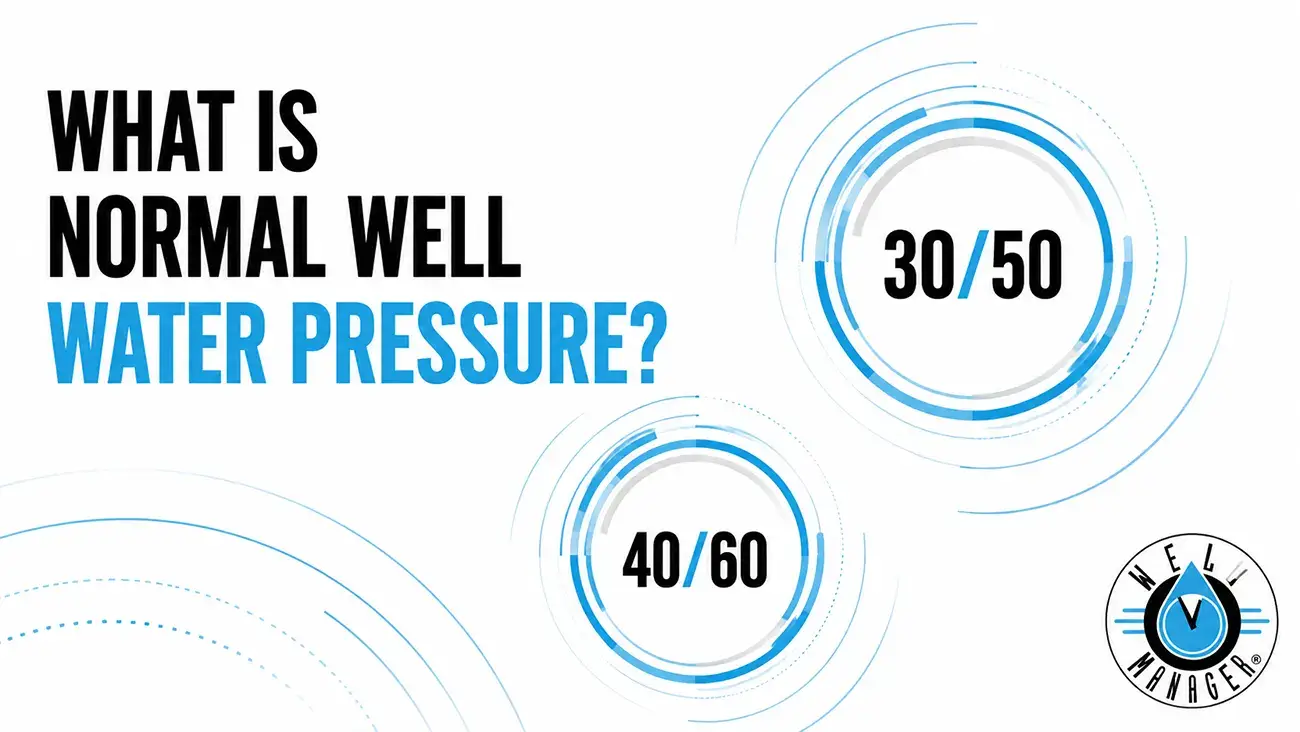
Normal water pressure for a house with a well is usually a range, not one fixed number. Conventional systems commonly operate on a 30/50 or 40/60 pressure cycle. A low water pressure well is not defined by the gauge momentarily reaching 30 or 40 PSI. What matters is whether the pump starts at the intended cut-in pressure, rebuilds the system, and reaches cutout.
If you are trying to diagnose a low water pressure well, watch the complete cycle. Reaching 30 PSI may be normal on a 30/50 system if the pump starts and pressure rises toward 50 PSI. Reaching 30 PSI and staying there after household water use stops points to a problem that needs further investigation.
What Do 30/50 and 40/60 Well Pressure Mean?
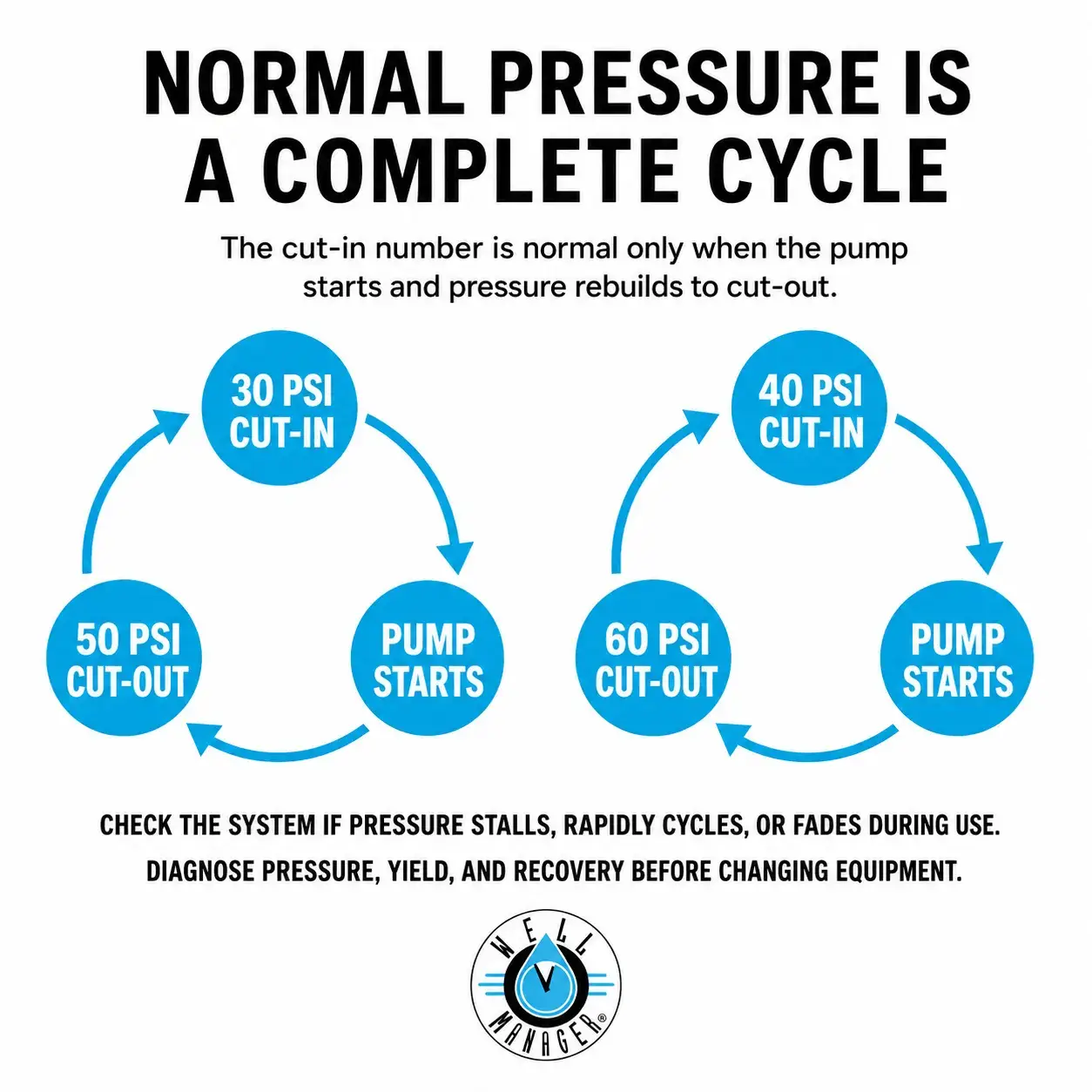
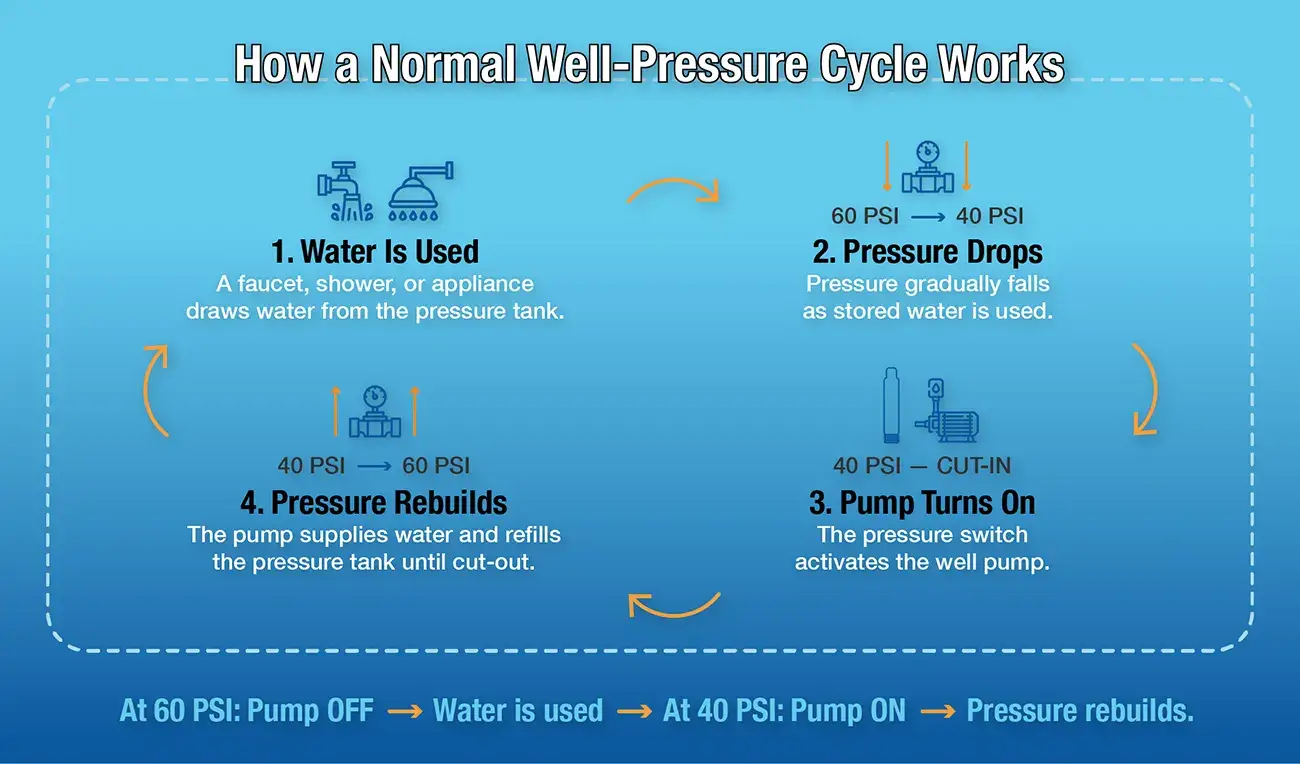
Clemson Cooperative Extension identifies 20/40, 30/50, and 40/60 PSI as common settings for conventional residential well systems. On a 30/50 system, the pump starts when pressure falls to about 30 PSI and stops when it rises to about 50 PSI. A 40/60 system follows the same process ten pounds higher.
Neither range is automatically correct for every house. An appropriate setting requires:
- A pump capable of building the required pressure
- A pressure tank configured to work with the switch
- Allowance for elevation, pipe friction, treatment equipment, plumbing ratings, and household demand
A professional should confirm the complete system can support a different range before changing settings.
How Normal Well-Pressure Cycle Works
A conventional pump-and-pressure-tank system moves through a predictable sequence.
- Water use begins. A faucet, shower, appliance, or other fixture draws water from the pressure tank.
- System pressure falls. Pressure moves from cut-out toward cut-in as usable tank drawdown is consumed.
- The pump starts. The pressure switch activates the well pump at the lower setting.
- Pressure rebuilds. The pump supplies active demand and refills the tank until the system reaches cut-out.
A shower can feel stronger near 50 or 60 PSI and softer as the system approaches 30 or 40 PSI. Normal cycling should still provide usable water without repeated surges, rapid pump starts, or a complete pressure collapse.
For a broader discussion of incoming service pressure and static versus flowing pressure, see our guide to normal water pressure in a home.
Is 30 PSI Normal or a Sign of Trouble?
Thirty PSI may be normal if the system uses a 30/50 switch and the pump starts at that point. If household demand is moderate and pressure then rises toward 50 PSI, the system may be completing an ordinary cycle.
A gauge that reaches 30 PSI and remains there tells a different story. Stop household water use and observe whether pressure rebuilds. If it rises, active demand may have exceeded the system’s delivery capacity. If it does not, a professional may need to examine the pump, switch, tank, leaks, restrictions, and available well water.
Before calling, record:
- The pressure at which the pump starts
- The highest pressure the system reaches
- Whether pressure rises after fixtures are closed
- The activities taking place when pressure stops recovering
- Whether performance improves after the system rests
Leave opening electrical controls, adjusting switch springs, or testing the pump to a qualified professional. The homeowner’s role is to document the pattern.
Which Pressure Behaviors Are Not Normal?
One gauge reading rarely identifies the failure. The sequence, duration, household demand, and system response provide information that is more useful. If only one fixture is weak, inspect that fixture and branch before treating the condition as a system-wide problem.
| What the homeowner observes | What it may indicate | What should be examined next |
| Pressure remains near cut-in after demand stops | Pump, control, leak, restriction, equipment, or source problem | Determine why pressure cannot rebuild |
| The pump repeatedly starts and stops | Lost tank drawdown, incorrect tank charge, leak, control trouble, or another cycling problem | Test the tank, switch, pump, and plumbing |
| Pressure starts normally but fades during sustained use | Pump-capacity, demand, restriction, yield, or recovery limitation | Compare system capacity with demand and well performance |
These patterns narrow the investigation without establishing a final diagnosis. Multiple problems can exist at the same time.
Is the Problem the Equipment or the Well?
Equipment problems can appear even when demand is low. The pump may fail to reach cutout, the tank may provide little usable drawdown, or the switch may cycle abnormally. Filters, valves, leaks, and restrictions can also reduce pressure.
A source limitation often becomes clearer during sustained use. The system may begin with acceptable pressure, then weaken after the pressure tank’s small reserve is consumed. Improvement after the well rests gives a professional a reason to examine yield, drawdown, recovery, and pump performance.
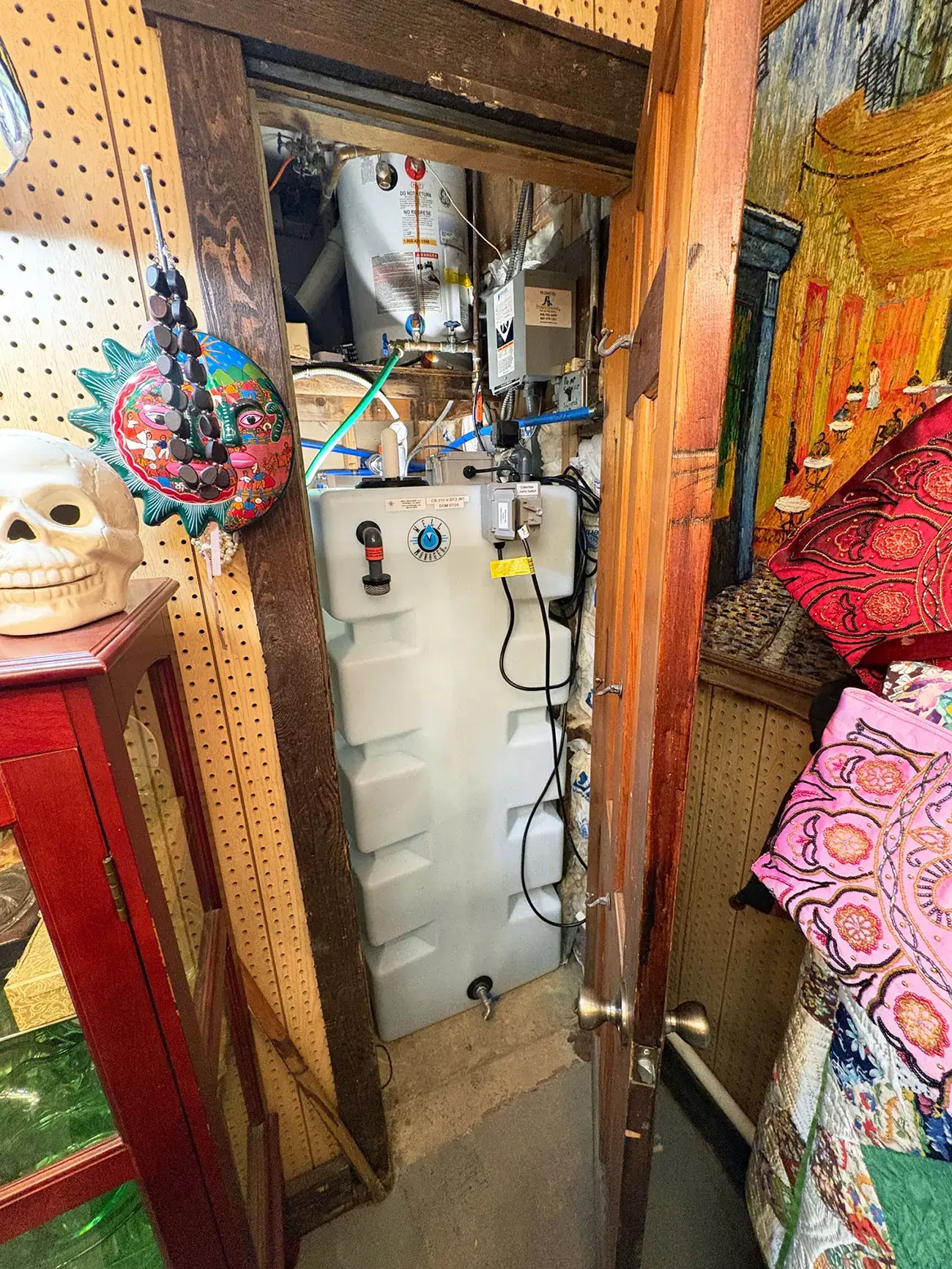
When homeowners call Well Manager, we examine four parts of the pattern: when pressure changes and whether the system reaches cut-out; which fixtures are running; what is known about yield, recovery, and seasonal behavior; and what pump, tank, filtration, controls, and storage are installed. These questions help separate pressure, delivery, and source-water availability before considering a solution.
Why a Larger Pump or Higher Setting Does Not Create More Water
A higher switch setting asks the pump to build more pressure. A larger pump may move water faster. Neither makes groundwater enter the well faster, and stronger equipment may consume a limited reserve sooner.
A larger pressure tank may improve drawdown and pump cycling, but it still provides limited storage. Pressure controls delivery; yield and recovery control source availability; storage changes when collected water is available.
Match the Correction to the Pressure Pattern
Testing may lead to different responses.
- Pressure-tank problem: Correct or replace the tank after confirming inadequate charge or drawdown.
- Pump, switch, leak, or restriction: Repair the affected component.
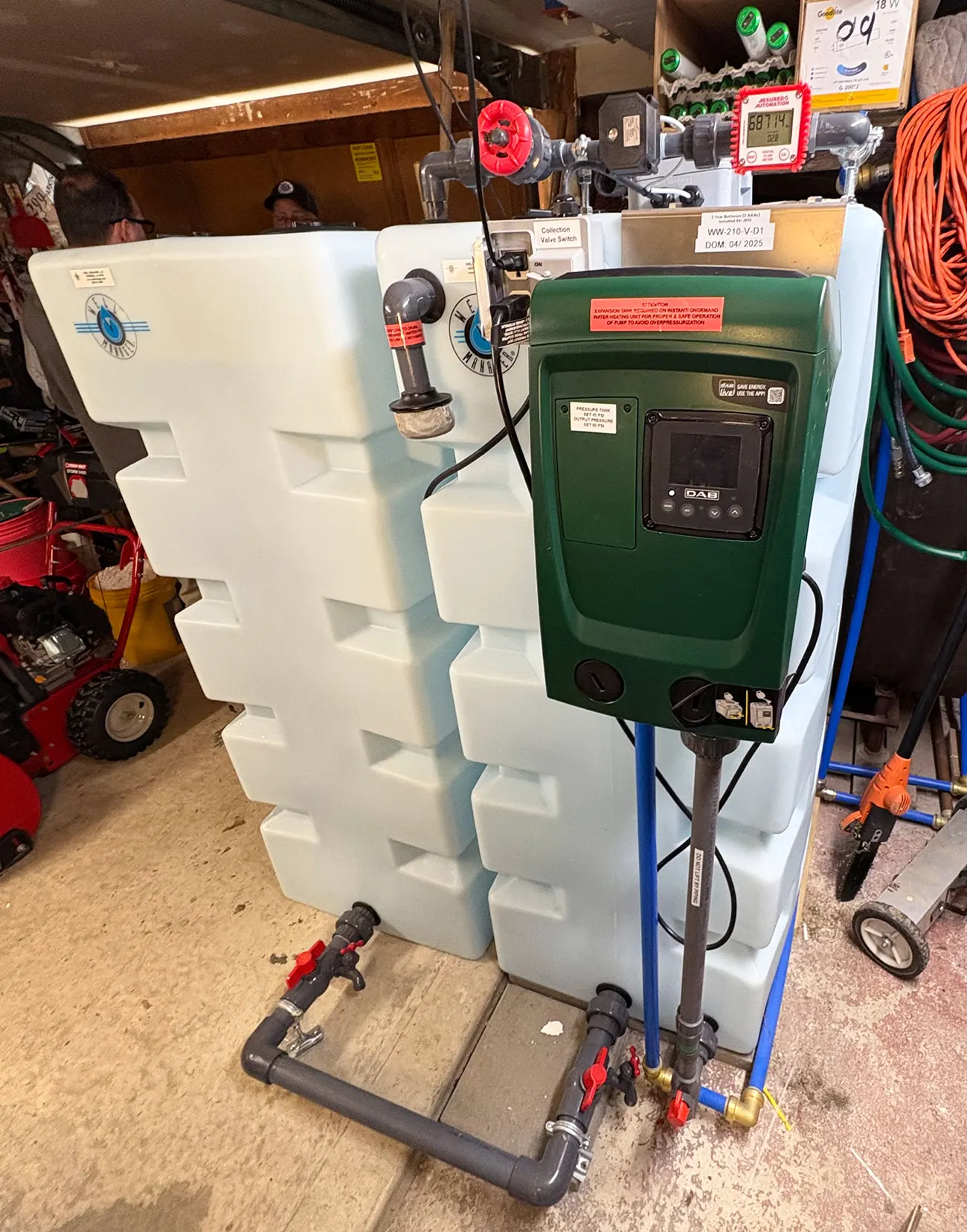
- Adequate supply with inconsistent delivery: Evaluate appropriate pressure support or ConstaBoost™.
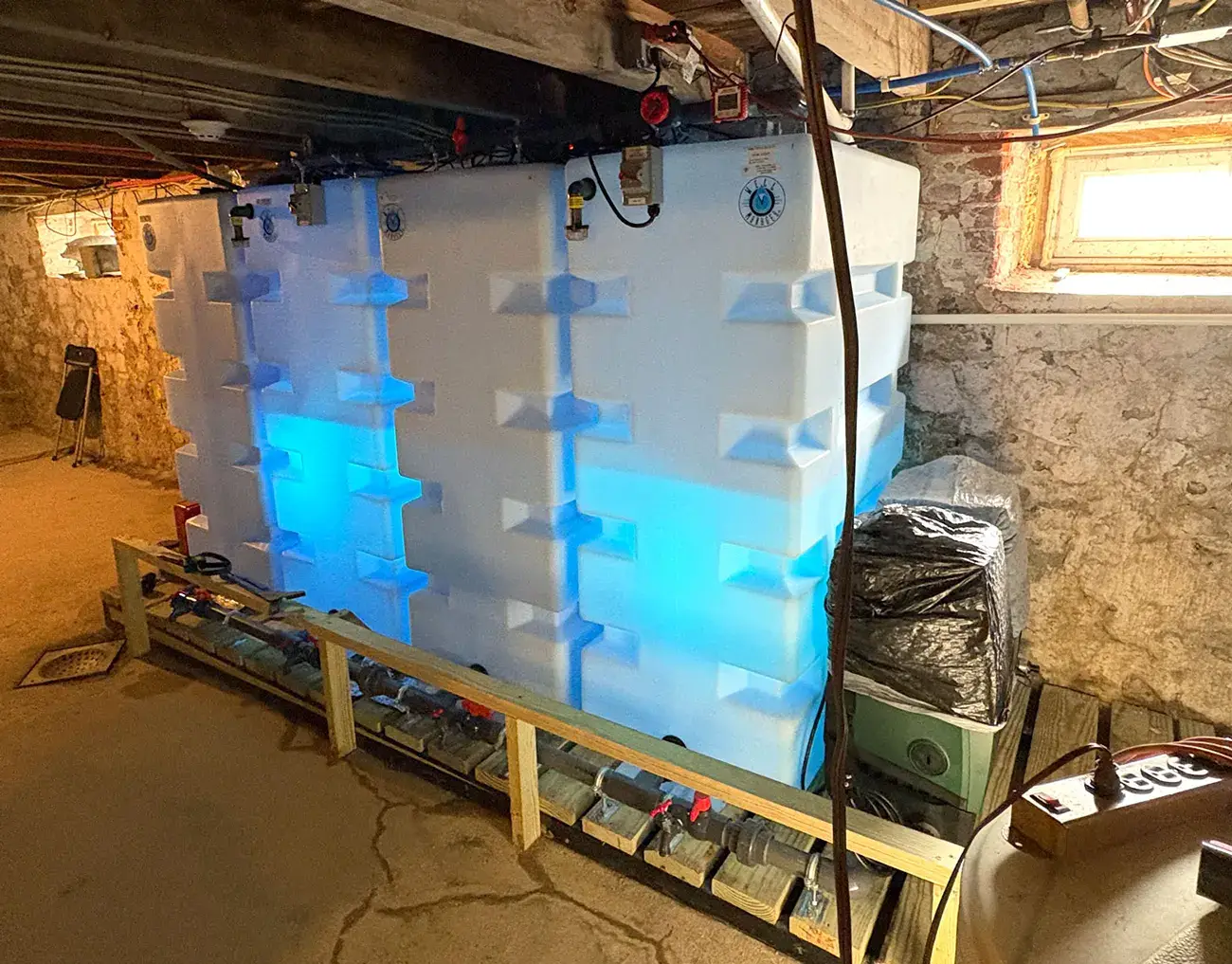
- Limited but usable well production: Consider controlled collection, storage, and repressurization.
- Contamination or structural well damage: Refer the problem to the appropriate treatment or well professional.
A recent yield test and realistic peak-demand calculation help determine whether controlled collection and storage fit the property.
Keep the Well Water Pressure Your Home Deserves
Normal well pressure is a complete operating cycle, not the highest number shown on the gauge. On a 30/50 or 40/60 system, reaching cut-in is normal when the pump starts, and pressure rebuilds to cut-out. Pressure that stalls, collapses during sustained use, or returns only after the well rests requires further diagnosis. Test the pressure equipment, well yield, recovery rate, and peak household demand before changing the pump or switch settings. The correct solution should address the actual limitation, whether it is in the equipment, delivery system, or water source.