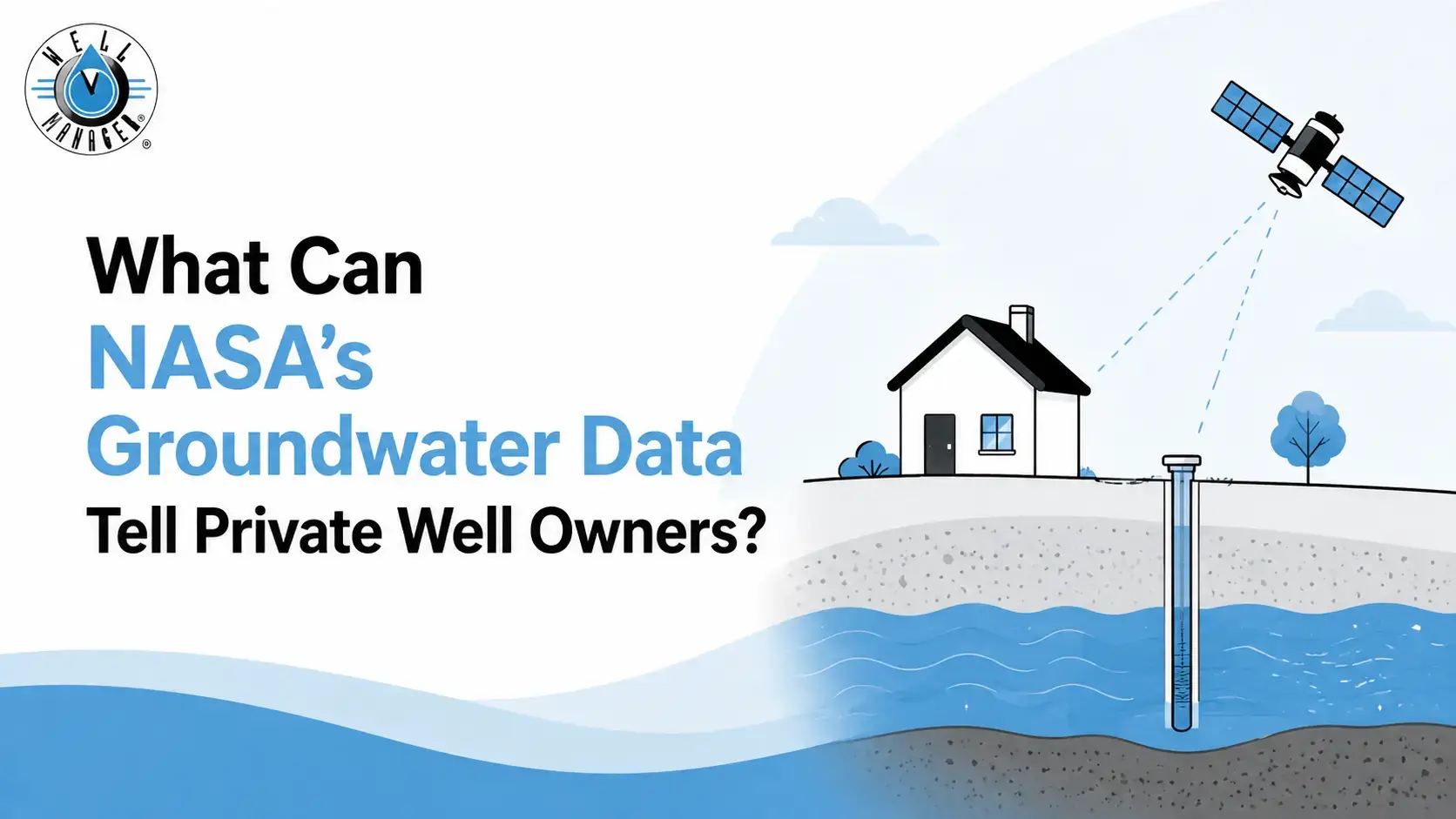
Groundwater usually fails quietly. A reservoir drops, and people see the shoreline move. A lake leaves a bathtub ring. A private well does not give the same visual warning. For many homeowners, the first sign shows up inside the house: the shower weakens, water pressure drops during normal use, the pump runs longer, or the system starts acting like a well water low pressure problem.
NASA is now measuring some of that hidden loss from space. NASA Earthdata’s Dec. 5, 2025 feature, “NASA Satellite Data Show Decrease in Colorado River Basin Aquifers,” reports that researchers used GRACE and GRACE-FO satellite data to estimate that Colorado River Basin aquifers have lost about 34 cubic kilometers of groundwater since 2002. The same NASA article reports that reservoirs and aquifers together lost 52 cubic kilometers of water, with groundwater accounting for about 65% of that total loss.
That does not mean a satellite reading explains one private well. It means the hidden part of the water system is no longer invisible. For private well owners, the lesson is simple: groundwater is measurable, limited, and worth managing before weak pressure becomes a daily problem.

What NASA’s Colorado River Basin Data Teaches Private Well Owners
The Colorado River Basin is not every homeowner’s backyard. The value of the NASA data is not that it diagnoses one property. The value is that it shows a larger truth about groundwater: major losses can occur below the surface over long periods, while people continue to rely on that water every day.
The connection for homeowners is not one-to-one. NASA is not saying one satellite reading explains one private well. The point is that hidden groundwater loss often becomes apparent through household symptoms, especially when a well shows weak pressure, slower recovery, or trouble keeping up during normal demand.
| What the research shows | What it looks like at home | Why it matters |
| Groundwater loss happens below the surface without obvious visual warning. | The well seems normal until pressure starts dropping during regular use. | A private well can become stressed before the homeowner understands what changed. |
| Falling groundwater levels can reduce well yield. | Water pressure drops, the pump runs longer, or water returns only after the well rests. | The issue may be recovery, not the pump or pressure setting. |
| More pumping does not create more groundwater. | A stronger pump or higher pressure setting may make the well fall behind faster. | The safer goal is managing available water, not forcing the well harder. |
| Private wells often lack regular monitoring. | Homeowners notice symptoms before they have clear data. | Pressure behavior, recovery time, and repeated drawdown become important warning signs. |
That margin is what protects daily life. It is what lets a home run a shower, dishwasher, washing machine, treatment equipment, and outdoor use without the system falling behind. When the margin shrinks, the home starts planning around water rather than using it normally.
Groundwater Loss Is Hard to See Until the House Feels It
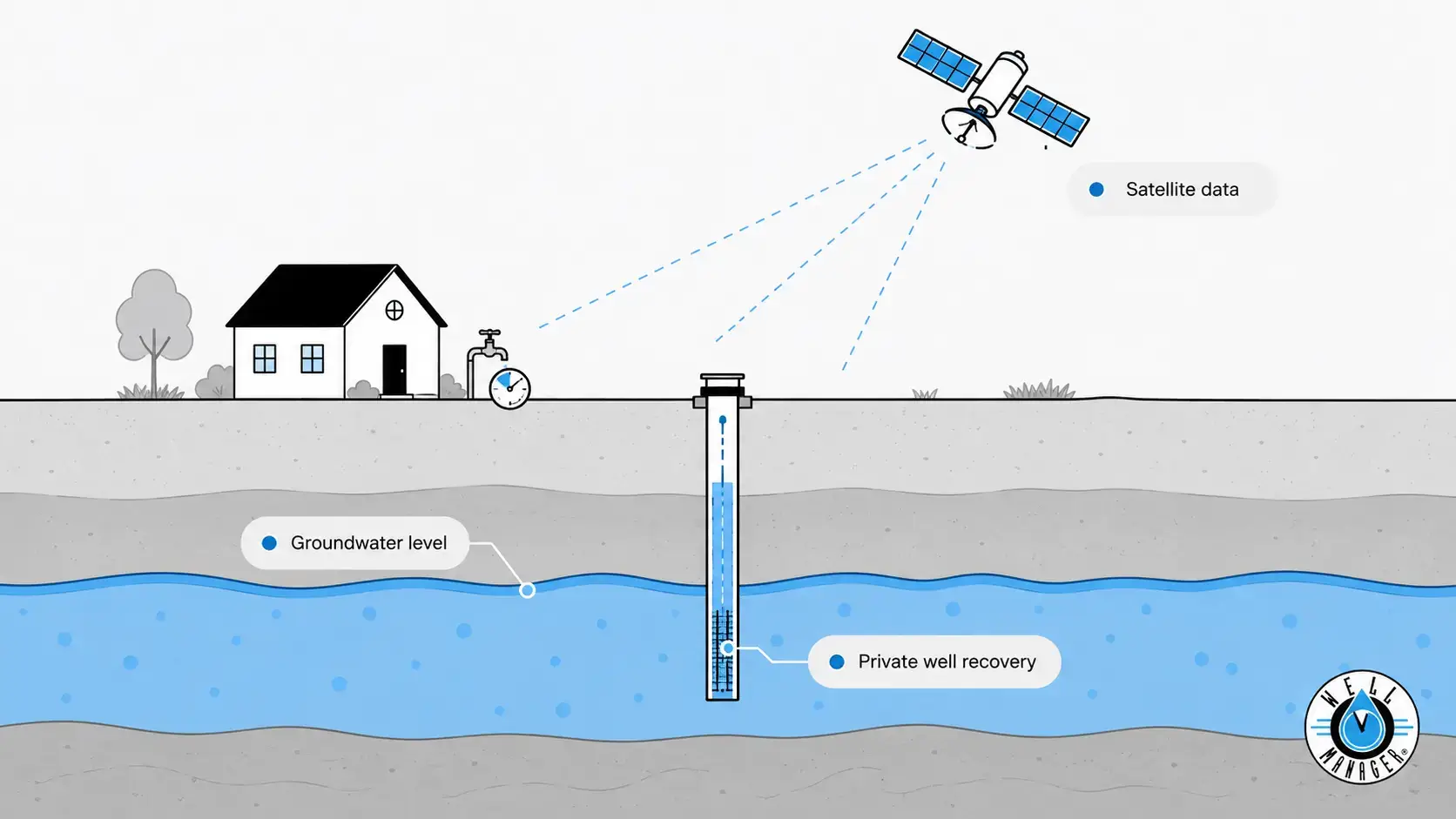
NASA explains why groundwater is harder to track than surface water. Reservoir loss is visible at the surface, but groundwater loss is not readily apparent. GRACE and GRACE-FO detect that hidden loss by measuring small changes in Earth’s gravity field as water mass changes above and below ground.
That matters because a homeowner with a private well typically lacks full visibility into aquifer behavior. The well may have worked for years, but that does not mean the recovery rate is the same every season. The home only feels what happens when demand meets the system’s current limit.
The warning signs often look familiar. Pressure weakens during a shower. The system struggles after laundry. Outdoor watering leaves the house with poor flow. Guests, irrigation, heat, or treatment equipment push the system past what the well can replace in real time.
That is why well water low pressure is not always a small plumbing issue. Sometimes it is the household symptom of a supply problem.
Why Low Pressure Is Not Always a Pump Problem
When pressure drops, many homeowners blame the pump first. Sometimes that is correct. A bad pressure switch, a clogged filter, a failing pressure tank, an undersized pump, or a plumbing restriction can all cause low pressure.
However, when the well is the limiting factor, more pump force does not solve the real problem. It pulls harder on a supply that needs time to recover.
USGS explains that, over the long term, pumping groundwater faster than it is replenished causes groundwater storage to decline. USGS also notes that if groundwater levels fall too far, a well owner might need to lower the pump, deepen the well, or drill a new well. As water levels decline, the rate at which the well yields water may decrease as well.
That is the practical bridge between NASA’s groundwater data and the home. A pressure system delivers water to fixtures. The well still has to produce enough water to feed that system. If the well cannot recover fast enough, pressure becomes the symptom, not the root cause.
How Groundwater Stress Shows Up Inside the Home
Groundwater stress does not show up the same way in every house. Some homeowners notice a slow seasonal change. Others see a sudden difference during a dry stretch or after a heavy-use weekend. The pattern matters more than one isolated pressure drop.
Watch for these signs:
- Pressure drops when more than one fixture runs.
- The well works after resting, then struggles again when demand rises.
- The pump runs longer than it used to after normal use.
- Outdoor watering leaves the house with weak water later in the day.
- The system recovers overnight, then falls behind again by afternoon.
- Pressure problems get worse during dry seasons or peak-use months.
- Water stops, and then returns after the well has time to recover.
These signs do not prove a regional groundwater crisis. They point to the same relationship that NASA and USGS describe at a larger scale: water removed from the system must be replaced. When use outruns replacement, the symptoms reach the home.
USGS provides homeowners with important clarification about wells that appear dry. A well is considered dry when water levels drop below the pump intake, but that does not mean the well will never have water again. Water levels may return over time as recharge increases, and well behavior depends on depth, aquifer type, pumping, and recharge.
That distinction matters. A well that stops or struggles is not always permanently failed. It may be recovering too slowly for the way the home uses water.

Why Forcing More Pressure Can Make the Problem Worse
A common reaction to weak pressure is to look for a stronger pump, a higher-pressure setting, or a bigger booster. That approach only makes sense when the well has enough water, and the problem is pressure delivery.
If the well recovery rate is the real limit, pulling harder can draw the well down faster. The homeowner may get short-term pressure improvement, followed by longer recovery, pump stress, or more frequent pressure loss.
USGS lists several effects of groundwater depletion, including drying of wells, deterioration of water quality, increased pumping costs, and land subsidence. USGS also explains that as the depth to water increases, pumps must lift water higher, which requires more energy.
The first question should not be, “How do I force more pressure?” The better question is, “Can my well recover fast enough to support the way my home uses water?”
That is where many low-pressure fixes fail. They address pressure at the fixture without addressing recovery at the well.
Why Water Management Matters When the Well Cannot Keep Up
When a well produces slowly, the goal is not to demand all the water at the exact moment the house needs it. The better approach is to collect water when the well is producing, store it, protect the pump from being pushed too hard, and deliver steady pressure from a managed reserve.
That is where Well Manager fits. The system is designed for low-yield wells where the issue is not only pressure, but also recovery. Instead of forcing the well harder during peak demand, Well Manager helps the home work with the water the well produces over time.
This matters because a low-yield well needs a different strategy than a normal well with a simple pressure issue. A stronger pump does not change the recovery rate. A pressure adjustment does not refill the aquifer faster. A greater demand at the wrong time can make the system feel less reliable.
A water management approach separates two different jobs:
- Collecting water from the well at a rate the well can support
- Delivering water to the house at a steady pressure when the homeowner needs it
That separation is the difference between chasing pressure and managing supply.
What Private Well Owners Should Do With This Information
NASA’s data should not make homeowners panic. It should make them pay attention sooner. Groundwater loss is now measurable, and private well owners depend on the part of the water system that is hardest to see from the surface.
If your home has weak pressure, slow recovery, or repeated drawdown, start by understanding the pattern.
Ask the following questions:
- When does the pressure fall?
- Does water return after the well rests?
- Does the problem get worse in dry weather?
- Does outdoor use affect pressure inside the home?
- Does the pump run longer than it used to?
- Does the system struggle after peak demand?
Those observations help distinguish a simple equipment issue from a well-recovery issue. If the pattern indicates low yield, the solution should respect the well’s recovery rate rather than forcing more demand through it.
Manage the Well Before Low Pressure Becomes a Daily Limit
Groundwater loss is now visible from space, but private well owners usually feel the warning much closer to home. The sign is not always a dry faucet. Often, it is weak pressure, longer recovery times, repeated drawdowns, or a well that cannot keep up during normal household demand.
Well water low pressure should not be dismissed as a minor comfort problem when it keeps returning. It may be the system telling you that pressure is only part of the issue. The deeper question is whether the well can recover quickly enough to support the home’s water use.
At Well Manager, that is the problem we focus on: helping homeowners manage available well water through controlled collection, storage, pump protection, and steady delivery. NASA’s data shows why the larger conversation matters. Your home’s pressure problems show why the solution needs to start at the well.