How to Test Well Yield | 5-Gallon Bucket GPM Test
Wondering how much water your well actually produces? In this video, we explain how to test well yield using a simple 5-gallon bucket test to help estimate your well’s gallons per minute (GPM). Learn how to better understand your well’s production, identify possible low-yield well issues, and gather useful information before troubleshooting water pressure or running-out-of-water problems.
Knowing your well’s production can help explain low water pressure, water shortages, or why your home occasionally runs out of water. This video explains how to test well yield using a simple 5-gallon bucket method to estimate gallons per minute (GPM). You’ll learn how the test works, why understanding your well’s flow rate matters, and how this information can help homeowners better understand water availability and low-yield well performance.
What This Video Covers
- How to test well yield using a 5-gallon bucket
- How to estimate gallons per minute (GPM)
- Why well flow rate matters for homeowners
- Signs your home may have a low-yield well
- How yield testing can help troubleshoot water problems
Why Well Yield Matters
Your well’s yield, often measured in gallons per minute (GPM), helps determine how much water your well can produce over time.
If your home experiences low water pressure, weak flow, or periods where water runs out, understanding your well’s production can be one of the first steps in diagnosing the problem.
Many homeowners are unsure whether the issue is caused by low well production, household demand, pressure limitations, or another system issue.
Testing your well yield can provide helpful information before making decisions about equipment upgrades, storage systems, or drilling a new well.
What Is a Well Yield Test?
A well yield test helps estimate how much water your well can produce within a certain amount of time.
One of the easiest homeowner-friendly methods is the 5-gallon bucket test, which provides a simple way to estimate your well’s gallons per minute (GPM).
This type of test can help homeowners better understand:
- How much water their well produces
- Whether the well may be considered low-yield
- Why water shortages or pressure problems may happen
- Whether water demand may be exceeding supply
What Is Considered a Low-Yield Well?
In many homes, a well producing less water than the household uses may lead to inconsistent pressure or periods of running out of water.
Low-yield wells may struggle to keep up with:
- Multiple bathrooms
- Laundry and dishwashing
- Irrigation or outdoor watering
- Livestock or larger households
- High-demand periods throughout the day
Understanding your GPM is often the first step toward finding the right water solution.
How the 5-Gallon Bucket Test Works
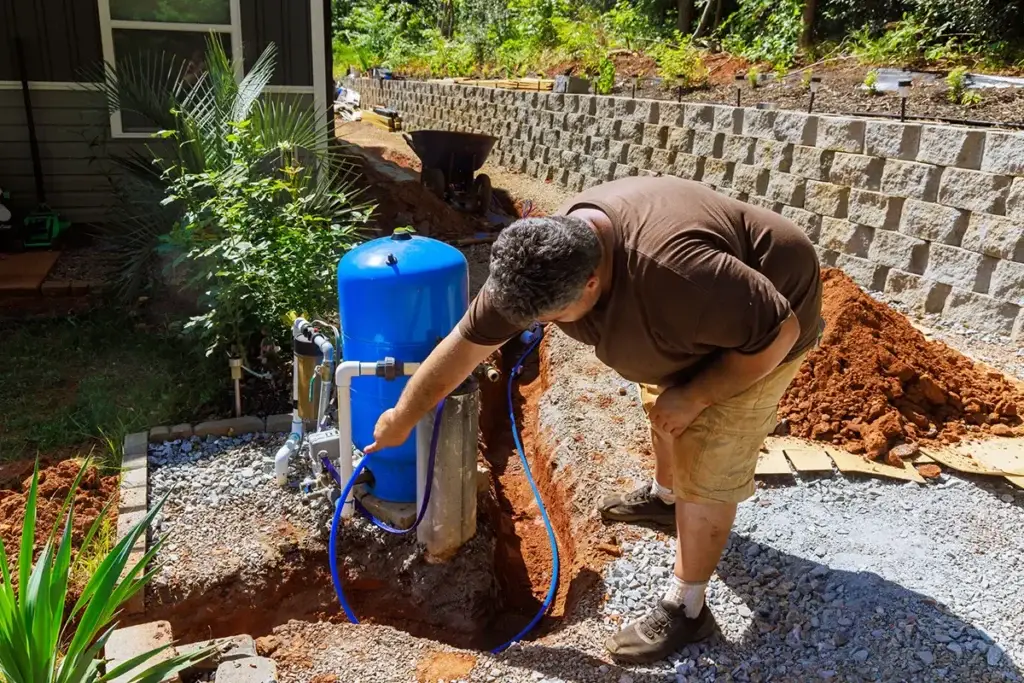
In this video, we walk through a simple process for testing your well’s production using a bucket and timer.
You’ll learn:
- Where to perform the test
- How to time water flow correctly
- How to estimate gallons per minute (GPM)
- What the results may suggest about well performance
- When low well production could contribute to household water issues
While this test can be a useful estimate, actual well performance may vary depending on water use, recovery rates, storage capacity, and household demand.
Not Sure If Your Well Produces Enough Water?
If your home struggles with low water pressure or running out of water, our team can help you better understand your well production and possible solutions.