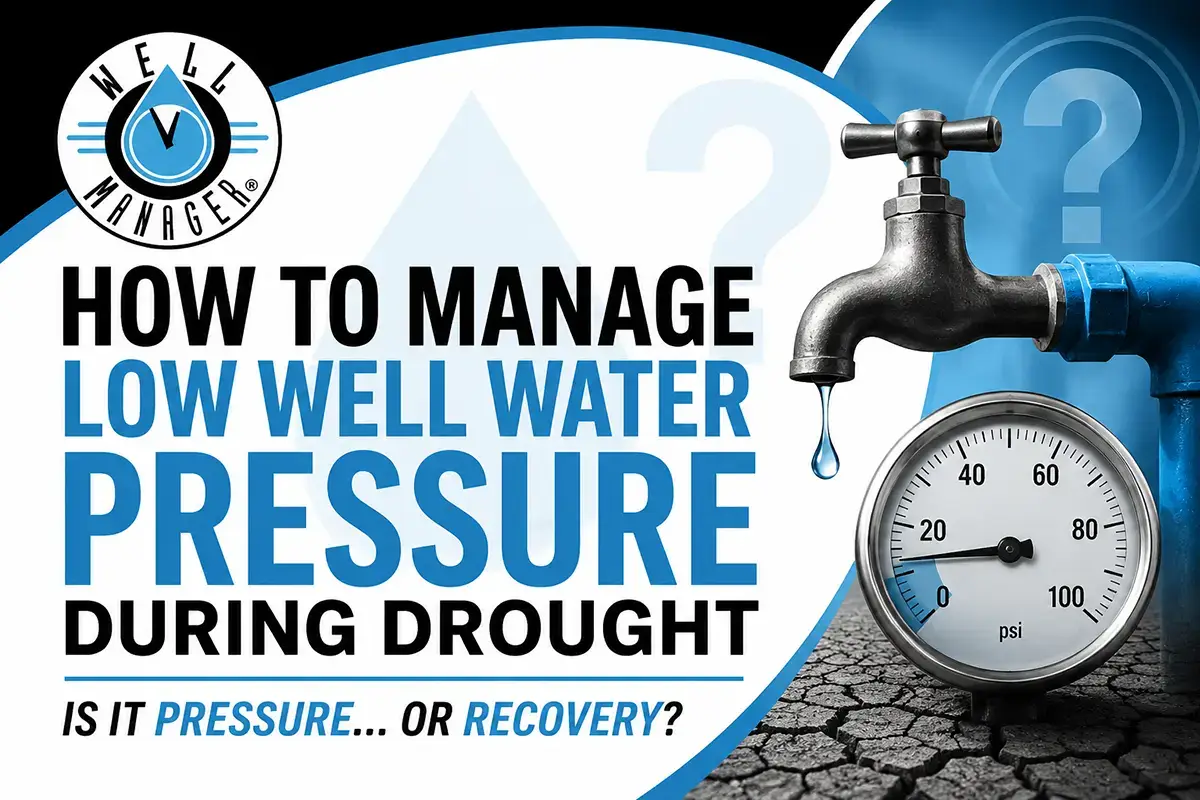
When dealing with a drought, the question is how to increase water pressure. The right answer should not assume the pump is too weak or too small. During dry weather, low pressure often connects to a larger issue with well recovery, water demand, storage, equipment behavior, or water quality.
There are many reasons a well develops problems during a drought. There might not be enough water entering the well from the surrounding aquifer, or the well’s recovery rate might be too slow to keep up with household use. Water consumption, plumbing configuration, pressure tank condition, filters, and pump controls all play a role. In addition to low water pressure, drought-related well problems often show up as turbid water, taste changes, air in the pipes, grit, sediment, or longer refill times.
Why More Pressure Is Not Always the Right First Move
It is easy to assume that more pressure will help when the shower is weak, the washing machine fills slowly, or water flow drops at several fixtures. During drought, that decision should be made carefully because pressure is only one part of the system. If the well is not recovering fast enough, increasing pressure does not solve the supply problem. It simply asks the system to move a limited amount of water more aggressively.
Low-yield wells do not suddenly become useless during drought. Many still function under light or moderate demand, but they struggle when the home uses water faster than the well can recover. Laundry, irrigation, showers, dishwashers, and several fixtures running simultaneously all increase demand. If that demand exceeds recovery, the pressure drop is a symptom of a supply and timing problem, not proof that the pump has failed.
A larger pump or higher pressure setting does not change the well’s natural recovery rate. If the well produces water slowly, the system has to respect that limit. Pushing the system harder might temporarily improve pressure at the fixture, but it also increases the risk of short cycling, air draw, sediment movement, loss of prime, or pump damage.
How Drought Changes Well Recovery
The well’s recovery rate after pumping is the key factor, not just the water flow rate at a single fixture. Recovery often takes longer during drought because there is less water available to recharge the well. A system might show acceptable pressure when no one is using water, then struggle as soon as real household demand begins.
That is why pressure, recovery, and storage belong in the same conversation. A pressure gauge shows what is happening at a single moment. Recovery behavior indicates whether the well supplies sufficient water after pumping begins. During drought, that difference matters because the home might need water faster than the well receives it.
What To Check During Drought Before Assuming the Pump Is the Problem
When pressure drops during dry weather, the first thing to consider is demand, recovery rate, and equipment behavior. A qualified well contractor, pump professional, plumber, or water-testing lab should handle testing and diagnosis as needed. Well Manager does not perform well testing, pump diagnostics, pressure tank inspections, or laboratory water analysis. Its role is different: Well Manager provides water management systems designed for low-yield wells where controlled collection, storage, and steady pressure delivery are part of the solution.
Before replacing the pump or changing pressure settings, the system should be evaluated for the most likely causes of pressure loss. Those checks often include:
- Testing static and pumping water levels.
- Calculating flow rate and recovery rate.
- Checking pump depth and pressure settings.
- Reviewing pressure tank condition.
- Checking the pressure switch or control behavior.
- Looking for clogged filters, mineral deposits, or plumbing restrictions.
- Testing water quality to determine if color, odor, taste, turbidity, sand, or grit has changed.
The pressure tank also matters. If the tank is waterlogged, improperly adjusted, undersized, or no longer holding pressure correctly, the home might experience poor pressure even when the well still produces enough water. Pressure switches, electrical controls, filters, and mineral buildup also influence how water moves through the home.
If you notice turbid water, sand, or grit, address those issues before replacing the pump or adjusting its capacity. Drought can change the way water enters the well, and heavier pumping during low-water conditions can disturb sediment. In that situation, the problem is not only pressure. The condition of the water supply also needs attention.
Recovery Rate Provides Better Information Than A Single Pressure Measurement
A pressure gauge gives useful information, but it only paints part of the picture. The system might read normally at rest and still fail to keep up during showers, laundry, or outdoor use. Recovery testing by a qualified professional show how the well behaves while water is being drawn and after pumping stops.
The recovery rate shows how quickly and consistently the well recharges. If recovery is too slow, the home might need to change how water is used or managed. Spacing out laundry, reducing irrigation, limiting the number of fixtures used at once, or adding storage might make more sense than replacing the pump immediately.
For example, running the dishwasher, washing machine, and shower simultaneously places a heavy demand on the system. In normal conditions, the well might keep up. During drought, the same demand might outrun recovery and cause pressure loss, air in the lines, or longer refill times.
Pressure Problem or Recovery Problem?
| Symptom | What It Might Mean | Better Next Step |
| Pressure drops during laundry, showers, or irrigation | Demand is exceeding recovery | Review water-use timing and have the recovery rate checked |
| Pressure is weak at most fixtures | Pump, pressure tank, filter, or plumbing issue | Have equipment and restrictions evaluated |
| Pressure starts strong, then fades | Stored pressure is being used faster than the well recovers | Review recovery rate, demand, and storage needs |
| Air, sputtering, sand, or grit appears | Low water level or sediment movement | Stop treating it as only a pressure issue, and check the water conditions |
| Water color, odor, or taste changes | Possible water-quality change | Arrange water-quality testing through a qualified lab or local authority |
Where Water Management Fits
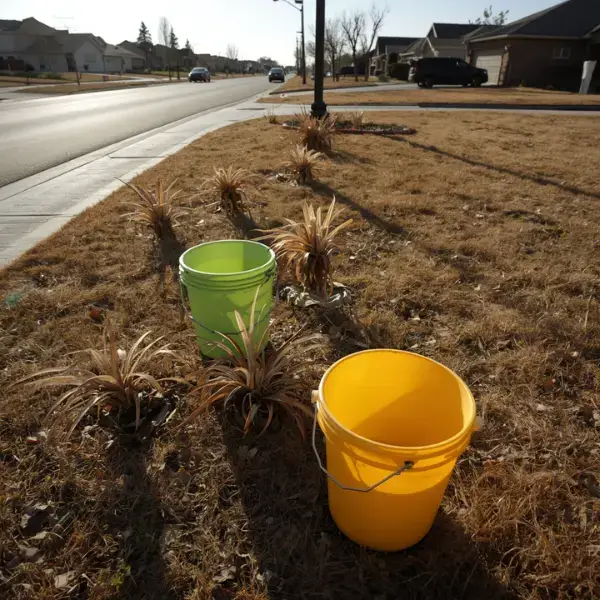
Water management becomes relevant when the well still produces water, but not fast enough to meet peak household demand. That is different from a failed pump, a clogged filter, a bad pressure tank, or a water-quality concern. Each issue can create pressure problems inside the home, but each one points to a different solution.
In a true recovery problem, the issue is not that the home has no water. The issue is that water is arriving too slowly to support the household’s use. In that situation, the goal is not to force the well harder. The goal is to collect water at a rate the well can support, store it, and deliver steady pressure from storage when the home needs it.
This is where water management fits naturally. It does not replace well testing, pump diagnostics, pressure tank repair, or water-quality testing. It fits when the central problem is a low-yield well that still produces water but cannot replenish quickly enough to meet peak demand. That distinction keeps the solution tied to the actual cause instead of treating every pressure complaint as a pump-capacity problem.
Proper Water Management Helps Find the Real Solution
Determining how to increase water pressure is not always about forcing more pressure through the system. The smarter goal is to protect the well, understand recovery limits, manage available water, and avoid over-pumping.
When the issue is mechanical, the equipment should be repaired. When the issue is water quality, testing and treatment should be the priority. When the issue is slow recovery from a low-yield well, the solution should respect that recovery limit rather than fight it.
If a well still produces water but cannot keep up with peak household demand, storage and controlled delivery may become part of the solution. That approach gives the well time to recover, reduces strain on the system, and helps the home use available water more consistently during dry conditions.