Temporary & Emergency Water Systems   PumpChamber


Irrigation Using a Well or Wells of Inadequate Yield

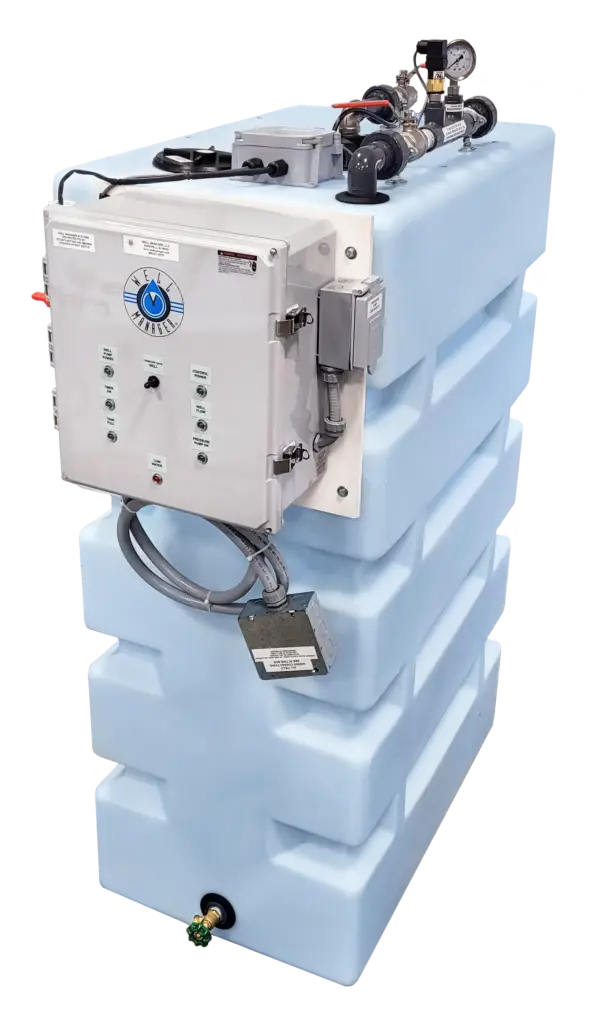
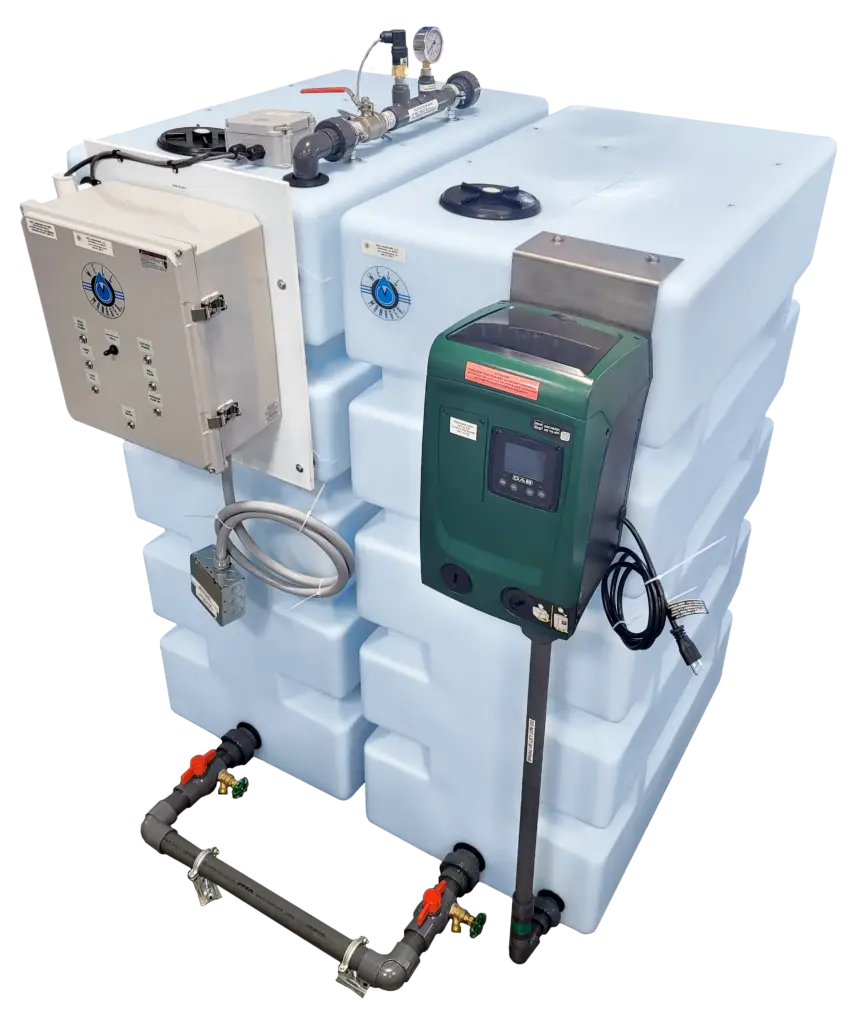
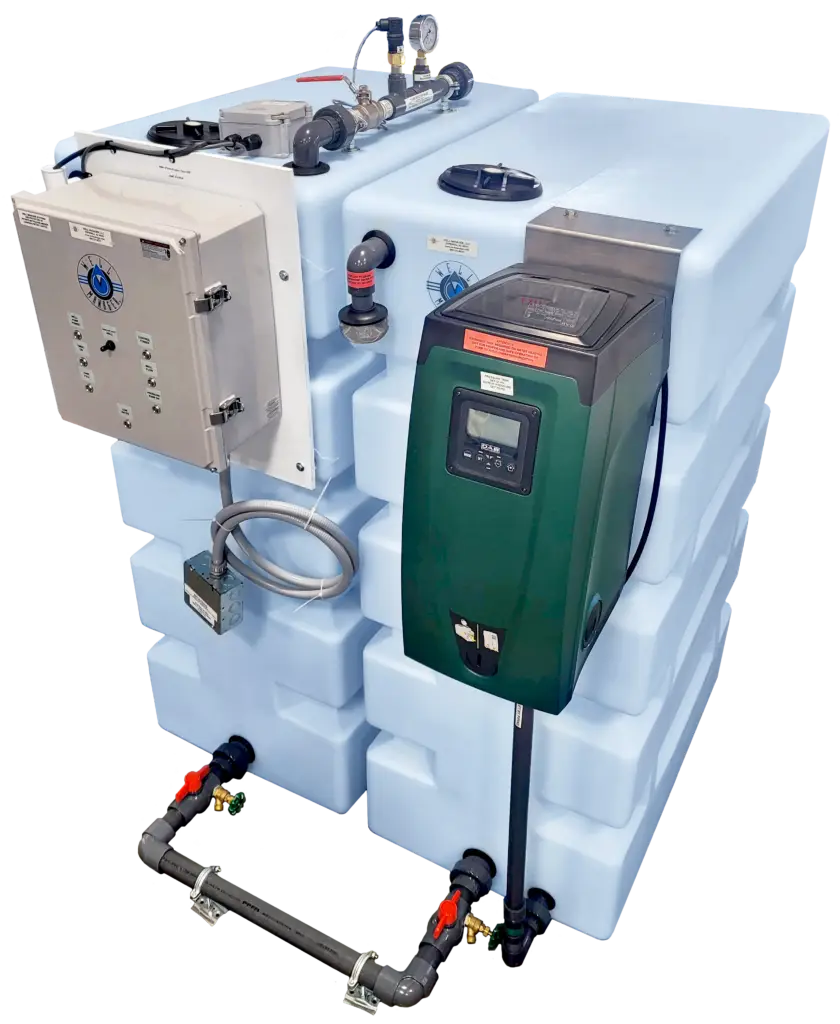
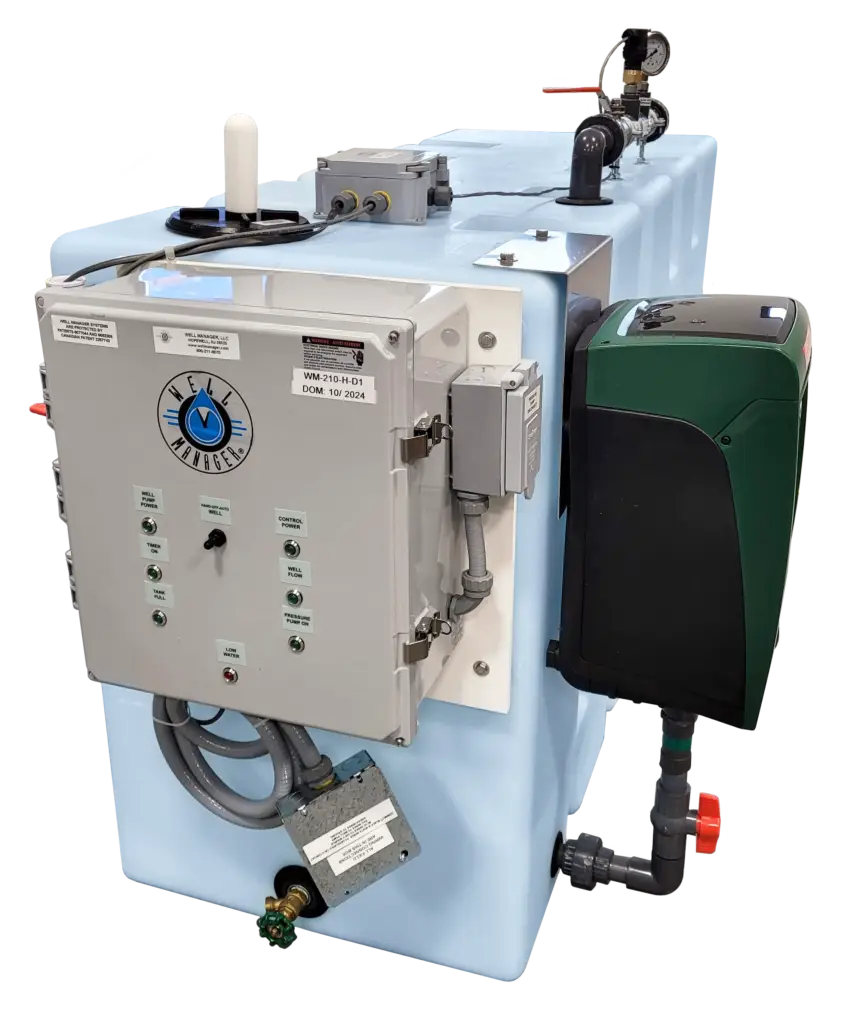
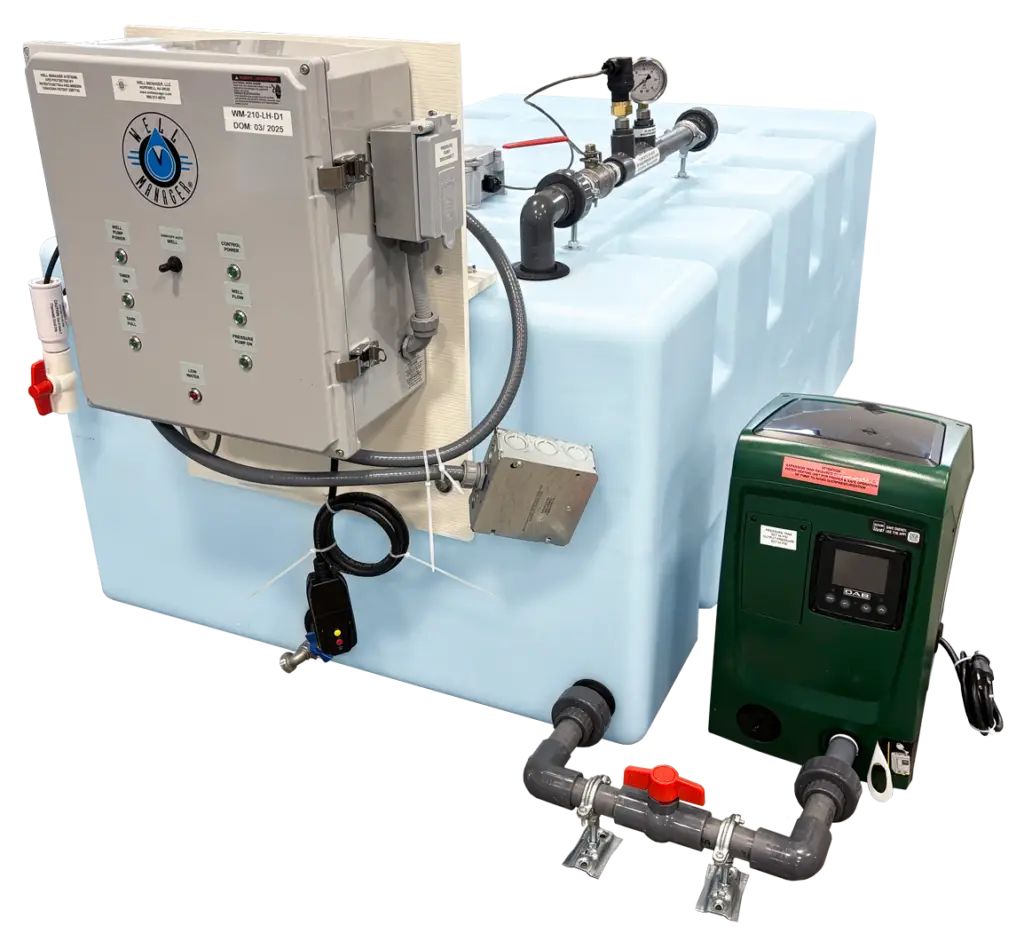
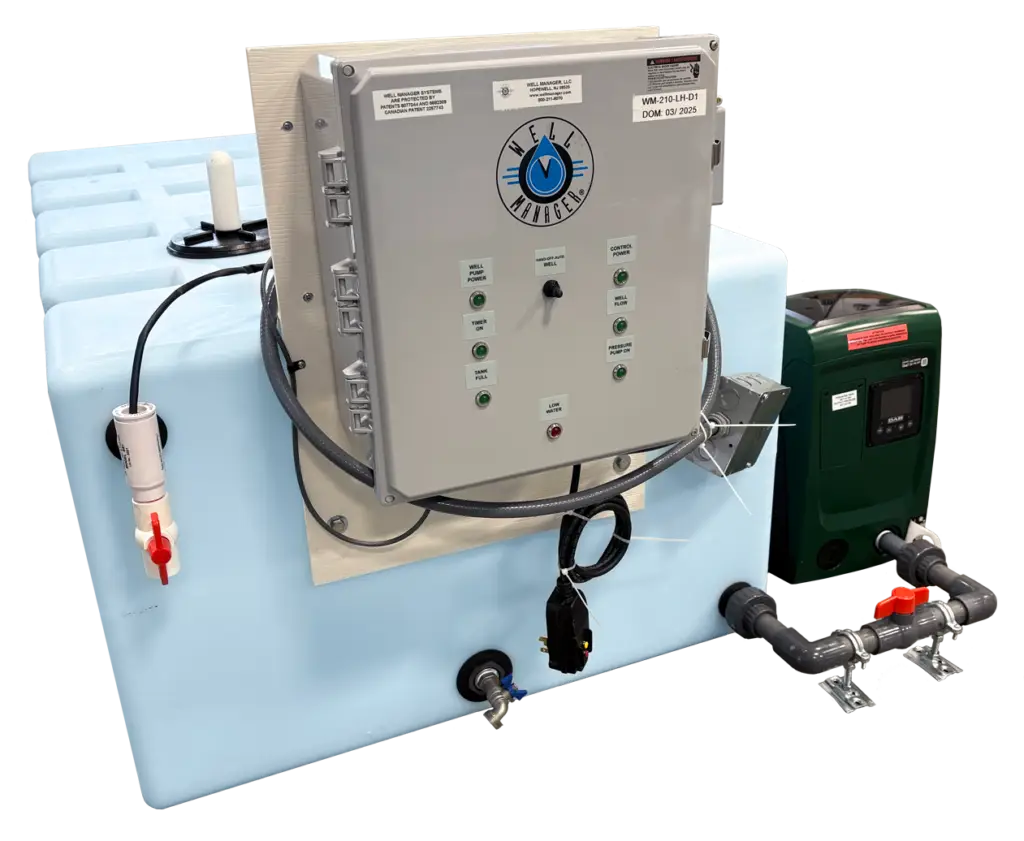
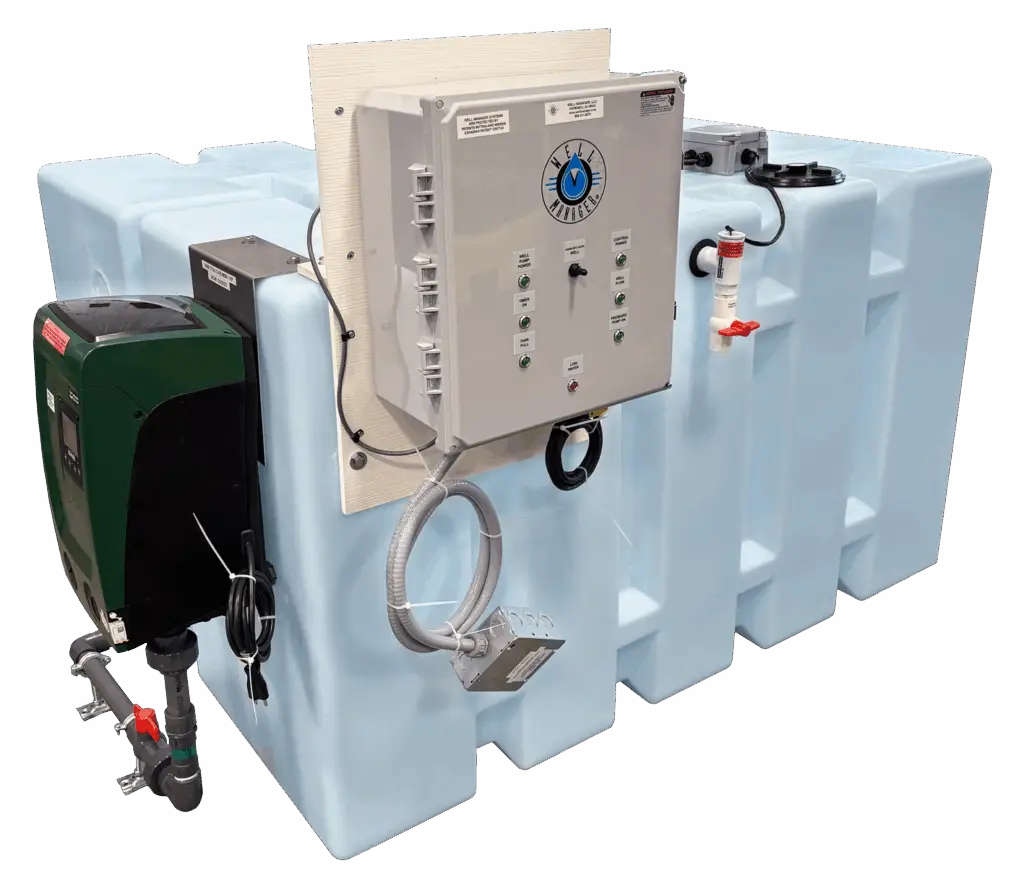
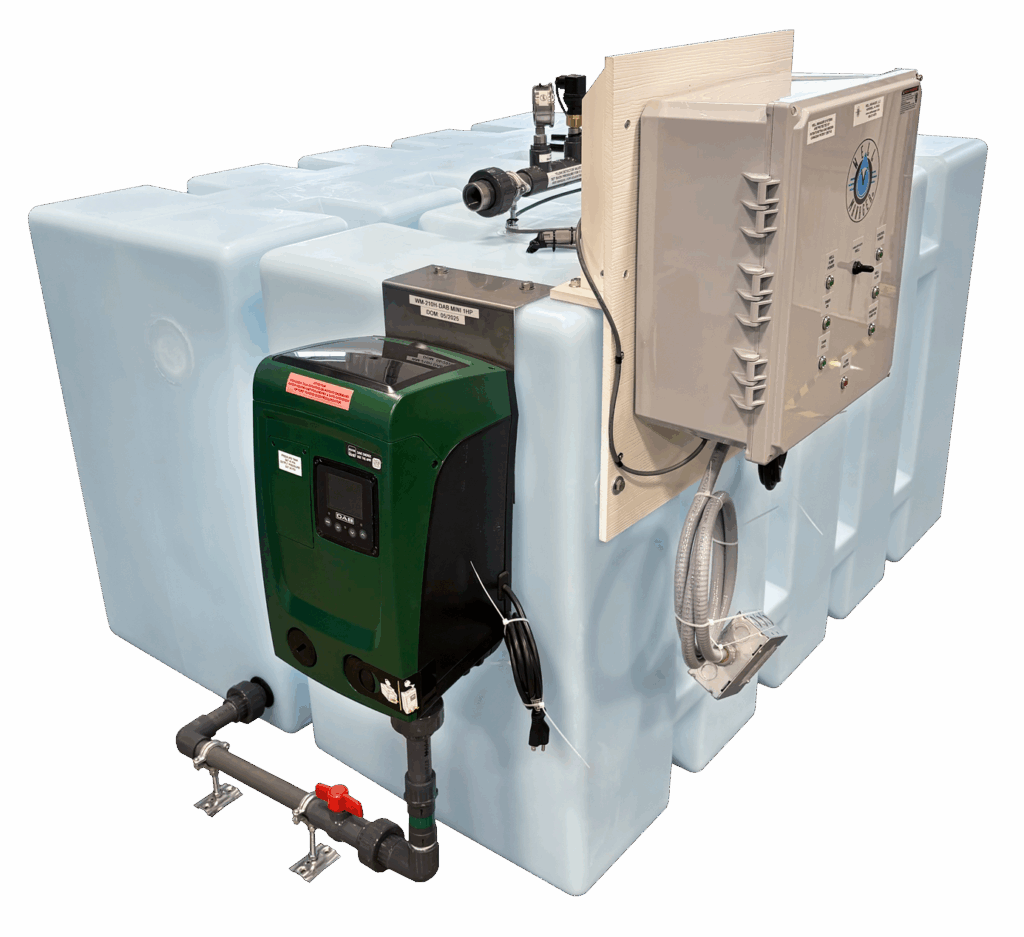
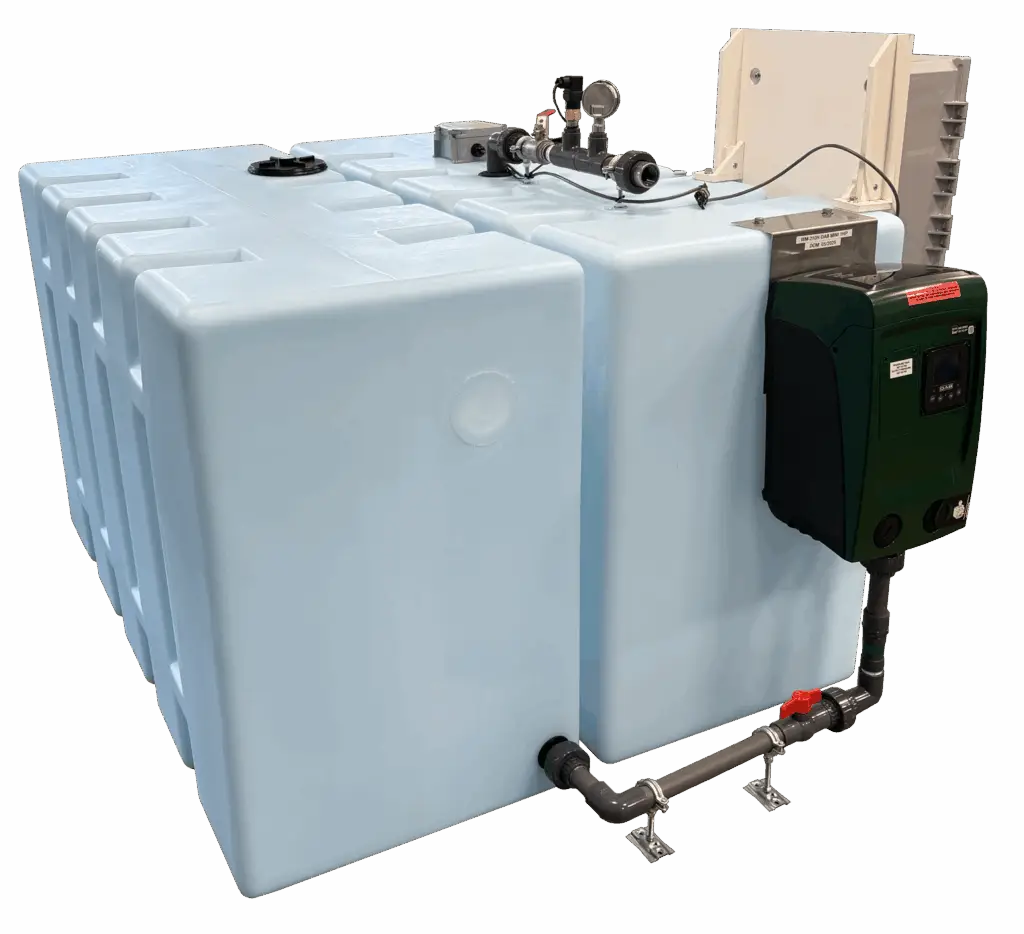
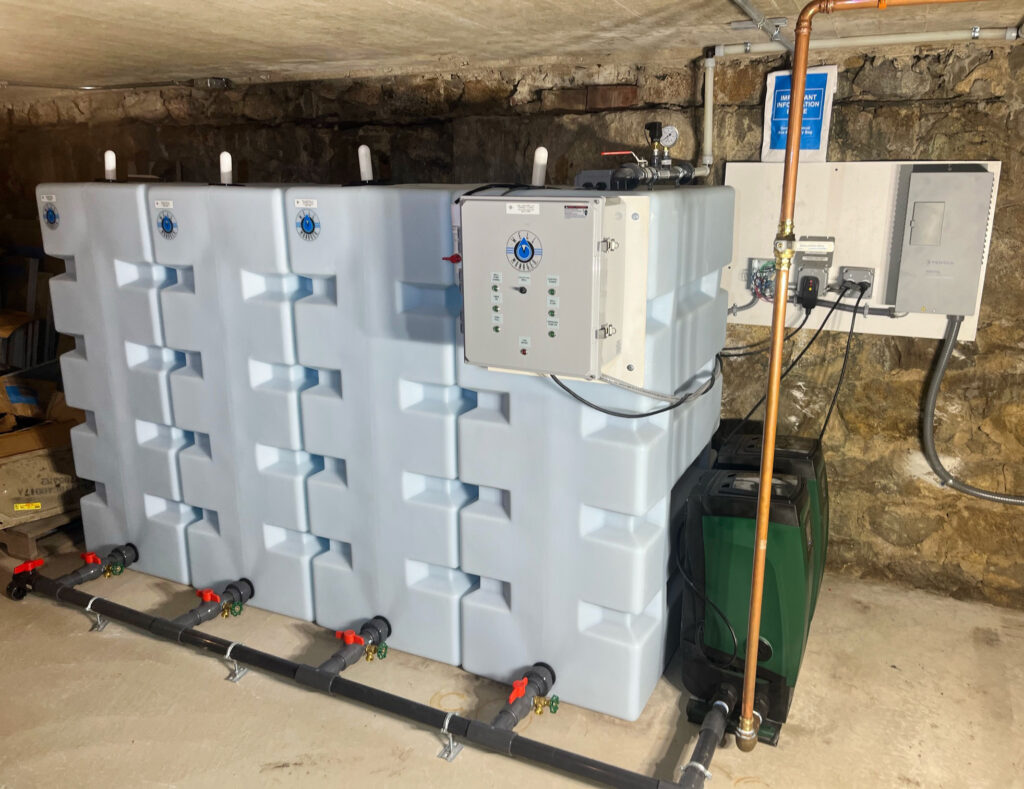
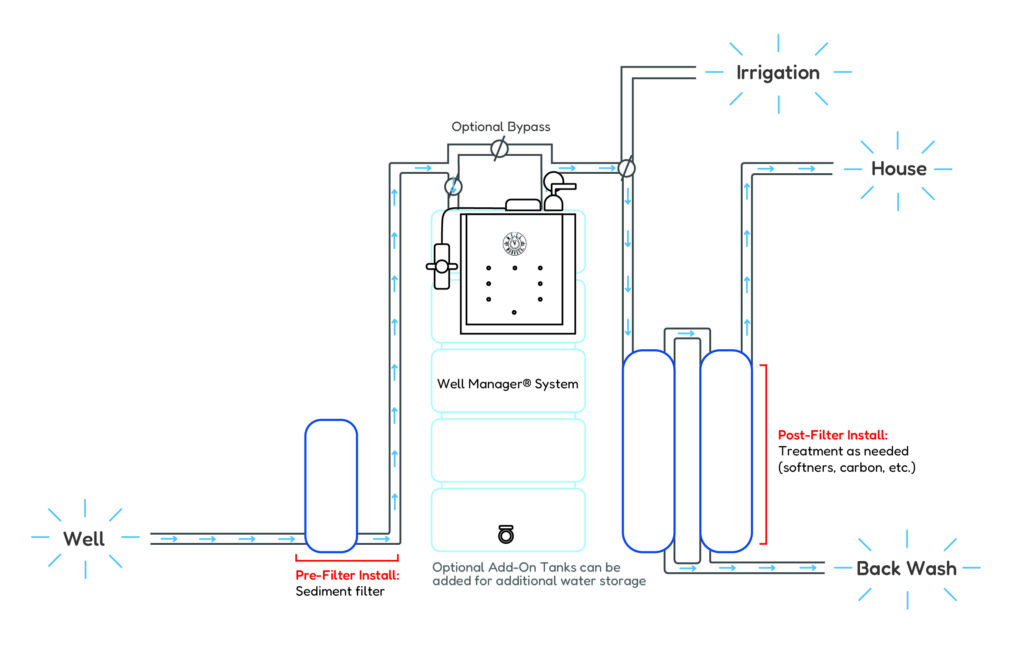
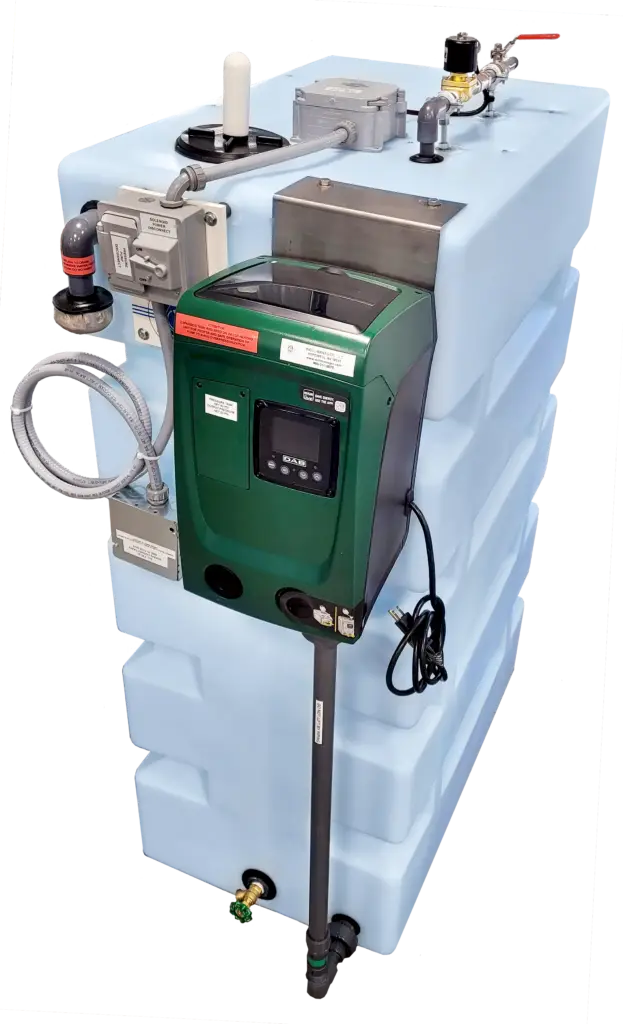
Well Manager® and Herculan ConstaBoostT Systems can be used to collect water from one or more wells and deliver it to irrigation systems or to systems that combine irrigation with a domestic water supply as may be the case with home landscape irrigation.

Should I Irrigate?

Irrigation is a depletive water use. In other words, water pumped from the ground and applied for irrigation is either taken up by plants or evaporates into the air. It does not go back into the aquifer through a septic system or some other means as other uses might. This doesn't mean that irrigation is a bad thing but it does mean that you need a way to gage the affect of your activities on local groundwater levels. You wouldn't want to inadvertently run your well or  neighboring wells dry.

The aquifer from which you are pumping water is like a pond fed by a stream. If you continually pump more water from the pond than the stream puts back, you will end up with an empty pond. If you exceed the inflow rate for a short time the pond level may dip but once you stop it will refill. As long as the overall use doesn't exceed the overall inflow (recharge) you will not run your aquifer dry. When using a low yield aquifer to irrigate you must always be aware that you could exceed the recharge rate, especially in an extended drought.

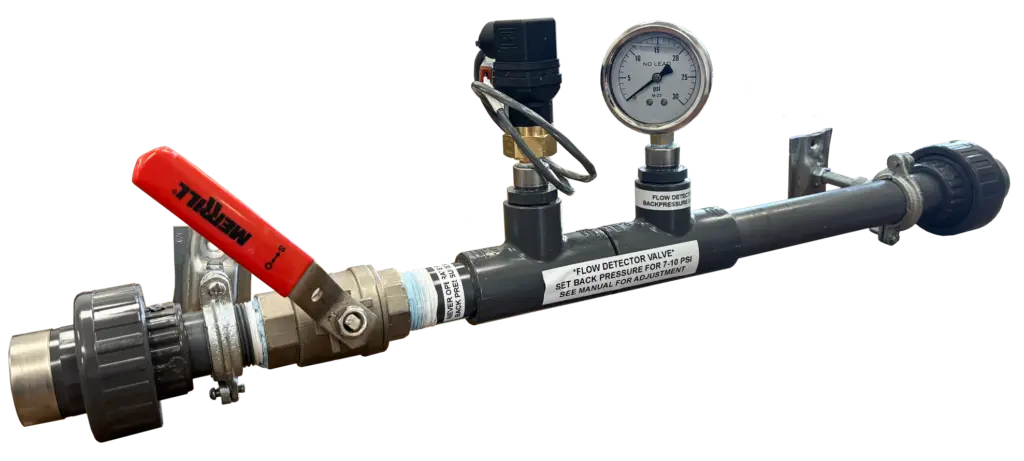
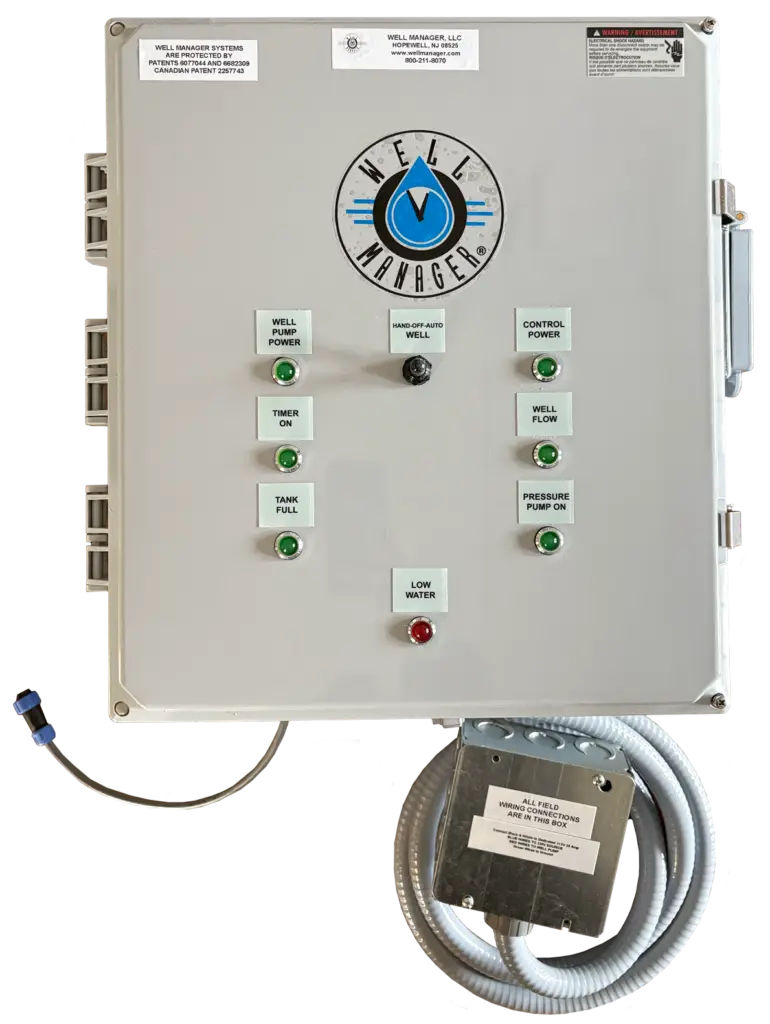
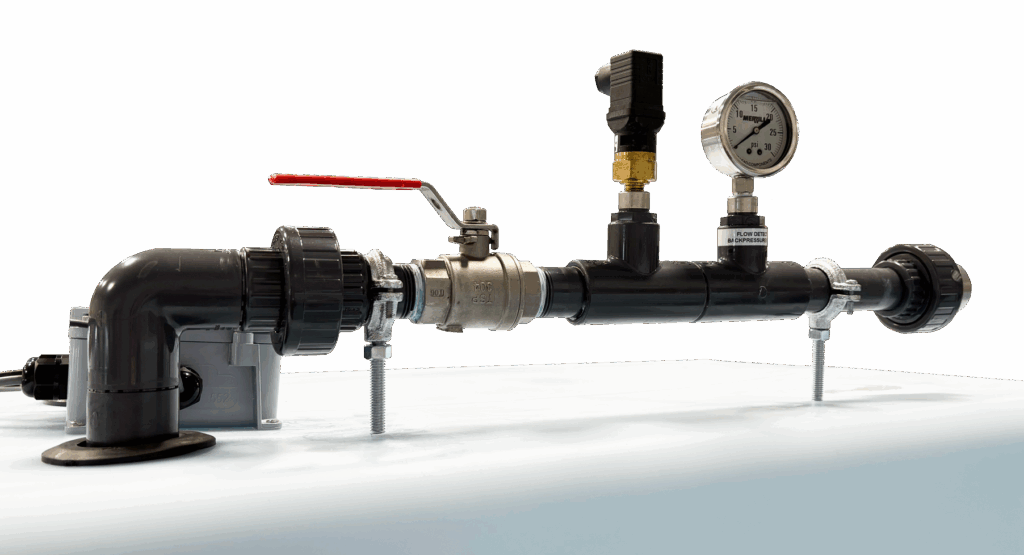
Well Manager® is the best device available for this use because it can maximize the well's output and provide visual clues as to how pumping is affecting the static level in your well and the water table in general. For more information on this see; Well manager - How it works.  The end of that page provides information on the Well Manager Flow Detector, which protects the well pump and provides valuable information about well water levels.

Can I Irrigate?

The first step in determining if you have enough water to irrigate is to design the system on paper and determine how much water will be required on a daily basis. When dealing with a low yield well - one that would not be adequate without a storage system - the system should be designed so that bed and grass zones are distinctly separate. Do not put some heads that are tending grass with some that are watering a bed on the same zone valve.

The reason for this is that you want the ability to cut back on use if your activities begin to affect the water table adversely due to lack of rain or some other reason. Grass that turns brown from lack of water will green up again when water is available, but shrubs, trees and other perennials may die when they turn brown. So when push comes to shove, you want to save your water for the shrubs and perennials.

The table below is for the purpose of illustration and lists the zones for a proposed irrigation system.

Zone #

Zone Use

GPM Required

Run Time Min.

Water Used This Zone

Day 1

Day 2

1

Grass Fr.

12

30

360

360


2

Grass Fr.

9

30

270

270


3

Bed Fr

6

30

180

180


4

Bed drip Fr

4.5

40

180

180


5

Grass Fr.

12

30

360

360


6

Bed Fr

6

30

180

180


7

Shrubs Fr

7.5

30

225

225


1755


8

Grass Back

12

30

360


360

9

Shrubs Back

6

30

180


180

10

Grass Back

12

30

360


360

11

Grass Back

9

30

270


270

12

Bed Back

9

30

270


270

13

Bed Back

6

30

180


180


3375


1620


If this is a combined system, the irrigation system and domestic water requirements must be calculated. Always calculate the building, not just the people currently using it. If this were a 4 bedroom house, the next owner may have a family that needs them all. Such a home could support five or six people so the system that supplies the building should be capable of supplying that many people.

Use

Gallons Required

# of Occurrences

Water Used Worst Case

Showers

10 min@ 3.0 gpm= 30

6

180.00

Toilet AM

1.6 gpf

12

19.20

Makeup/shave AM

2.0

6

12.00

Peak Demand Requirement 6:00 - 7:00AM

211.20

Clothes Washer

36

2

72.00

Toilet PM

1.6 gpf

24

38.40

Indoor Plant Watering

4

1

4.00

PM Showers 2 Teens

30

2

60.00

Cooking Dinner

5

1

5.00

Dishwasher

15

1

15.00

PM  Demand 5:00PM - Bedtime PM

194.40

Softener Backwash

2:00 AM                1

120

120.00

Total Domestic Worst Day

525.60

According to our irrigation layout chart, the total irrigation need is 3,375 gallons and the total domestic use chart shows our need on the worst day is 525.60 gallons. If we want to run the entire irrigation system every other day, we would need 3375 + 525.6 = 3900.60 gallons on the days we irrigate. This allows nothing for leaks like running toilets in the house, malfunctions in the irrigation system, or car washing.

The next step is to calculate the minimum well yield to support this demand. To do that divide the total gallons required (3900) by the number of minutes in a day (1440) and get 3900 ÷ 1440 = 2.71 gpm. Mathematically it looks like a 3 gpm well could supply this need. In the real world cutting it this close would certainly lead to disaster.

If the well in question was a 3-gpm well what would happen if we split the irrigation system and ran half every day? Split as shown in the table, day one would require 1775 gallons and day two would require 1620 gallons. If these figures are put together with our worst day domestic need, water required for day 1 = 2280.60 and day 2 = 2145.60. The 3 gpm well can produce 3-gpm x 1440 minutes = 4,320 gallons so this well could support the proposed irrigation system and the maximum capacity of the house, should it ever be needed.

Since many irrigation systems run in the overnight hours it will be necessary to calculate the storage required to permit all of the zones scheduled for the heaviest day to run, the treatment equipment to backwash with enough water remaining in storage to satisfy the morning peak demand needs of the residents.

The following spreadsheet is based on collecting 60 gallons three times per hour from a 3-gpm well (180 gallons per hour).

The results of the work sheet will produce a graph like this one, showing how your layout impacts the proposed storage arrangement.

You can download this calculating spreadsheet to try out your irrigation system with various timing and storage arrangements. The values in the yellow shaded cells are to be added by the user. You can rename your zones, change the GPM used and increase, decrease or eliminate the rest periods between zone starts.

Timing Is Everything

This spreadsheet will show that, when it comes to getting the most from low yield wells, timing is everything. Let me demonstrate that to you now. You will need to click on the blue underlined "download" located a few sentences above and follow the instructions. Once you have the spreadsheet on your computer you will see the graph on top with the spreadsheet below.
Immediately below the graph note that you can input the well yield in cell 25A, the number of collection cycles per hour (choose 1, 2, or 3) in cell 26D, starting time for irrigation in 27D (in 24 hour format i.e. 5:00 PM enters as 17:00), and storage tank size in cell 28D. When you change any of these the graph will automatically change also.

Try it out with me now. Change the collection cycles per hour to 1 and note that the graph now shows that stored water levels dip to just over 100 gallons at 4:30 AM. Change collection cycles per hour to 2 and the graph shows that storage is lowest at 4:20 AM but doesn't fall below 180 gallons. Change collection cycles to 3 and see that storage falls to 165 gallons at 4:30 AM. In each case the total number of gallons collected was 180 gallons (well yield x 60 minutes) but with 1 collection we pumped 180 gallons once per hour, with 2, 90 gallons twice per hour and with 3, 60 gallons three times per hour. Depending on the storage arrangement, the number of pumpings per hour can make the difference between running out of water and not!

If you want to start your proposed irrigation earlier to see how that would affect storage, change the start time in 27D (in 24 hour format 9:00 PM = 21:00), insert rows where necessary and copy formulas as needed. If you feel you have irreparably altered the spreadsheet disgard it and download another. If you need help call 800-211-8070 between 8:00 AM and 5:00 PM EST, M-F.

All irrigation timers are not the same so be sure you have one that will allow the settings you are proposing in your zone timing layout.
In the Domestic Use Chart above, the water softener will start at 2:00 AM on some mornings so there must be enough water in storage to allow for that. If this sequence starts at 10:00PM the softener will backwash when the chart shows there is 510 gallons in storage. Still by 6:00 AM storage is down to 165 gallons without the softener backwash. If the softener uses 120 gallons in the 90 minutes following 2:00 AM, then storage could get as low as 45 gallons. It may pay to start the sequence a little earlier so each of the rest periods can be extended or, if there is no one home in the late morning or early afternoon, you could set the softener to backwash then as the tanks will be full.

All of the water uses we are discussing here are timed uses - we can schedule them to occur when water is available. We know when water is available because a Well Manager® is a time based collector. It is simply a matter of doing the math and scheduling the events.
It appears that this irrigation system can be made to function properly on a well with a 3-gpm yield with as little as 550 gallons of storage - considerably less than storage required by standard systems.
 

Planning for Problems

This layout assumes that all of the zones will shut off when they should and that the lawn service won't hit any of the pop-up heads with a mower blade converting them from 3 gpm to 20 gpm heads. Unfortunately this does sometimes happen. If it does happen to this system the residents could get up and discover that they have no water to shower.

Optional Stop Loss Controls

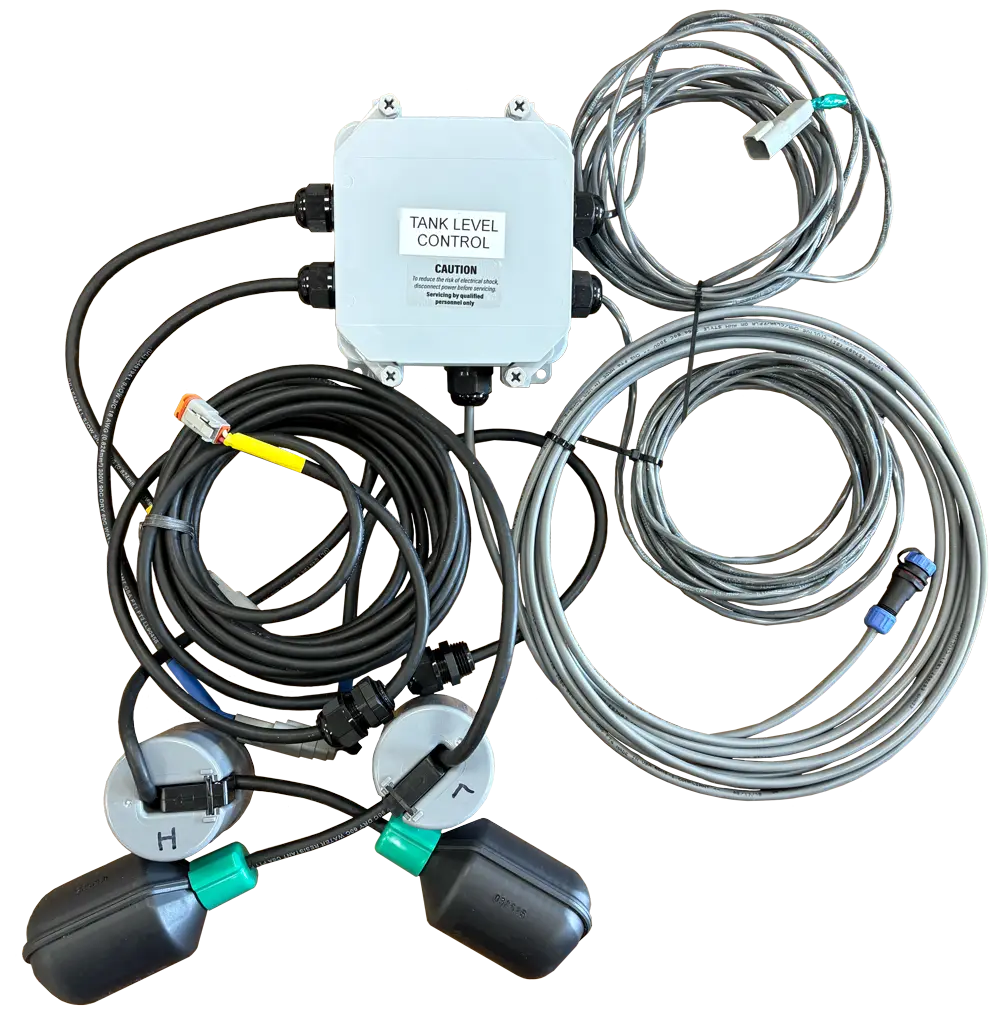
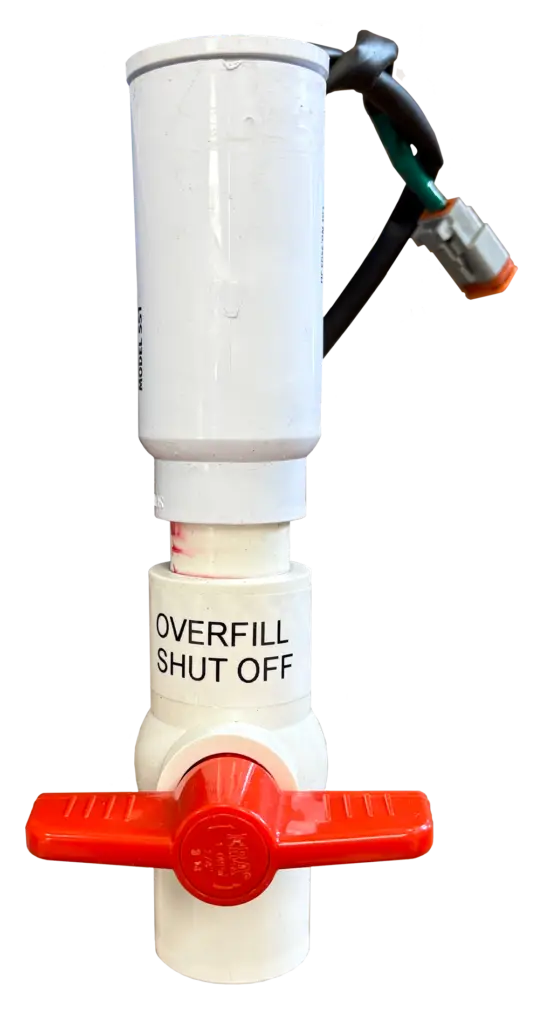
In order to prevent this we offer an item called a Stop Loss Control. This control requires 120-volt power supply that can be obtained from a Well Manager control panel or any other source. The Stop Loss has a low water float that is set at a water level below which there will be insufficient water for morning domestic use. If the stored water level drops to this point the Stop Loss will close the solenoid valve installed on the branch that feeds the irrigation system. When the water level rises to the Stop Loss upper float level (set by user) the solenoid will open. In this way it will be impossible for the irrigation system to interfere with the comfort of the residents.

The Stop Loss Control has a status light to let you know what is going on and a momentary switch which allows the solenoid to be opened, when the low water float is up, so that the system can be serviced without waiting for the tank to refill.

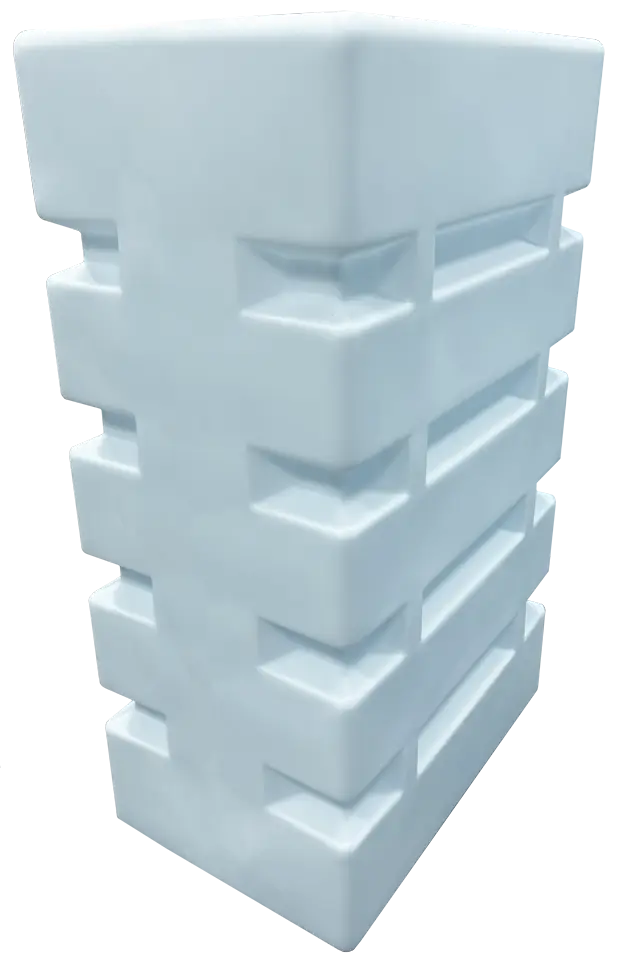
In the example discussed above there must be 211 gallons of usable water to cover AM domestic peak demand. If this system were built with three 220-gallon tanks, the Stop Loss would need to shut off irrigation when 211 ÷ 3 = 70.33 gallons of usable water remains in each tank. AND the irrigation system must be designed and timed to finish so that there will be adequate stored water when the morning peak demand time begins (in this case 6:00 AM).

Running Toilets Can Drain Storage

Running toilets waste more water than any other plumbing fixture. When plumbing new buildings supplied by low yield wells, it is a good idea to supply all of the toilets with a single dedicated water line that originates at the pump equipment area. With the water distribution divided this way, it becomes possible to use a Stop Loss Control to shut off all of the toilets if stored water gets too low. This way resident will not come home from work to find that they have no water because a toilet was running.

Remember, it is important that Well Manager control timing is set up to take no more water than the well yields. If you set it up to harvest too much water, a running toilet may empty the tank and the well. With the timer correctly set up the well cannot be pumped down.

Reverse Engineering

In cases where the well is not yet drilled, it often pays to reverse engineer the system. Design the system, and calculate the well yield required to operate it without storage. Then try it out with various storage configurations, well yields and budget numbers. Once you have determined what size pumps are required to re-pressurize and deliver the water the only changes required from one well yield to another will be in the amount of storage required and some fittings, pipe and valves. Armed with this information it becomes easier to decide when to stop drilling.

If you need help with system sizing for your irrigation plan, call 800-211-8070


© 2006, Reid Plumbing Products, LLC  US: 800 211 8070  Worldwide: +1 609 466 4347