
Spring can look perfectly normal. The snow melts, streams rise, and nothing feels urgent. Then July arrives. Irrigation begins, temperatures climb, and suddenly the system feels different. Recovery slows. The pump runs longer. What used to feel steady now feels strained. Many homeowners describe it simply as low water pressure, but what they are often experiencing is something deeper: a well that cannot recover fast enough during peak demand.
In snowmelt-driven regions like Utah and Colorado, water reliability depends on timing. Snowpack acts as seasonal storage. When that storage is below normal, melts early, or releases water too quickly, groundwater recharge can weaken. Recharge influences recovery. Recovery determines how a well behaves in the heat of summer. At Well Manager, we design systems around that chain, because understanding it is the difference between reacting to a problem and preventing one.
Snowpack Is Seasonal Water Storage, and Timing Matters
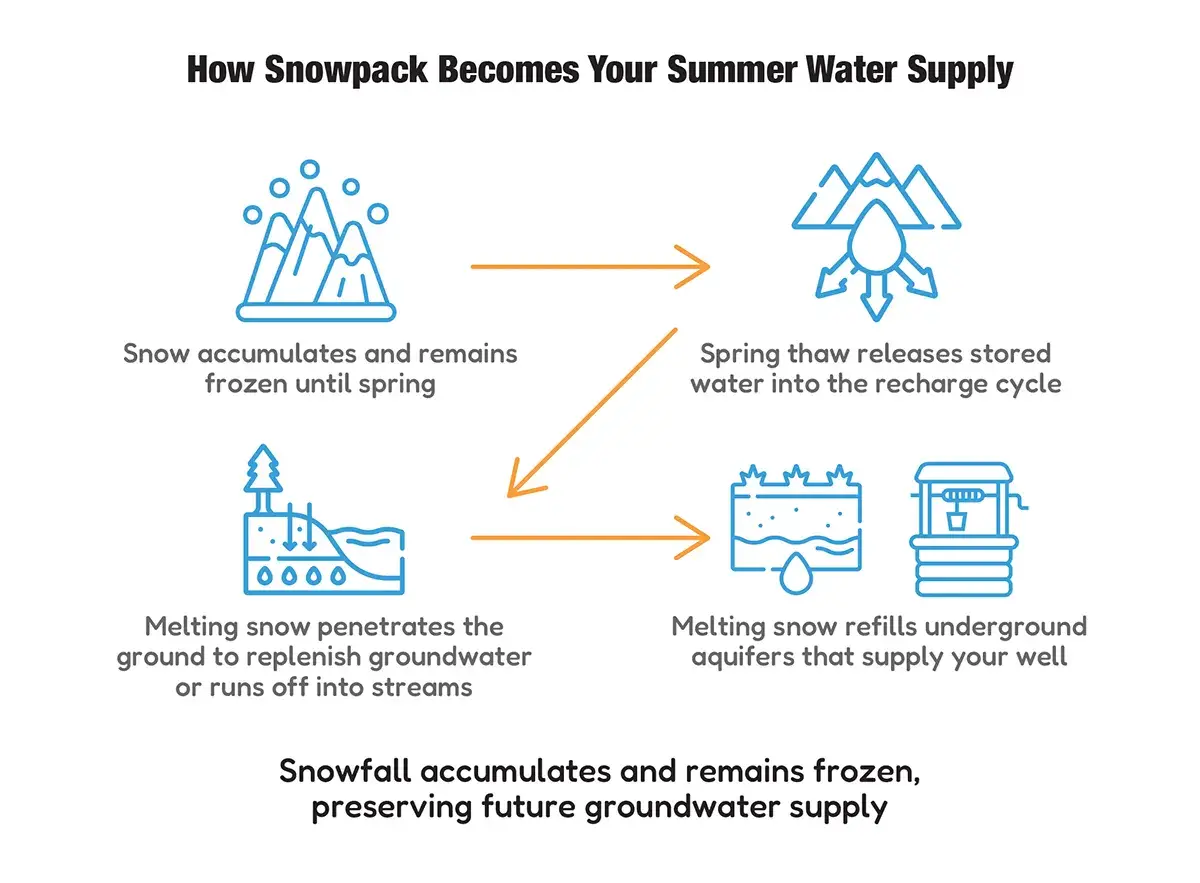
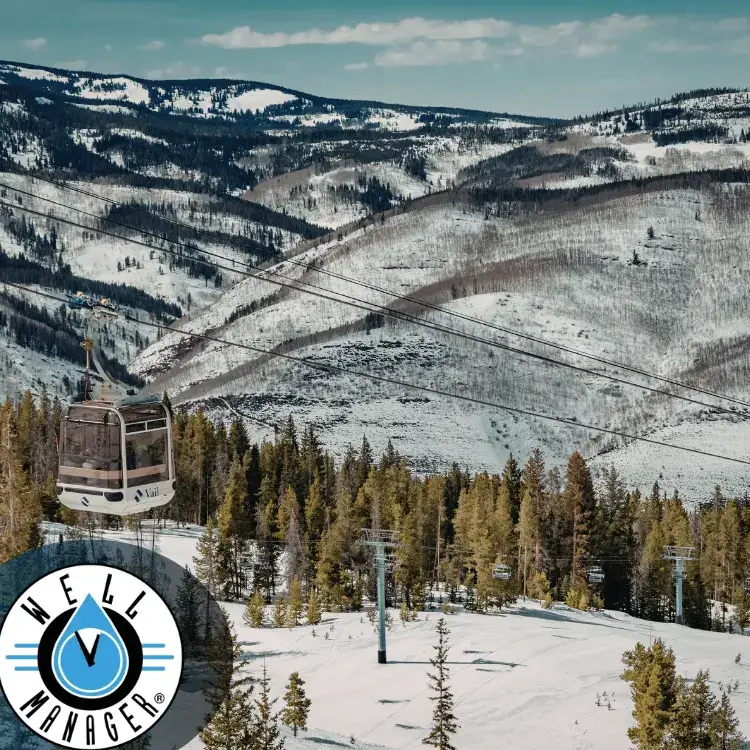
If you live in Utah or Colorado, “low snowpack” is not an abstract headline. It becomes a summer household problem because the region depends heavily on snowpack for supply. Utah’s Division of Water Resources has stated that about 95% of Utah’s water supply comes from snowpack, which is why snow conditions are treated as a water planning signal, not just a ski report.
This winter, Utah’s state water page is blunt about what is happening: it says Utah’s 2026 water year started with a dry stretch, and that on February 1, snowpack hit a new record low. It also states that as of February 3, 94% of the state is in drought and that Utah had around a 20% chance of reaching a normal snowpack by April. Those are not generic statements; they are the state’s own early-warning language.
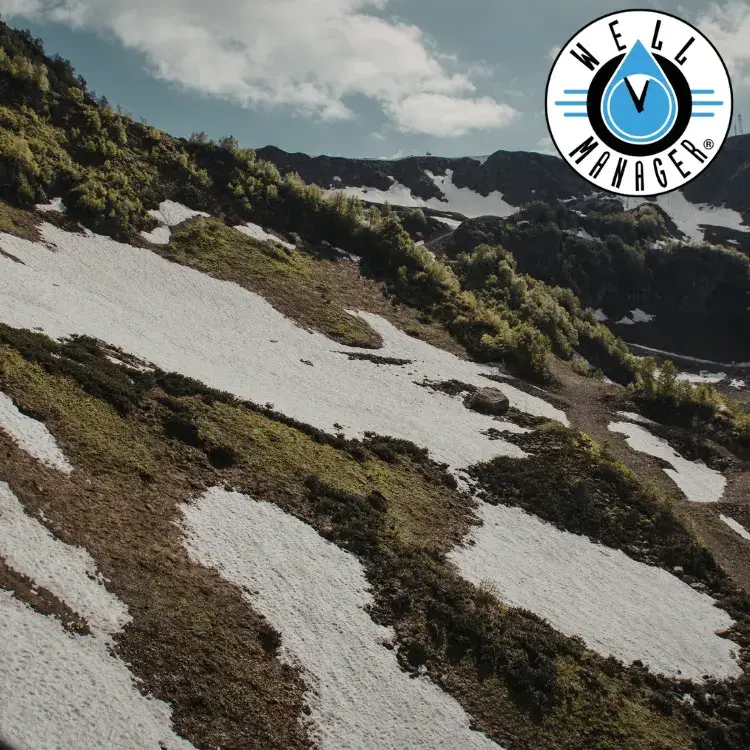
NRCS reported that as of January 1, Colorado’s statewide snow water equivalent (SWE) was 56% of the median, meaning the snowpack held a little more than half of the typical water content for that date. Conditions varied by region, from 47% of median in the Arkansas River Basin (southern Colorado) to 72% of median in the Laramie–North Platte Basin (northern Colorado). When seasonal storage is that far below normal in parts of the state, the system enters spring with less cushion, and wells can be more vulnerable when summer demand ramps up.
That is what “timing matters” means in real life. When basin snow storage is far below typical levels, the system heads into spring with less cushion. And when the cushion is thin, the risk does not always show up in April. It shows up later, when the calendar shifts into sustained summer demand.
Why the Same Winter Shows Up as Low Water Pressure in Summer
Snowpack is the storage signal. Groundwater is the delivery reality for many well owners, and groundwater does not respond instantly just because the weather conversation starts in winter.
USGS explains drought impacts in terms homeowners recognize: when rainfall is less than normal for weeks, months, or years, water levels in lakes and reservoirs fall, and the depth to water in wells increases. USGS also notes that if a well is pumped faster than the surrounding aquifer is recharged, water levels in the well can be lowered. Drought, seasonal variation, and pumping all affect groundwater levels.
This is the missing link between “snowpack timing” and what a homeowner feels. When the system has less recharge or recharge arrives in a shorter window, wells can enter summer with less margin. Then summer adds demand. If pumping outpaces recharge and recovery, the homeowner often notices low water pressure, especially during high-use periods.
If you want to see this locally, rather than taking anyone’s word for it, Utah has built tools specifically for public visibility into groundwater behavior. The Utah Geological Survey’s Groundwater Data Hub is described as providing access to groundwater data, including water-level trends, and notes that water levels over time are graphed dynamically when a well is selected. That matters because it gives homeowners and water managers a way to connect the concept of “seasonal decline” to actual monitored wells, not just explanations.
At Well Manager, we take this pattern seriously because it’s the pattern that creates the summer crisis moment. People call it low water pressure. The underlying problem is often recovery under sustained demand. That is why our solutions emphasize timed collection, storage, and pump protection, designed to stabilize supply when natural recharge and seasonal margin are not cooperating.
The Summer Failure Window: Demand Rises When the System Has Less Margin
The reason groundwater lag matters is simple: the stress shows up when demand peaks, not when the snow report comes out. In Utah, state water planning analysis found that roughly 39% to 42% of potable water use is for outdoor purposes, and it uses summer versus winter production comparisons (2019–2022) to reach that range, meaning the “summer jump” is not a guess; it is visible in water system production data. When outdoor use turns on, the well’s recovery margin gets tested for hours at a time, day after day.
This is also why small equine or small-farm properties can feel the problem earlier. Utah State University Extension materials note that adult horses commonly drink about 5 to 10 gallons of water per day. That is a steady baseline demand that does not pause because the well is recovering. Add irrigation and heat, and a well that “worked fine” under moderate spring use can start falling behind in mid-summer.
USGS explains the mechanism homeowners actually experience: groundwater levels in wells can be lowered when a well is pumped faster than the aquifer is recharged, and droughts, seasonal variation, and pumping all affect groundwater levels. When summer demand stacks on top of weaker recharge conditions, the homeowner symptom often reads like low water pressure, but the underlying issue is that recovery cannot keep up with sustained withdrawal.
If last summer forced you to make tradeoffs, cutting back irrigation, spacing out high-use activities, or watching the system struggle during hot stretches, treat that as a pattern, not a one-off. Seasonal vulnerability tends to recur unless the system is modified to collect water more deliberately, buffer supply, and protect the pump during low-recovery periods.
Early Signs Your Well Is Entering a Low-Recovery Season
Before a complete outage, patterns tend to appear the same way each summer as the recovery margin shrinks.
- The pump runs longer than it used to after normal use. That often means the well takes longer to rebuild its supply after each draw, especially once outdoor demand is active.
- Recovery takes noticeably more time between heavy draws. In a low-recharge season, the system may not “reset” quickly between events, so the day starts stacking demand on top of demand.
- Outdoor watering causes the system to lag for the rest of the day. Sustained withdrawal can outpace recovery, and the well can spend hours trying to catch up.
- Low-water safety shutoffs happen during extended heat. Protective controls can trigger more often when water level and recovery are under stress.
- You start planning around the system. If routines change to avoid running multiple demands, that is often the first practical sign that a low-water-pressure well pattern is developing.
- Low water pressure is most noticeable during high-use periods. When it’s low water pressure in a well that only happens during peak use, it’s often a recovery problem before it becomes an “all the time” problem.
These patterns don’t diagnose geology. They do give you language for what’s happening: the well is operating with a reduced recovery margin in peak season.
How Well Manager Is Built for Seasonal Recovery Stress
At Well Manager, we focus on what actually changes outcomes during low-recharge seasons. When recovery slows, forcing the well to chase real-time demand increases stress and risk. Instead, we design systems that separate collection from immediate use.
- Timed water collection allows water to be drawn when the well can recover safely, rather than only when household demand spikes.
- On-site storage builds a reserve buffer, so peak use does not immediately translate into overdraw.
- Flow detection and pump protection controls prevent the system from continuing to pull when the well cannot safely keep up.
This is not about creating more water. It is about managing water in a way that respects seasonal constraints.
Homeowners dealing with low water pressure well issues in summer are often facing a predictable recovery problem. We work tirelessly to design around that pattern, building systems that stabilize supply, reduce pump stress, and protect against emergency conditions when recharge underperforms. Our approach is not reactive. It is preventative.
Prepare Before Peak Demand Returns
If your well struggled last summer, don’t wait for July to confirm it again. When snowpack storage is low, groundwater recharge can lag, and summer demand is when the system is tested. Low water pressure is often the visible signal, but the underlying issue is usually recovery under sustained use.
Well Manager systems are designed for this failure mode: timed water collection to work with recovery windows, on-site storage to buffer peak demand, and flow detection and controls to protect the pump when conditions tighten. If you’re seeing low water pressure on a well during hot stretches or outdoor watering season, the next step is to talk through what your property needs before peak season hits.
Next Step: Learn How Well Manager Stabilizes Low-Recovery Wells