When a home starts running low on water, the advice usually comes fast and sounds simple. Add a tank. Add a booster. Go bigger. The problem is that those suggestions often get used interchangeably, even though they solve completely different problems. That is why homeowners can upgrade part of their system and still end up dealing with the same issue.
The difference comes down to function. A pressure tank does not store much usable water. A storage tank does. A booster pump does not create more water. It only increases pressure. In a low-yield well, understanding those three roles determines whether the fix works.
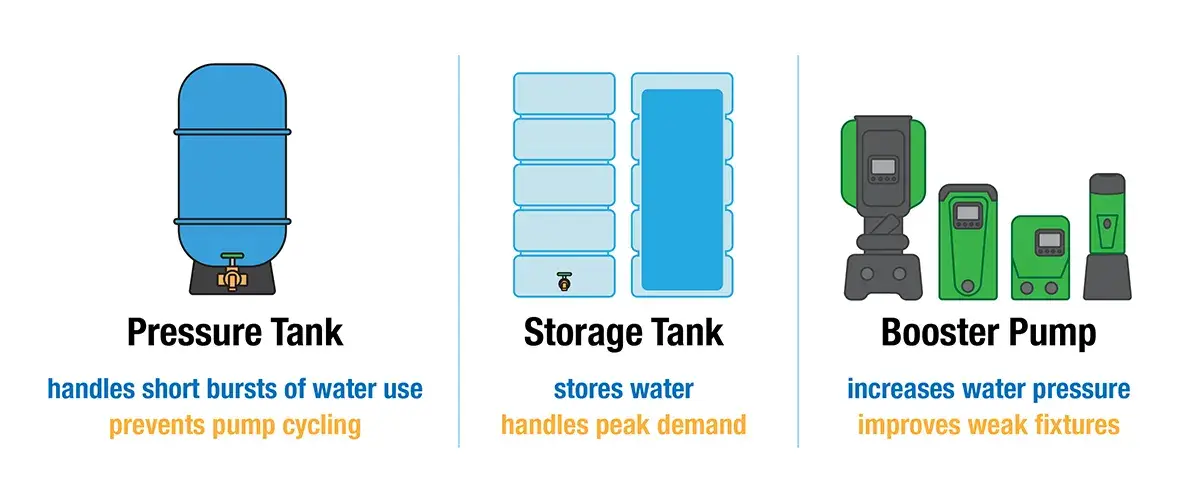
Pressure Tank: Stores Pressure, Not a Large Supply of Water
Most homes already have a pressure tank, which is why it is often the first place people look when water performance drops. It feels like the logical fix, especially when someone suggests increasing the size. But the pressure tank’s job is often misunderstood, particularly when the issue is a well that cannot keep up with demand.
A pressure tank stores a limited amount of water under pressure. That stored water is used between pump cycles, which prevents the pump from turning on every time a faucet opens. This improves system stability and protects the pump from rapid cycling, both of which are important for long-term performance. The limitation is the amount of water actually available. Only a portion of the tank’s volume is usable before the pump turns back on. That means even a large pressure tank may only provide a relatively small working supply.
What a pressure tank helps with:
- Reducing frequent pump starts and stops
- Providing short bursts of water without immediately engaging the pump
- Smoothing pressure changes during light use
What it does not solve:
- Running out of water during showers, laundry, or multiple fixtures
- A well that cannot produce water fast enough during peak demand
That is where people get stuck. A pressure tank can make a system feel better in short bursts, but it does not change how much water is actually available when demand continues.
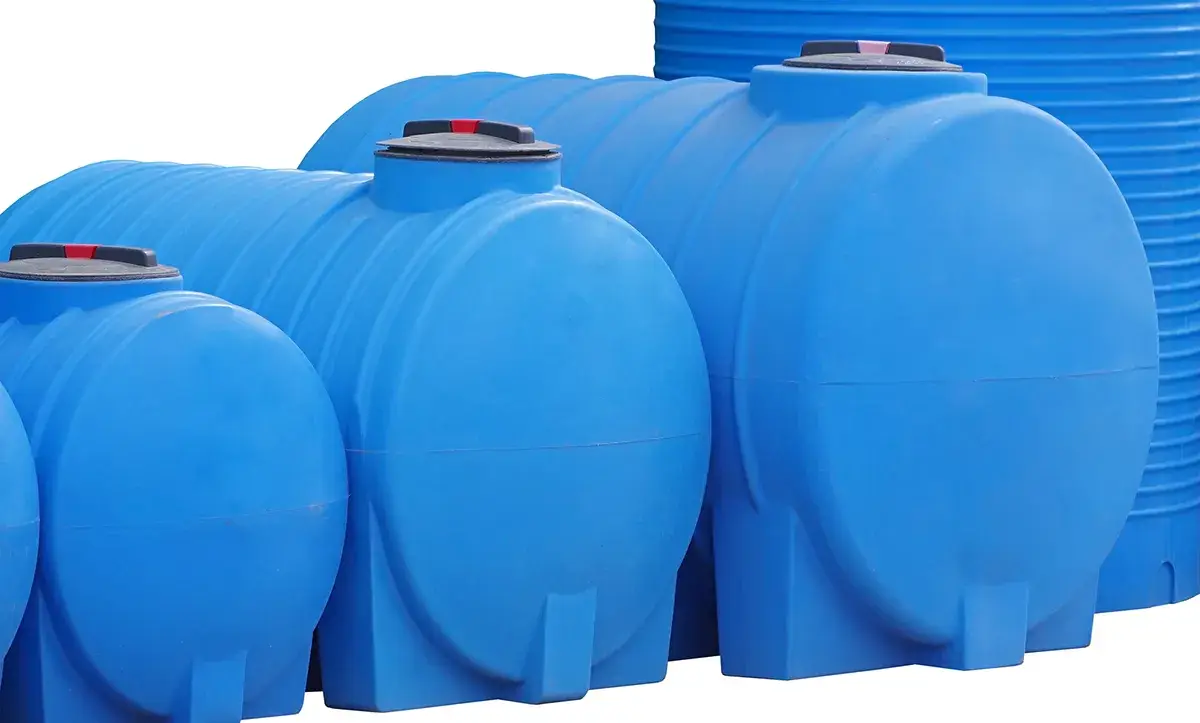
Storage Tank: Stores Usable Water for When the Well Is Too Slow
When the problem is not just pressure, but the amount of water available at a given time, the system has to change differently. This is where a storage tank becomes the most important component in the comparison. A storage tank holds actual usable water volume. Instead of forcing the well to keep up with real-time demand, the well slowly fills the tank. That water is then available when the home needs it, regardless of how quickly the well can produce at any given moment. This directly addresses the most common low-yield problem: peak demand. Homes rarely use water evenly throughout the day. Water use tends to stack up in short windows, morning routines, evening use, and multiple fixtures running at once. A well may produce enough water across 24 hours and still fall behind during those periods.
What a storage tank changes:
- Separates well production from household demand
- Allows slow wells to keep up over time instead of instantly
- Provides a reserve of water during high-use periods
Where it becomes essential:
- Homes that run out of water when multiple things are used together
- Wells with slow recovery rates
- Situations where spacing out water use is not practical
This is the key distinction:
- A pressure tank helps with delivery behavior.
- A storage tank changes how much water is available.
Water Pressure Booster Pump: Increases Pressure, Not Water Supply
Once water availability is addressed, the next question is how well that water is delivered through the home. Pressure is the symptom most people notice first, which is why booster pumps often come up early in the conversation. But their role is often misunderstood.
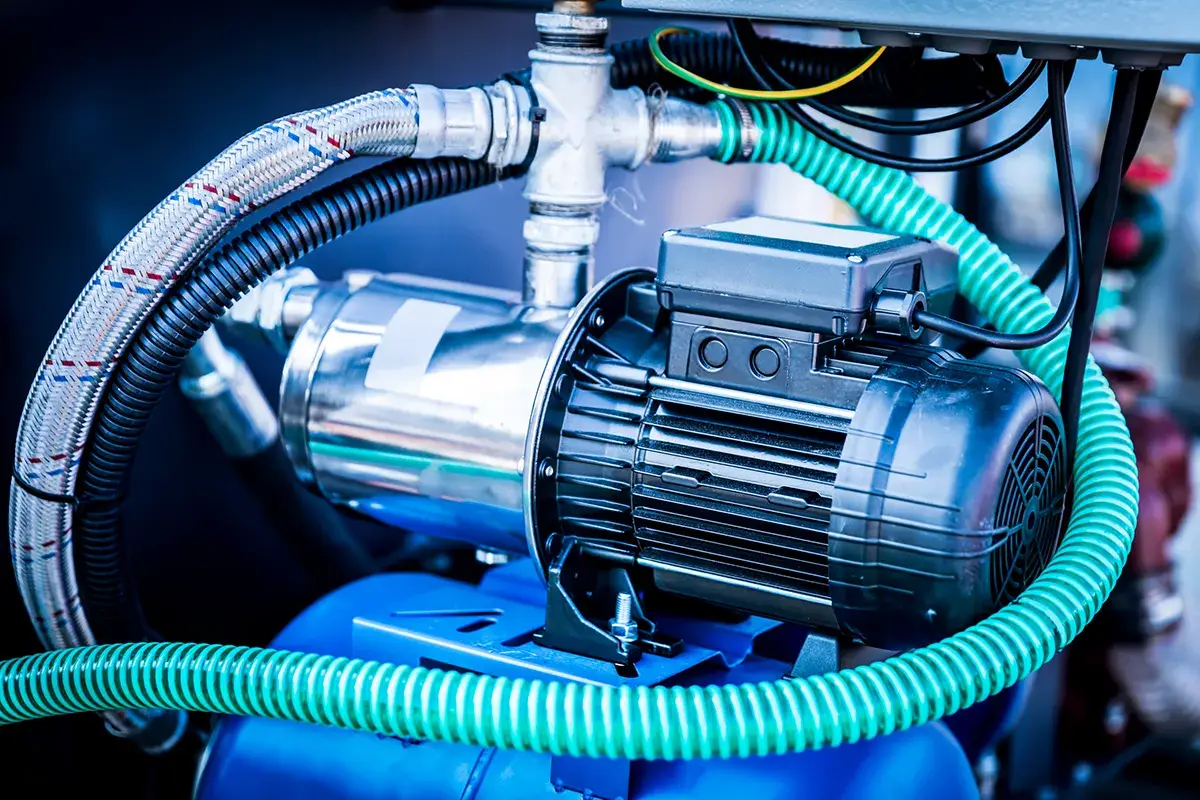
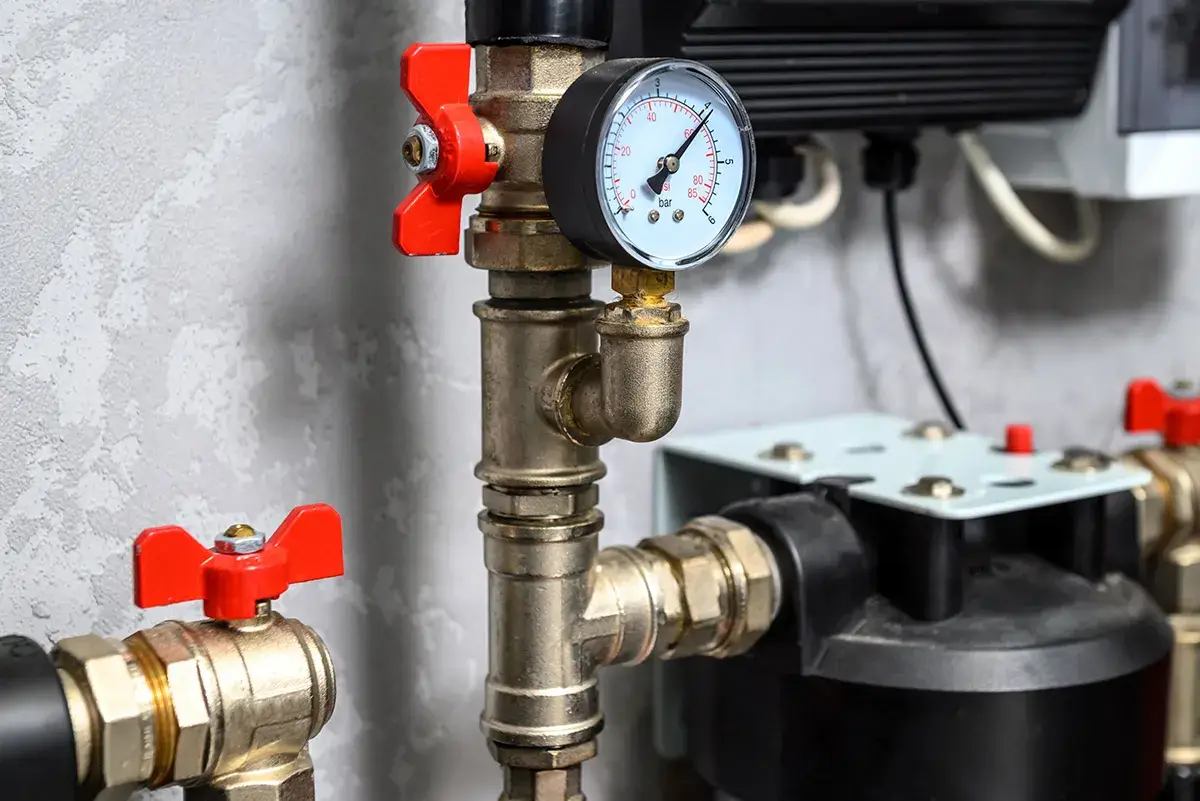
A water pressure booster pump increases delivery pressure. It helps push water through the plumbing system more effectively, improving performance at fixtures and making the system feel stronger and more consistent. This is especially noticeable in larger homes, multi-level properties, or systems where pressure drops over distance. The limitation is simple but critical. A booster pump does not increase the amount of water the well produces. It cannot make a slow well recover faster or create additional supply.
What a booster pump helps with:
- Weak or inconsistent pressure at fixtures
- Pressure loss across long pipe runs or elevation changes
- Re-pressurizing water coming from a storage tank
What it does not solve:
- Running out of water during peak demand
- A well that cannot keep up with household use
This is where many systems go wrong. If the real issue is supply, adding pressure alone will not fix it. A booster pump works best when water is already available and just needs to be delivered properly.
Clear Comparison: What Each One Actually Does
At this point, the differences should already be clear, but putting them side by side removes any remaining overlap. Each one has a role. The mistake is treating them like they do the same job.
| Component | What it does | Helps with | Does NOT solve |
| Pressure tank | Stores a small amount of water under pressure | Pump cycling, short bursts of use | Ongoing water shortages |
| Storage tank | Stores usable water volume | Peak-demand shortages, slow wells | Pressure delivery on its own |
| Booster pump | Increases delivery pressure | Weak fixtures, pressure after storage | Low well output |
How to Choose Based on What Is Actually Happening
Once the roles of a pressure tank, storage tank, and booster pump are clear, the decision becomes more practical. The goal is not to choose between three similar options. It is to identify what your system is failing to do. Most wrong recommendations stem from people reacting to symptoms like low pressure or running out of water without separating supply, storage, and delivery.
- Start with when the problem shows up: Pay attention to the pattern. If pressure is weak even when only one fixture is running, the issue is usually delivery. If the system falls behind only when multiple fixtures are used at once, the issue is more likely to be with the supply or storage.
- Figure out whether the system is running out of water or just delivering it poorly:Those are different problems. If water sputters, stops, or needs time to recover, the issue is availability. That points toward storage. If water is always present but feels weak or inconsistent, the issue is delivery pressure.
- Consider how the well performs over time:A low-yield well may produce enough water over a full day but still fall short during peak use. If spacing out showers, laundry, or other water use helps, that usually points to slow recovery. In that case, the missing function is stored volume, not just pressure.
- Look at whether storage is already part of the system:If the system already has stored water but fixtures still feel weak, the problem may no longer be availability. It may be how that water is being delivered. That is where a booster pump becomes relevant.
- Match the component to the missing function:A pressure tank helps with cycling and short bursts of delivery. A storage tank increases the amount of water available during peak demand. A booster pump improves the delivery of water throughout the home. The right choice depends on which of those functions is missing.
Choose the Right Fix, Not Just the Familiar One
A pressure tank, a storage tank, and a booster pump are often discussed as if they do the same job, but they do not. A pressure tank stores a limited amount of water under pressure, a storage tank stores usable water volume, and a booster pump improves delivery pressure once water is available. That distinction is what makes the right comparison possible, especially on a low-yield well where supply and pressure are often confused. At Well Manager, that is where the conversation starts, because the best solution comes from identifying whether the real limitation is stored volume, delivery pressure, or both. Once that is clear, the path to the right system becomes much easier to see.